 "Stories of Our Lives’ is set to screen at the upcoming New Voices in Black Cinema Festival, which runs April 21 to 24 at BAMCinematek in Brooklyn, NYC. The critically-acclaimed Kenya-South Africa co-production directed by Jim Chuchu will screen on Sunday, April 24 at 2pm. Created by the members of The Nest Collective, a Nairobi-based arts initiative, the film is an anthology of 5 short films dramatizing true stories of LGBT life in Kenya. The film won a Jury Prize at the 65th Berlin International Film Festival and came second in the Panorama Audience Award. For tickets (which are now on sale) and other info about the film and the festival, visit http://www.bam.org/film/2016/stories-of-our-lives. Below is our previous review of the film written by Zeba Blay, followed by a trailer.
***
“If we are not Africans, what are we?”
It’s the question that lies at the core of “Stories of Our Lives”, the anthology film presented by the collective known as The Nest.
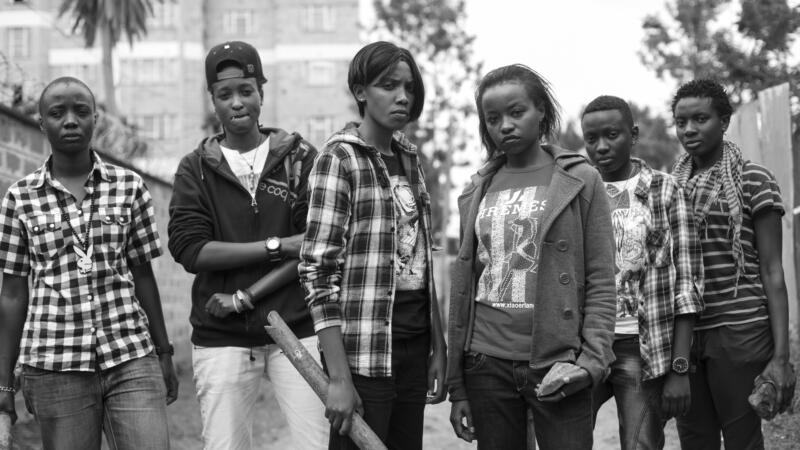
Based on an archive of true stories from the LGBTI community in Kenya, the film is broken down into several black & white vignettes, ably filmed, and beautifully acted. With the names of those involved withheld to protect them from possible retribution, the separate but thematically linked shorts give brief but vivid glimpses into the lives of lesbian, gay, and trans Kenyans living in a country and continent notoriously hostile towards their identities.
In one story, a schoolgirl gets suspended for her budding relationship with a fellow female student. In another, a young man eager to explore his sexuality at a clandestine gay club in Nairobi has to contend with the explosive reaction of his homophobic friend. The strongest short of the bunch, titled “Athman,” explores the difficult relationship of a closeted gay man in love with his understanding but befuddled straight best friend.
The common party line of those with anti-gay attitudes on the continent tends to always hinge on the idea that “gayism is un-African,” as one politician in the movie declares. The question of the African identity, of course, is one so hard to pin down – a character in one short corrects a British rent boy who calls him African – “We don’t like to all be lumped together like that,” he explains.
It’s a sentiment that echoes the overall theme of the film, the need for gay, lesbian, trans, and intersex Kenyans to assert their own identities, indeed their own existence, in a cultural landscape that often tells them that they simply shouldn’t exist.
Because, no, homosexuality is not a Western construct. Often, the main motivation for those who condemn it is Christian doctrine, perhaps the most “Western” thing ever brought to Africa, (next to slavery). So, while these kinds of stories about gender and sexuality on the continent seen here are rare, what’s particularly refreshing about the several tales presented is that, because they are by Kenyans, about Kenyans, they employ a brave honesty and simplicity that doesn’t seek to sensationalize African attitudes towards the LGBTI, to demonize and condemn. Thankfully, this isn’t a movie about “Africa’s homophobia problem” that we’ve seen before. This is a beautiful little film about love, about humanity, about one of the many facets of what it means to be African.
—
Zeba Blay is a Ghanaian-born film and culture writer based in New York. She is a contributor to Huffington Post, Africa Style Daily, and Slant Magazine. She co-hosts the weekly podcast Two Brown Girls, and runs a personal movie blog, Film Memory. Follow her on Twitter @zblay.
—