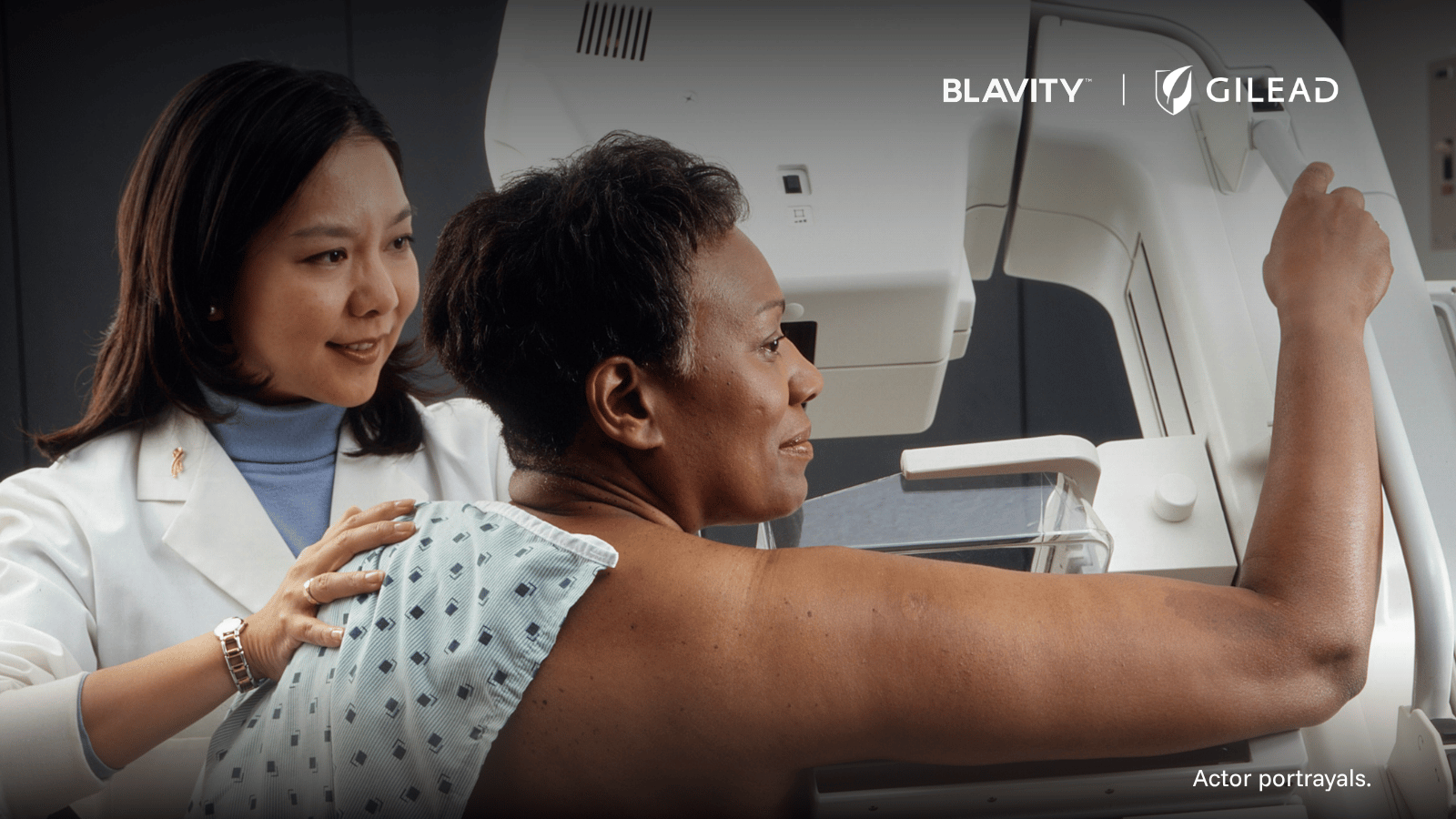
When it comes to women’s health, there are no one-size-fits-all solutions. And for Black women, that gap in care is felt every single day. Whether it’s standardized assessment tools and medicines that have been developed without Black bodies in mind, or systemic and structural factors that contribute to stark health disparities, Black women face many obstacles throughout their healthcare journeys. And when it comes to breast cancer, those obstacles may contribute to late-stage discoveries, more aggressive tumor types, and significantly higher death rates. The American Cancer Society and other organizations are working to close the disparity gap through education and access.
With a multitude of factors at play—environment, genetics, healthcare access—staying informed is a key factor in taking care of your health. Your doctor will use the latest information and your individual circumstances to make expert recommendations—but ultimately, the best decisions are made together. That’s why your education is essential. Below, you’ll find an overview of the risks Black women face and questions that can help navigate breast health conversations with your physician.
Why Breast Health Matters So Much
According to the American Cancer Society, Black women are 41% more likely to die from breast cancer than White women, despite being less likely to be diagnosed with it. Black women also have lower survival rates at any stage of breast cancer. Research shows there are many factors contributing to these stats:
- Genetics: Black American women develop more aggressive types of cancer, like triple-negative breast cancer (TNBC), at disproportionate rates. Fortunately, advances in research and awareness of the differences in tumor types has led to the development of various treatment options for TNBC.
- Comorbidities: Having comorbidities means an individual has two or more distinct diseases occurring at the same time. For example, diabetes is more commonly diagnosed in Black Americans than white Americans, and is also associated with a negative influence on cancer survival.
- Structural Inequity: Inequity and bias within healthcare systems and the economic barriers blocking access to healthcare in the U.S. mean Black women are more likely to be diagnosed at advanced stages of the disease.
You Are Your Own Best Advocate
The stats may seem intimidating, but gathering information and advocating for yourself can help you feel empowered. Here are two things you can do:
- Write down questions you want to ask before you go into medical appointments. The information you get from your questions can make a big difference.
- Speak up when you have questions during your appointment. Your doctor won’t know what you need explained if you don’t ask.
Discover What’s In Your Family Tree

Even before bringing questions to your doctor, consider asking the women in your family about your family health history. Gathering detailed histories from both sides of your family can be a helpful tool for self-advocacy. The American Cancer Society suggests asking the following questions:
- Have you ever been diagnosed with cancer?
- If so, how old were you when you were diagnosed with cancer?
- Have you ever talked to a genetic counselor or had genetic testing? If so, what were the results?
Let’s Talk to Your Doctor
Once you’re armed with information and an understanding of your family health history, you can step into your annual exam with confidence and questions in hand.
To help, here are five questions about breast health to take to your primary care provider or OB/GYN:
- Based on my risk factors, when should I start getting mammograms and how often? Guidelines suggest starting regular mammograms around age 40, but some providers, like the Mayo Clinic, suggest Black women have a personalized risk assessment, starting in their 30s, to determine when regular screenings should begin.
- Does my family history of cancer qualify me for genetic testing? Genetic testing can help detect gene variations that identify the risk of developing breast cancer. But, since only 5-10% of all cancers are hereditary, it’s important to continue regular preventative measures regardless of the outcome of genetic testing.
- Do I have dense breast tissue? If so, how does that affect my breast cancer risk? Is a supplemental screening test like a 3D mammogram, an ultrasound, or a breast MRI a better option for me than a traditional mammogram? Black women may be more likely to have higher breast density than white women, and dense breast tissue can mask tumors, making them harder to detect on a mammogram. Dense breasts are also associated with an increased risk of breast cancer.
- Can you walk me through the best way to do a breast self-exam and how often I should do them? Get familiar with the look and feel of your own breasts. If you feel changes—like a lump—don’t wait for your annual physical to bring it up. Check in with your physician to learn how to do a self-breast exam and how often you should do them.
- If I notice a change in the texture of the skin on my breast/nipple, should I be concerned? Always talk with your doctor about any changes or concerns with your breasts.
What If I’m Diagnosed With Breast Cancer?

If you receive a breast cancer diagnosis, here are nine questions to ask your doctor:
- What do you know about my diagnosis and treatment options?
Your test results will help explain your specific cancer and what they mean for your treatment options. Ask your doctor for recommended treatment options as they will depend on the type of breast cancer you have. - Will you do genomic tests?
Testing for tumor gene mutations involves examining the cancer tissue to assess genes within cancer cells. This can help inform treatment for certain types of metastatic breast cancer. - How much time do I have to consider treatment options?
The type and stage of breast cancer, including whether it has spread to other parts of the body, can influence treatment recommendations and the order they’re given. It’s important to gather as much information as you can about your treatment options and consider discussing your preferences with your family or support system. It’s important to be open and honest with your doctor about your choices. - How long will my treatment last, what are the potential side effects, and how will it make me feel?
Treatment affects every part of your life. Knowing what to expect—the timeline, the side effects, and how you may feel—allows you to plan ahead for your family, your work, and your own peace of mind. - If I have a genetic mutation, should my family members be screened?
Breast cancer that is genetically inherited by parents makes up approximately 5-10% of all breast cancers. It may be helpful to discuss whether or not there are benefits to genetic testing for you or your family members. - Will my breast(s) be removed?
Some factors that can impact whether or not your doctor may suggest a mastectomy include: the size of the tumor, whether or not the cancer tissue is present in multiple areas, whether the patient can safely receive radiation therapy, and genetics. - If I have to have a mastectomy, will I be able to have breast reconstruction surgery after? If yes, when is the best time to do so?
If you have to have a mastectomy, be open and honest with your healthcare team about your desire to undergo breast reconstruction. This way, your doctors can let you know about availability and timing of post-treatment options. - Will I still be able to get pregnant after treatment?
If you’re considering growing your family—or building one—have a transparent conversation with your doctor. The ability to conceive post-treatment depends on a variety of factors, but the first step is making sure your healthcare team is aware of your needs and concerns. - Is there someone in your office who can help me navigate billing and insurance coverage for my treatment?
Navigating financial realities, like insurance coverage, can be challenging. Take advantage of any assistance your doctor’s office may provide. Patient and billing services are there to help you navigate the process. It’s also good to know some pharmaceutical companies may have financial assistance options available for patients.

Conversations about breast health and breast cancer can feel heavy, but they’re necessary. Regular screening and self-advocacy are just the beginning. The more informed you are, the better equipped you are to make decisions that reflect your needs, your values, and your future. Because at the end of the day, caring for yourself is also how you show up for the people who need you most. It starts with knowing your worth, knowing your body, and never being afraid to ask about every option—including treatments like TRODELVY® (sacituzumab govitecan-hziy), which certain patients with metastatic breast cancer can discuss with their care team.
WHAT IS TRODELVY?
TRODELVY® (sacituzumab govitecan-hziy) is a prescription medicine used in adults to treat:
- Triple-Negative Breast Cancer (TNBC) that cannot be removed by surgery (unresectable) and has spread to nearby tissues (locally advanced) or other parts of the body (metastatic).
- As the first treatment:
- alone when you are not a candidate for PD-1 or PD-L1 inhibitor-based therapy.
- with the medicine pembrolizumab or pembrolizumab and berahyaluronidase alfa-pmph, when the tumors test positive for PD-L1.
- As the first treatment:
- Hormone Receptor (HR) positive, Human Epidermal Growth Factor Receptor 2 (HER2) negative breast cancer that cannot be removed by surgery (unresectable) and has spread to nearby tissues (locally advanced) or other parts of the body (metastatic), and you received hormonal-based therapy and at least 2 more therapies throughout the body (systemic) for metastatic breast cancer.
It is not known if TRODELVY is safe and effective in children.
PD-1=programmed cell death protein 1, PD-L1=programmed death ligand 1
IMPORTANT SAFETY INFORMATION
TRODELVY can cause serious side effects, including low white blood cell count and diarrhea:
- Low white blood cell count (neutropenia) can be severe and lead to infections that can be life-threatening or cause death as early as the first cycle of treatment. Your healthcare provider should check your blood cell counts during treatment and may give a medicine to help prevent neutropenia starting in the first cycle of treatment if you have an increased risk for developing low white blood cell count with a fever (febrile neutropenia). Tell your healthcare provider right away if you develop any of the following signs of infection: fever, chills, cough, shortness of breath, or burning or pain when you urinate.
- Severe diarrhea can lead to loss of too much body fluid (dehydration) and kidney problems. Your healthcare provider should monitor you for diarrhea and give you medicine as needed to help control it. If you lose too much body fluid, your healthcare provider may need to give you fluids and electrolytes to replace body salts. If you develop diarrhea during your treatment with TRODELVY, your healthcare provider should check to see if it may be caused by an infection.
- Tell your healthcare provider right away the first time that you get diarrhea during treatment with TRODELVY; if you develop black or bloody stools; if you develop symptoms of dehydration, such as lightheadedness, dizziness, or faintness; if you cannot take fluids by mouth due to nausea or vomiting; or if you cannot get your diarrhea under control within 24 hours.
If you develop serious side effects, your healthcare provider may treat you with certain medicines, delay treatment, lower your dose, or permanently stop treatment with TRODELVY.
Do not receive TRODELVY if you have had a severe allergic reaction to TRODELVY. Ask your healthcare provider if you are not sure.
Allergic and infusion-related reactions can be serious or life-threatening. These reactions are more common within 24 hours of receiving TRODELVY. Tell your healthcare provider right away if you get any of the following symptoms during or at any time after your TRODELVY infusion: swelling of your face, lips, tongue, or throat; hives; skin rash, itching, or flushing of your skin; fever; difficulty breathing or wheezing; lightheadedness, dizziness, feeling faint, or passing out; chills or shaking chills (rigors); chest pain.
Nausea and vomiting can be severe. Before each dose of TRODELVY, you will receive medicines to help prevent nausea and vomiting along with medicines to take home with instructions about how to take them. Tell your healthcare provider right away if you develop nausea or vomiting that is not controlled with the medicines prescribed for you.
Before receiving TRODELVY, tell your healthcare provider about all of your medical conditions, including if you:
- have been told that you carry a gene for UGT1A1*28, which can increase your risk of getting side effects with TRODELVY, especially low white blood cell counts, with or without a fever, and low red blood cell counts.
- have liver problems. It is not known if TRODELVY is safe in people with moderate or severe liver problems.
- are pregnant or plan to become pregnant. TRODELVY can harm your unborn baby. Your healthcare provider should check to see if you are pregnant before you start receiving TRODELVY. TRODELVY may cause fertility problems in females, which could affect your ability to have a baby. Talk to your healthcare provider if fertility is a concern for you.
- Females who can become pregnant should use effective birth control during treatment and for 6 months after your last dose of TRODELVY. Talk to your healthcare provider about birth control choices that may be right for you during this time. Tell your healthcare provider right away if you become pregnant during treatment with TRODELVY.
- Males with a female partner who can become pregnant should use effective birth control during treatment and for 3 months after your last dose of TRODELVY.
- are breastfeeding or plan to breastfeed. It is not known if TRODELVY passes into your breast milk and can harm your baby. Do not breastfeed during treatment and for 1 month after your last dose of TRODELVY.
Tell your healthcare provider about all the medicines you take, including prescription and over-the-counter medicines, vitamins, and herbal supplements. Certain medicines may affect the way TRODELVY works and may increase your risk of side effects.
The most common side effects of TRODELVY when used alone include decreased white blood cell and red blood cell counts, nausea, diarrhea, feeling tired or weak, hair loss, increased sugar levels (glucose) in the blood, constipation, vomiting, decreased protein levels (albumin) in the blood, increased alkaline phosphatase in the blood, decreased appetite, stomach pain, decreased creatinine clearance, and decreased magnesium and potassium levels in the blood.
The most common side effects of TRODELVY when used with pembrolizumab include decreased white blood cell and red blood cell counts, diarrhea, nausea, feeling tired or weak, hair loss, increased alkaline phosphatase, sugar (glucose), and liver enzyme levels in the blood, constipation, rash, decreased potassium levels in the blood, increased lactate dehydrogenase levels in the blood, vomiting, stomach pain, headache, increased eosinophil levels in the blood, and decreased protein levels (albumin) in the blood.
These are not all of the possible side effects of TRODELVY. Call your doctor for medical advice about side effects. You are encouraged to report negative side effects of prescription drugs to the FDA. Visit www.fda.gov/medwatch or call 1-800-FDA-1088.
Please see Important Facts about TRODELVY, including Important Warning.
The information in this article does not provide medical advice and does not substitute for clinical decision making. It is intended for informational and educational purposes only.
TRODELVY, the TRODELVY logo, GILEAD and the GILEAD logo are trademarks of Gilead Sciences, Inc., or its related companies. All other marks are the property of their respective owners.
© 2026 Gilead Sciences, Inc. All rights reserved. US-TROC-1047 10/26

This content was created for Gilead as part of a paid partnership.