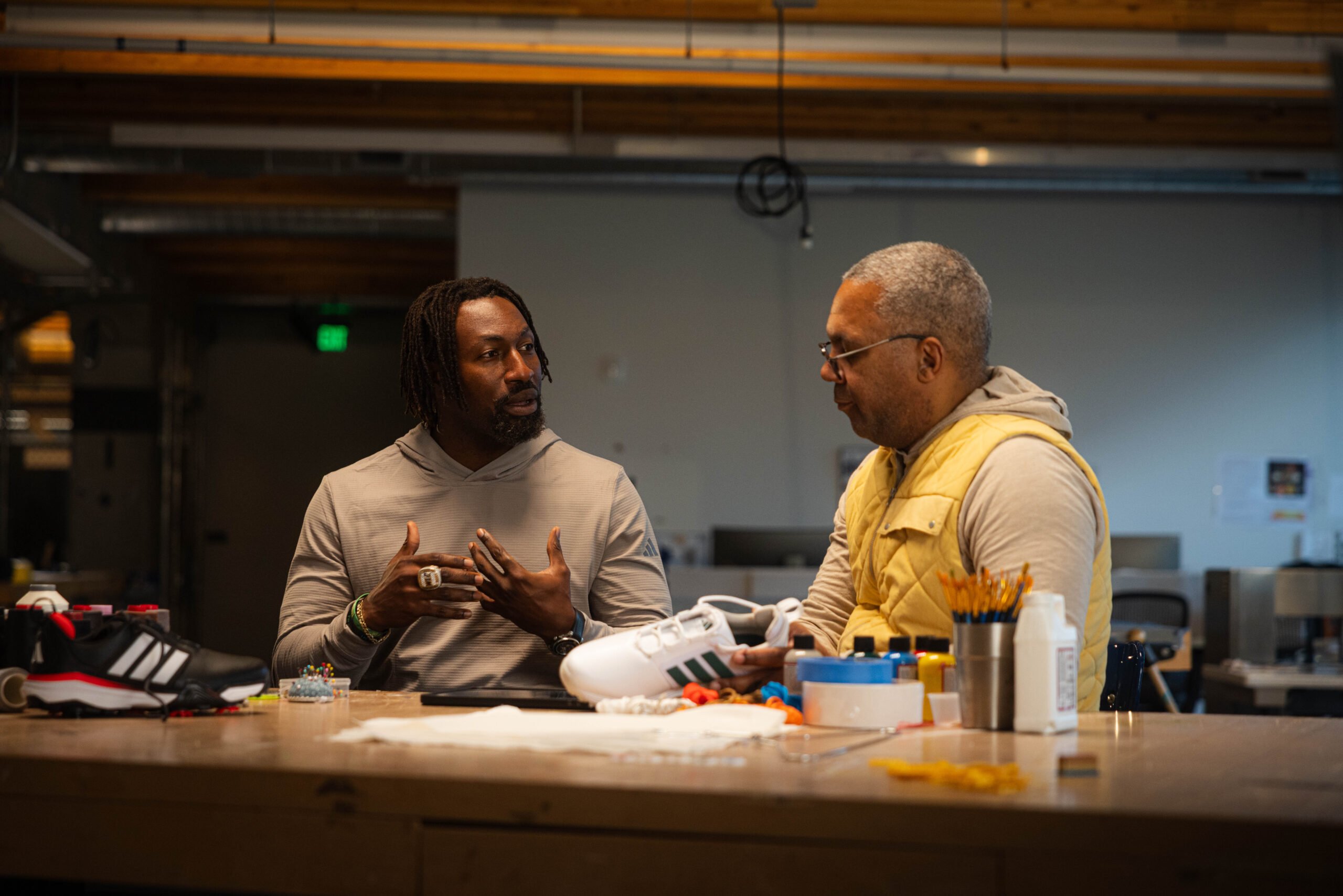
As golf continues to shift culturally, Maurice Allen is focused on making sure Black players are part of what the sport becomes next.
Allen, a professional golfer, community leader, and Chairman of Maurice Allen 360, has spent his career navigating a game where Black representation has often been limited. That experience is part of what shaped his new partnership with adidas Golf for its Black History Month 2026 campaign.
At the heart of the initiative are Chicago State University’s golf teams, a program at a Predominantly Black Institution (PBI) that has historically had fewer resources and far less visibility than larger programs.
Allen’s decision to support CSU was personal.
“I understand firsthand the lack of resources for minority golfers and golf programs because of the hardships I experienced throughout my career,” he shared.
After meeting with head coach Antoinette “Coach Macon” Smith and hearing directly about what the team was up against, Allen felt he couldn’t just walk away. “As someone whose goal is to grow the game and support young people as they grow and learn on their journey to adulthood, I couldn’t sit back and do nothing,” he said. “These young people need to know that someone cares enough to take action.”
For Allen, that support is about more than equipment or a spotlight. He sees it as something that can shape confidence and possibility. “It gives them hope to push toward their dreams,” he explained. “And it encourages them that when they’re in a position to help others, they’ll do so, because they know what it feels like to have someone believe in you.”
The partnership has also come full circle in an unexpected way. Allen recalls meeting one of CSU’s current players, Jayden, years ago when Jayden was a junior golfer and Allen was just starting his own professional career.
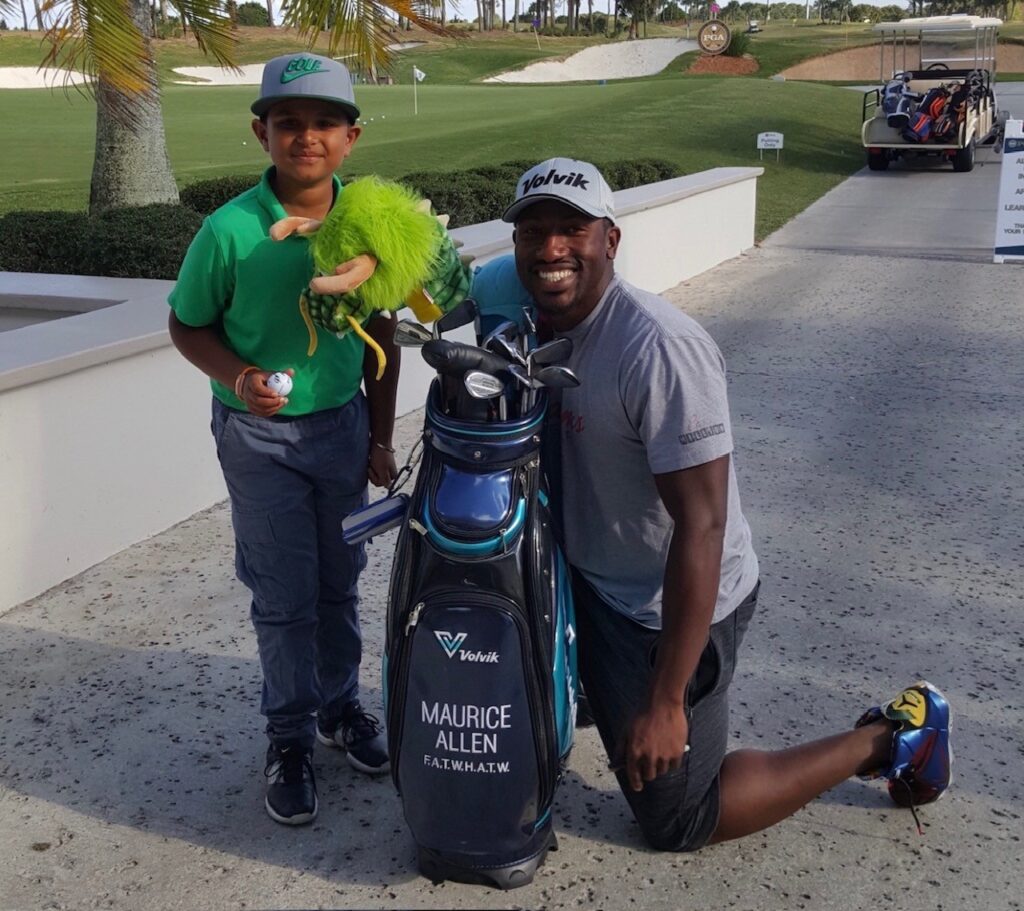
“It’s really special to have a full circle moment like this,” he said, watching Jayden now chase his dream at the college level.
Why PBIs matter in golf’s future
When it comes to conversations about Black representation in golf, access is often the first issue people point to. Allen agrees it matters, but says the deeper challenge is influence.
“Access is one of the challenges, but it isn’t the biggest issue we face,” he said. “A larger challenge is having access to people who look like me in positions of power.”
He believes the sport still struggles with the difference between tolerance and true respect. Without Black voices in decision-making roles, it becomes harder for inclusion to feel real or lasting.
“Too often, we are not viewed as a viable or valuable demographic within the golf industry,” he said, which can make the space feel unwelcoming even when progress is being discussed.
That’s part of why this campaign also includes a creative collaboration with adidas: a custom Adipower golf shoe inspired by Allen’s personal history and the Black pioneers who helped pave the way in the sport.
“To me, it’s very important to take a moment to honor those who blazed the trail,” Allen said. “It allows conversations to be had and gives people the opportunity to become inquisitive.”
He hopes the design does more than tell his story and pushes the next generation to imagine bigger futures for themselves.
“I want them to dream bigger,” he said. “To recognize that what they do is bigger than themselves. More than anything, I want them to be inspired to chase their wildest dreams without fear.”
Visibility, investment and what comes next
Allen also sees visibility as just as important as funding, especially for Black student-athletes at PBIs like Chicago State.
“I believe college is one of the most formative periods in a person’s life,” he said. Programs like CSU, he added, are building leaders not only in sport, but in their communities.
Providing support, he says, helps reinforce that these athletes matter and that their journeys are worth investing in.
When asked what meaningful support from brands looks like, Allen sees this as only the beginning.
“It opens the door to conversations that sometimes feel uncomfortable, sensitive, or even intimidating,” he said. “But they are necessary.”
He believes adidas stepping into this space should be viewed as part of something longer-term, not a one-time moment.
Looking ahead, Allen says the real opportunity is what happens if more brands and athletes commit to Black golfers and PBIs in a sustained way.
“This work is not about reshaping a sport,” he said. “It’s about building people and creating opportunities for experiences that can shape the trajectory of their lives.”
Allen believes the more the sport makes room for everyone, the more meaningful it can become.
“The more connected we are as people,” he said, “the more we can support one another, grow together, and create meaningful change.”