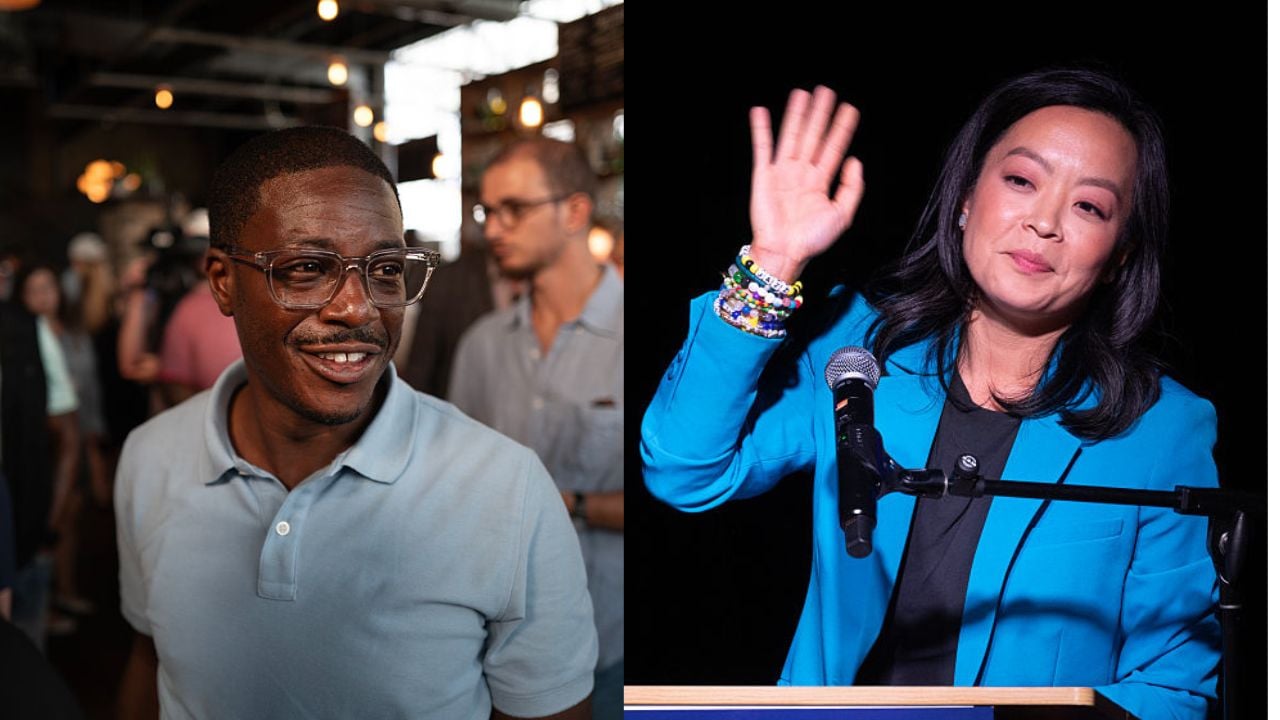
The Democratic primary for Wisconsin’s governor’s race has ended in a surprise outcome, with a Black centrist candidate defeating a far-left candidate who was widely expected to win. Tuesday’s surprise result reshapes Wisconsin’s race, sets up the possibility of a Black person leading the state for the first time, and defies the trend of progressives outperforming centrist candidates in Democratic races.
Centrist Crowley pulls off surprise victory over progressive Hong in primary
The Associated Press declared Wednesday morning that centrist Milwaukee County Executive David Crowley had narrowly defeated progressive State Rep. Francesca Hong to win the Democratic primary in Wisconsin’s governor’s race. The result comes as a huge surprise, with a July poll having shown 38% of likely primary voters backing Hong and just 7% backing Crowley — who had briefly suspended his campaign — and 34% undecided. These undecided voters appear to have heavily broken for Crowley in the final weeks of the campaign. With Election Night transitioning into early Wednesday morning, Hong and Crowley exchanged leads as votes came in, with only a few thousand voters separating the two in the end. Mediaite reported that Hong conceded the race, foregoing the option of demanding a recount and clearing the way for Crowley to declare victory.
Crowley’s late surge and questions about Hong led to comeback win
Crowley, who had briefly dropped out of race amid low poll numbers and meager campaign resources, was able to make a significant surge in the final weeks of the campaign. Outgoing Democratic Governor Tony Evers endorsed Crowley. Two other major candidates, Lt. Gov. Sara Rodriguez and former Lt. Gov. Mandela Barnes, each dropped out in recent weeks amid separate scandals. Hong, meanwhile, ran on popular ideas such as free healthcare and childcare as well as a moratorium on building new data centers in the state. However, she faced backlash from moderates who have pushed back against some of her past positions, such as defending the police, even as she moderated those positions. Hong also drew criticism for past remarks criticizing Valentine’s Day and calling for Thanksgiving to be canceled. Crowley’s campaign successfully persuaded many undecided voters that Hong’s controversial past statements made her less electable in November’s race. Hong also faced some skepticism within the DSA, with prominent democratic socialists such as Sen. Bernie Sanders of Vermont and Rep. Alexandria Ocasio-Cortez of New York declining to make endorsements in the Wisconsin primary.
Countering the progressive wave in Democratic primaries
Crowley’s victory over Hong represents a limit to the rise of Democratic Socialists of America-backed candidates and other progressives defeating moderate, establishment-backed Democrats. DSA-backed candidates have won a number of key primaries against establishment Democrats, as have other progressives like Abdul El-Sayed in nearby Michigan. However, the progressive wave within the Democratic Party has seen limits, such as progressive former Rep. Cori Bush’s unsuccessful attempt to unseat Rep. Wesley Bell in Missouri. And the perceived competition between progressives and centrists within the party has left Democrats with the task of promoting intraparty unity as they seek to retake control of Congress from the GOP and win other key races in November. Both Crowley and Hong have acknowledged the need for such unity as Crowley faces Trump-backed conservative Rep. Tom Tiffany in the general election.
A win for Crowley in November would make him the first Black governor in Wisconsin’s history, and it would be a significant hold for Democrats. Such a victory in a competitive state like Wisconsin will likely depend on Crowley maintaining the support of moderate Democrats while also reaching out to voters who found Hong’s progressive politics appealing.