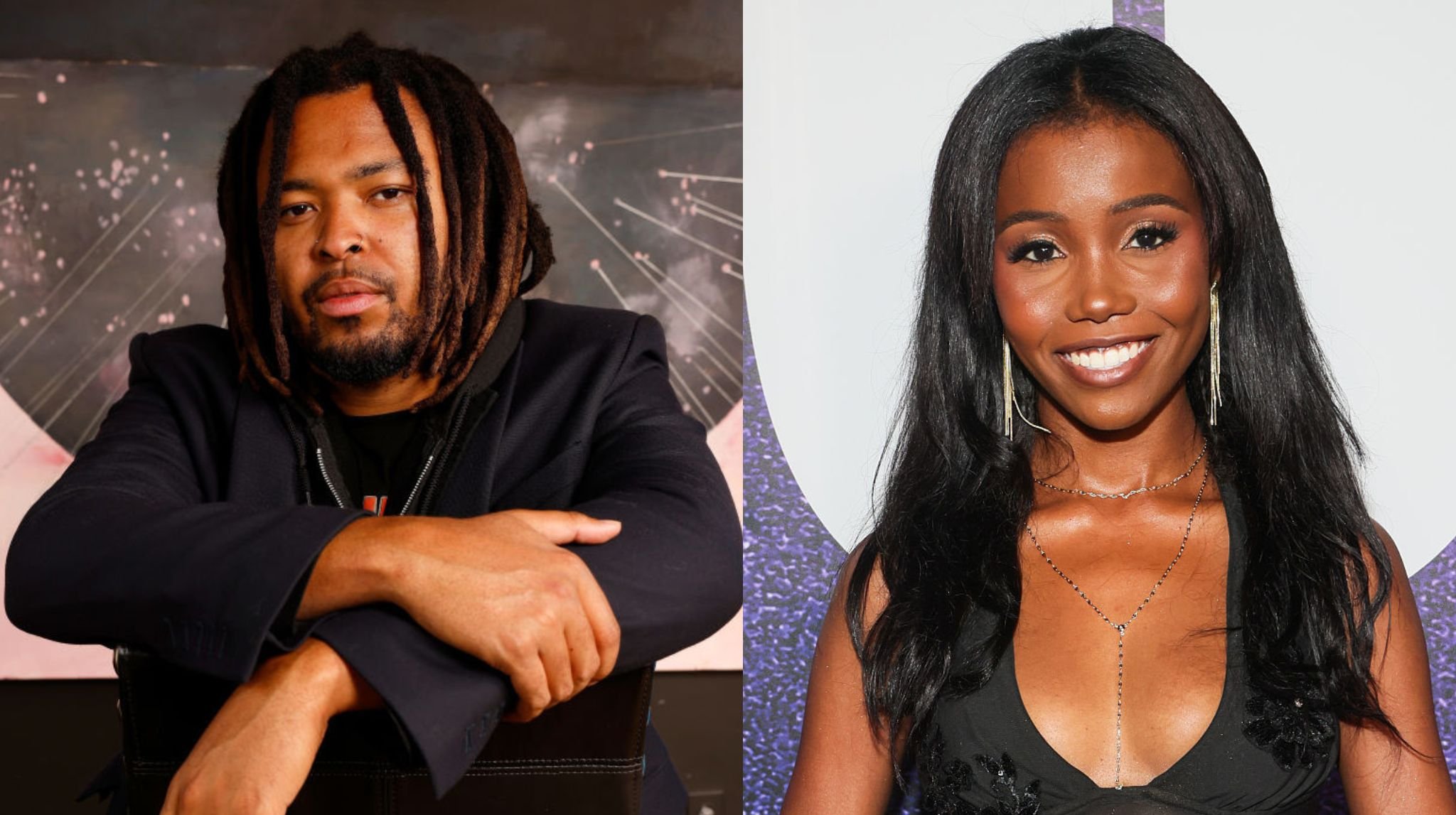
When writer, director, producer, model, actress, and philanthropist Sabrina Lassegue was 15 years old, she was sexually assaulted by three boys in her hometown of Bethesda, Maryland. She went to the hospital alone, afraid and in “excruciating pain,” and underwent a rape kit administered by a medical professional due to medical racism, “ridiculed” and “encouraged” Lassegue to not press charges. Unaware of her rights, she obliged.
Later, she opted to “pursue the proper charges against my assailants,” but it was too late. Her rape kit had been destroyed and with it, any evidence that would help her get the justice she deserved.
Lassegue’s survival—and how it propelled her to become a fierce advocate for Maryland’s SB 615—is the focus of Fenice, a 2024 documentary directed by acclaimed, two-time Sundance–nominated filmmaker Sterling Hampton. Passed in 2023, the legislation establishes a comprehensive reporting system that allows sexual assault evidence collection kits to be tracked through law enforcement. The short documentary delivers an electric portrait of Lassegue’s many roles, following her efforts to advance SB 615 while balancing life as Miss Bethesda USA, competing for Miss Maryland, and running her production company, Extinguished Youth.
As Lassegue and Hampton prepare for their second collaboration—Inauguration Day, a coming-of-age dramedy set during Barack Obama’s historic 2009 presidential inauguration—we spoke with Hampton about bringing Fenice to life, translating Lassegue’s extraordinary story to the screen, and what’s next for their growing creative partnership.
The film often pairs hauntingly beautiful images with a jarring score. How does the visual and audio language of the Fenice illuminate Sabrina’s story?
I think I’ve generally made that creative decision to make the auditory experience sometimes uneasy and provocative because often times we as people walk around every day with all kinds of emotions and challenges that aren’t printed on our faces. Visually, there can be beauty and calm, but underneath the surface, we are all battling different things. The score for me in film feels like almost like the subconscious. Particular tones and frequencies create a visceral experience that you’re not necessarily noticing directly. But it’s doing so much to convey the state of mind of a person. My work in non-fiction documentary films is usually surrounding folks who are battling identity, bigotry and self-worth. So by extension, in this film, I think I wanted to suggest that you never really know what people are going through or living with or what experiences they’ve had when you see them. But they can be constantly feeling these things that you can’t see at any moment consistently. The score is a metaphor or a tool to convey cognitive dissonance.
How did you observe Sabrina’s advocacy (and her personally) evolve throughout the process of realizing Fenice?
I think in anybody’s journey to make usefulness out of their lived experience, there’s two things happening. Within advocacy, you’re working to be able to express your ideas about legislation and how to do so with flawless communication and charisma. At the same time, you’re also still moving day by day to make sense of those same experiences. It’s an incredible undertaking and requires a lot of courage. Being able to witness that through Sabrina’s journey has been truly inspiring and humbling. I got to see her in real-time transmuting darkness into light by passing legislation banning the destruction of rape kits in her hometown after her’s being thrown out.
Water seems to be an important motif in Fenice. What inspired the water imagery you included in the short?
I often times cannot take conscious methodical credit for the creative decisions I make in my short-form non-fiction work. Within my short-form projects, I tend to manifest creative decisions that are, at the time, usually of more shallower thought meaning-wise (at least in the beginning). I say this because I haven’t always been readily able to express why I’m choosing to make a creative decision in the phases prior to production. I just know I need to do it. It’s like pulling from source when your creative antenna is up. For example, Sabrina being submerged in water felt like an interesting visual. But whilst filming and afterward in the editing process, I found that that scene is a representation of being in a state of confusion and under a great amount of pressure and weight. This pressure/weight being Sabrina’s survivor story. You’re disoriented in this place that you psychologically come back to every time you think of what happened. This scene ended up being very powerful to show this kind of idea.
What did Sabrina bring to the project behind the scenes?
Everything. Sabrina and producers Joey Gutterman and Kelly Chen made the intention to tell this story. They brought me into the fold and wanted me to do what I’ve done with this subject matter. Sabrina’s story and her courage to talk about it is the real work. I merely observed the journey.
What do you hope audiences take away from Fenice?
Through my humble experiences and observations thus far while being on this earth, I think life can be full of confusion and suffering. The said confusion and suffering is on a spectrum that is as wide as it can be. What I seem to believe is that the only potential goal in this life is to make your experiences useful. Which, in and of itself, can probably seem provocative when you pair that statement with experiences on a particular part of the spectrum I mentioned. What the core of that statement means, especially when I use the phrase “useful,” is that we may not be able to take away or erase the experiences we’ve had, but we have the power to turn the experiences into something that helps others and in by doing so, heal a bit of ourselves. It’s about transmutation of negativity into positivity. A conversion of dark into light. An active internal change of energy. Which is dramatically easier said than done. Sabrina has done that. She used her lived experience to prevent anyone else from having to go through what she went through in the medical process. That is one of the most remarkable things a person can do.
And you and Sabrina have another project in the works, right?
Yes. Our individual companies have joined forces on an array of projects [we’re] currently in production on a feature, Inauguration Day. This project is especially exciting because Sabrina was able to write and act in the film while I direct. Inauguration Day is about my lived experience back in 2008 on the day of Obama’s inauguration, when the staff corralled the Black students into a room to watch the programming. It was sort of odd at the time but especially alarming today when looked from a viewpoint in 2026. The staff/faculty thought they were doing a service to us (and in a lot of ways, it was a thoughtful gesture). But there was a lot being assumed by thinking each of us wanted to see the inauguration.
Ultimately, my experience was of great amazement and appreciation of the first black man to be elected to the highest office in the world. But that wasn’t the unanimous exact feelings from everyone in the room. The film explains how we’re not monolithic as a people by capturing the different views/perspectives of the students in the classroom.