
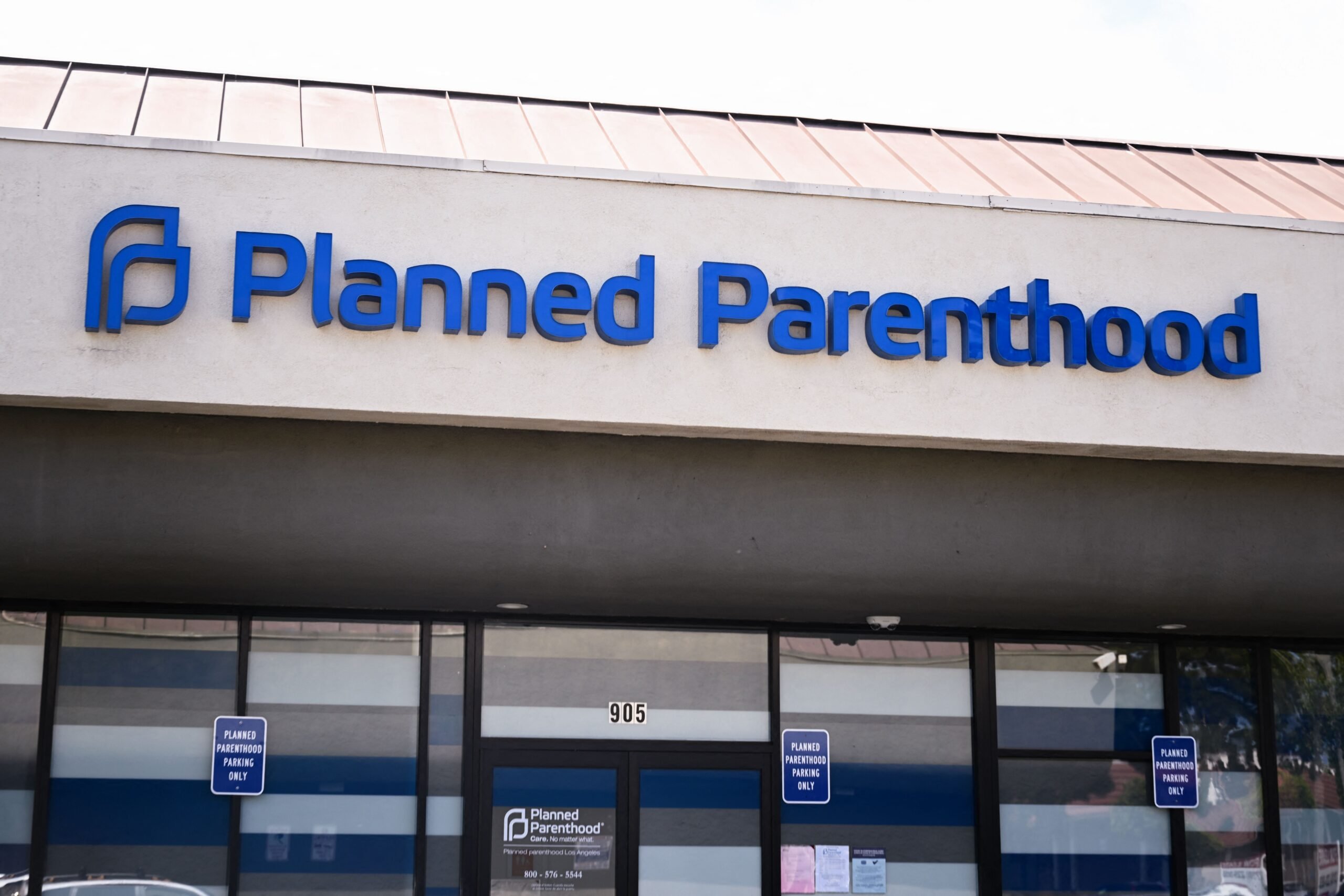
A Texas fight over Medicaid money has suddenly become a federal case. The U.S. Justice Department has moved to join the Planned Parenthood Medicaid lawsuit, a five-year legal battle that could cost the organization more than $1.8 billion.
In a court filing late Friday, Nov. 6, federal lawyers said they plan to formally ask to intervene by Nov. 13, Reuters reported. Planned Parenthood says a loss could force it to shut down in Texas.
For patients, however, the stakes go far beyond the courtroom. Here’s what the case alleges, how both sides are arguing it and what it could mean for people who rely on Planned Parenthood for birth control, STI testing and cancer screenings.
Why did the Justice Department join the Planned Parenthood Medicaid lawsuit?
The case began in February 2021, when an anonymous whistleblower known as “Alex Doe” filed it under seal in federal court in Amarillo, according to the State of Texas’s complaint. Texas then joined the case. Notably, the Justice Department declined to step in at the time.
Since then, that has changed. The DOJ filing came days after Texas voters elected Democrat Nathan Johnson to replace outgoing Republican Attorney General Ken Paxton, who championed the case, according to Reuters. Still, the department has not publicly explained its reasons.
Even so, the move matters. Once it intervenes, the federal government gets a direct role in the case, no matter who leads the Texas attorney general’s office. In other words, the lawsuit no longer depends on one state official’s priorities.
What is Planned Parenthood accused of doing?
Specifically, the suit targets Planned Parenthood Federation of America and three regional affiliates: Planned Parenthood of Greater Texas, Planned Parenthood Gulf Coast and Planned Parenthood South Texas.
First, some background. Texas and Louisiana moved to end the affiliates’ Medicaid enrollment years ago. However, court orders paused those terminations for years while the affiliates fought them. During that time, the clinics kept treating Medicaid patients and kept billing the programs.
The plaintiffs say that billing broke the federal False Claims Act. They argue the affiliates were not entitled to the payments and failed to return the money once the terminations took effect, according to the Texas complaint.
Planned Parenthood, however, strongly disputes that. It says its billing was lawful because court orders allowed it to keep serving Medicaid patients during those periods. Importantly, the lawsuit does not claim Planned Parenthood billed for care it never provided.
So what does the law actually require? Jamie Davis, Esq., CCEP, CIPP/US, a health care compliance attorney with Build and Comply Consulting, said the bar is lower than many people assume. “‘Knowingly’ includes reckless disregard and deliberately looking the other way, so the government does not have to prove someone intended to commit fraud,” Davis told Blavity Health.
Davis added that federal involvement is not a verdict. “When the Justice Department joins a case, it signals the government thinks the claims are worth pursuing. It is not a finding of liability,” Davis said.
How much money is Texas seeking from Planned Parenthood?
Initially, the dispute centered on about $10 million. The affiliates received “approximately $10 million dollars in payments from state funds” for the claims at issue, the Texas complaint states.
However, the potential bill is far larger. The False Claims Act lets the government recover three times its damages, plus a separate penalty for each false claim, according to the Justice Department. Because the affiliates filed thousands of claims, those penalties add up fast.
As a result, the plaintiffs are seeking more than $1.8 billion in reimbursement, penalties and fees. That figure is what the plaintiffs are asking for, not an amount a court has ordered Planned Parenthood to pay.
Why has Texas been trying to remove Planned Parenthood from Medicaid?
The conflict dates to 2015. That year, Texas and Louisiana notified the affiliates that they planned to remove them from their Medicaid programs. The move followed the release of undercover videos by an anti-abortion group, which Planned Parenthood has long said misrepresented its practices.
Next came years of litigation. Patients and providers sued, and lower courts initially blocked the terminations. Then, in November 2020, the full Fifth Circuit Court of Appeals ruled that Medicaid patients could not challenge a state’s decision that a provider is unqualified, ABA Journal reported.
Texas’s exclusion finally took effect in March 2021, according to The Texas Tribune. Since then, Planned Parenthood clinics in Texas have not been able to bill the state’s Medicaid program.
Underneath the legal arguments sits a long political fight over abortion, who qualifies as a Medicaid provider and how low-income patients access reproductive healthcare. Supporters of the exclusion argue that public money should not flow to an abortion provider in any form. Meanwhile, Planned Parenthood and its allies argue that the exclusion punishes patients who use its clinics for routine care.
How does Planned Parenthood respond to the Medicaid fraud allegations?
In contrast, Planned Parenthood calls the case baseless. Its central argument is simple: when a court order allows you to do something, you cannot be punished for doing it after the order is later lifted. It also argues that the False Claims Act requires proof that someone “knowingly” filed false claims, which it says did not happen, according to the organization.
The national federation has also argued it cannot be held liable for legal advice its in-house lawyers gave to affiliates. A three-judge Fifth Circuit panel initially agreed. However, the full appeals court later ruled in August 2026 that the appeal came too early, sending the case back to the trial court, Bloomberg Law reported.
Susan Baker Manning, Planned Parenthood Federation of America’s general counsel, responded sharply to the DOJ’s move. “They want to bully Planned Parenthood out of business,” she said in a statement Saturday, adding that the organization would “fight this every step of the way, including at trial.”
Could Planned Parenthood be forced to close its Texas health centers?
Planned Parenthood says yes. The organization has warned that losing the Medicaid lawsuit would force it to shut down its Texas operations, according to Reuters.
The math explains why. A judgment in the billions would dwarf the roughly $10 million at the center of the dispute. Even a smaller award could strain clinics that are already stretched thin.
Notably, the broader network is already shrinking. A one-year federal ban on Medicaid payments to Planned Parenthood, passed in 2025, expired in July 2026. During that year, the organization said nearly 30 health centers closed nationwide, according to KFF.
How could the Planned Parenthood Medicaid lawsuit affect patients who rely on reproductive healthcare?
Since 2021, Texas Medicaid patients have not been able to use their coverage at Planned Parenthood. Still, many low-income and uninsured Texans pay out of pocket or use other programs at its clinics. As a result, closures would remove those options entirely.
Nationally, though, Planned Parenthood plays an outsized role in family planning. In 2023, nearly one in five female Medicaid enrollees got contraceptive care from a Planned Parenthood clinic, KFF found.
If clinics close, patients could lose easy access to services such as:
- Birth control, including long-acting methods like IUDs and implants
- STI testing and treatment
- Pregnancy testing
- Cervical and breast cancer screenings
- Routine wellness exams and blood pressure checks
Those gaps can also carry real health costs. Cervical cancer screening, for example, can find precancerous changes early, when they are easier to treat, according to the CDC. Moreover, Black women already face higher cervical cancer death rates than white women, according to the American Cancer Society.
What doctors say happens when a clinic closes
Physicians say the first services to slip are the routine ones. “Routine, non-urgent care goes first: birth control refills, STI testing, and Pap/HPV screening. It is very hard for Medicaid patients to find a new provider, because many private clinics don’t accept Medicaid due to low reimbursement rates,” Sarah Bonza, MD, MPH, FAAFP, MSCP, physician founder of Bonza Health, told Blavity Health.
Texas has seen this before. Brian Herrick, MD, a practicing family physician and chief medical officer at the health care AI company Attuned Intelligence, pointed to earlier Texas research. “A 2016 Texas study found that excluding Planned Parenthood from a state-funded family-planning program was associated with 35.5% fewer program claims for IUDs and implants and 31.1% fewer for injectable contraception,” Herrick told Blavity Health. “That gives us concrete evidence that patients don’t simply move seamlessly to another provider when access changes.”
Over time, those gaps can become serious. “Without STI testing and cervical cancer screening, conditions we had nearly eliminated or controlled start showing up late and severe,” Bonza said. Similarly, Herrick noted that “untreated chlamydia and gonorrhea can lead to pelvic inflammatory disease,” which can make it harder to get pregnant later.
Where to find low-cost reproductive care in Texas
- Community health centers: Federally funded health centers charge on a sliding scale based on income. Search the HRSA Find a Health Center tool.
- Healthy Texas Women: This state program covers family planning and some preventive care for eligible women ages 15 to 44. Check eligibility at HealthyTexasWomen.org.
- Free or low-cost STI testing: Find a testing site near you through the CDC’s GetTested locator.
- Ask before you book: Confirm that a clinic accepts your Medicaid plan or offers a self-pay discount.
Does Medicaid cover abortions at Planned Parenthood?
Generally, no. In fact, this is one of the most misunderstood parts of the case.
Since 1977, the Hyde Amendment has banned the use of federal funds for abortion, with exceptions only when the pregnancy endangers the patient’s life or results from rape or incest, according to KFF. In addition, Texas bans nearly all abortions.
So, the Medicaid payments at the center of the Planned Parenthood Medicaid lawsuit were for other health services. They covered care like birth control, screenings and exams. The lawsuit is about whether the affiliates were eligible to bill for that care, not about Medicaid paying for abortions.
What happens next in the Planned Parenthood Medicaid lawsuit?
First, the Justice Department still needs to formally file its motion to intervene. Its lawyers told the court they would do so by Nov. 13, and the judge will then decide whether to allow it.
Meanwhile, the case is moving again after a nearly three-year pause. The Fifth Circuit’s August 2026 ruling sent it back to U.S. District Judge Matthew Kacsmaryk, and both sides have proposed a trial date in April 2027, according to Reuters.
Still, several key questions remain unresolved. Did court orders legally protect the affiliates’ billing? Can the national federation be held responsible for its lawyers’ advice? And if Planned Parenthood loses, how large would the final judgment be? Either side could appeal after trial, so a final answer may still be years away.
In the meantime, patients can protect their care by keeping regular appointments and knowing their backup options. “Use your preventive care while you still have it,” Bonza said.
Bottom line
The Justice Department’s move to join Texas’s case raises the stakes in a long fight over whether Planned Parenthood must repay Medicaid money it collected while court orders kept it in the program. Planned Parenthood says a loss could close its Texas clinics. Until the case is decided, patients should know where else to find affordable birth control, STI testing and cancer screenings.
Frequently Asked Questions
Can Texas Medicaid patients still receive care at Planned Parenthood?
Texas Medicaid has not covered care at Planned Parenthood since its exclusion took effect in March 2021, though patients can still pay out of pocket, according to The Texas Tribune.
What is the difference between Medicaid and Title X funding?
Medicaid is a health insurance program that pays providers for covered care, while Title X is a federal grant program that funds family planning services for low-income and uninsured people, according to HHS.
Citations
American Cancer Society. Cancer Facts & Figures for African American/Black People. American Cancer Society. Accessed November 9, 2026. https://www.cancer.org/research/cancer-facts-statistics/cancer-facts-figures-for-african-americans.html
Centers for Disease Control and Prevention. Screening for Cervical Cancer. CDC. Accessed November 9, 2026. https://www.cdc.gov/cervical-cancer/screening/index.html
Centers for Disease Control and Prevention. GetTested: National HIV, STD, and Hepatitis Testing. CDC. Accessed November 9, 2026. https://gettested.cdc.gov/
Health Resources and Services Administration. Find a Health Center. HRSA. Accessed November 9, 2026. https://findahealthcenter.hrsa.gov/
Healthy Texas Women. Healthy Texas Women Program. Texas Health and Human Services. Accessed November 9, 2026. https://www.healthytexaswomen.org/
KFF. The Sunsetting of the Federal Planned Parenthood Medicaid Ban Shifts Decisions to States. KFF. Published June 25, 2026. https://www.kff.org/quick-insights/the-sunsetting-of-the-federal-planned-parenthood-medicaid-ban-shifts-decisions-to-states/
Najmabadi S. Judge rejects bid by Planned Parenthood to stay in Medicaid, affecting health service for thousands of low-income Texans. The Texas Tribune. Published March 10, 2021. https://www.texastribune.org/2021/03/10/planned-parenthood-medicaid-texas/
Office of Population Affairs. About Title X Service Grants. U.S. Department of Health and Human Services. Accessed November 9, 2026. https://opa.hhs.gov/grant-programs/title-x-service-grants/about-title-x-service-grants
Planned Parenthood Federation of America. The Facts on United States ex rel. Doe v. Planned Parenthood Federation of America. Planned Parenthood. Published August 2023. https://www.plannedparenthood.org/about-us/newsroom/press-releases/the-facts-on-united-states-ex-rel-doe-v-planned-parenthood-federation-of-america-the-meritless-case-that-could-shut-down-planned-parenthood
Reuters. Justice Department joins Texas lawsuit against Planned Parenthood. Reuters. Published November 7, 2026. https://www.reuters.com/legal/government/justice-department-joins-texas-lawsuit-against-planned-parenthood-2026-11-07/
Salganicoff A, Sobel L, Gomez I, Ramaswamy A. The Hyde Amendment and Coverage for Abortion Services Under Medicaid in the Post-Roe Era. KFF. Published March 14, 2024. https://www.kff.org/womens-health-policy/issue-brief/the-hyde-amendment-and-coverage-for-abortion-services-under-medicaid-in-the-post-roe-era/
State of Texas. Texas’s Complaint in Intervention, United States ex rel. Doe v. Planned Parenthood Federation of America. Office of the Texas Attorney General. Accessed November 9, 2026. https://www.texasattorneygeneral.gov/sites/default/files/images/executive-management/Final%20Tex’s%20Complaint%20in%20Intervention.pdf
Bloomberg Law. Planned Parenthood Fraud Appeal Dismissed by Full Fifth Circuit. Bloomberg Law. Accessed November 9, 2026. https://news.bloomberglaw.com/litigation/planned-parenthood-fraud-appeal-dismissed-by-full-fifth-circuit
U.S. Department of Justice. The False Claims Act. U.S. Department of Justice Civil Division. Accessed November 9, 2026. https://www.justice.gov/civil/false-claims-act
ABA Journal. En banc 5th Circuit allows Medicaid defunding of Planned Parenthood. ABA Journal. Published November 24, 2020. https://www.abajournal.com/news/article/en-banc-5th-circuit-allows-medicaid-defunding-of-planned-parenthood