
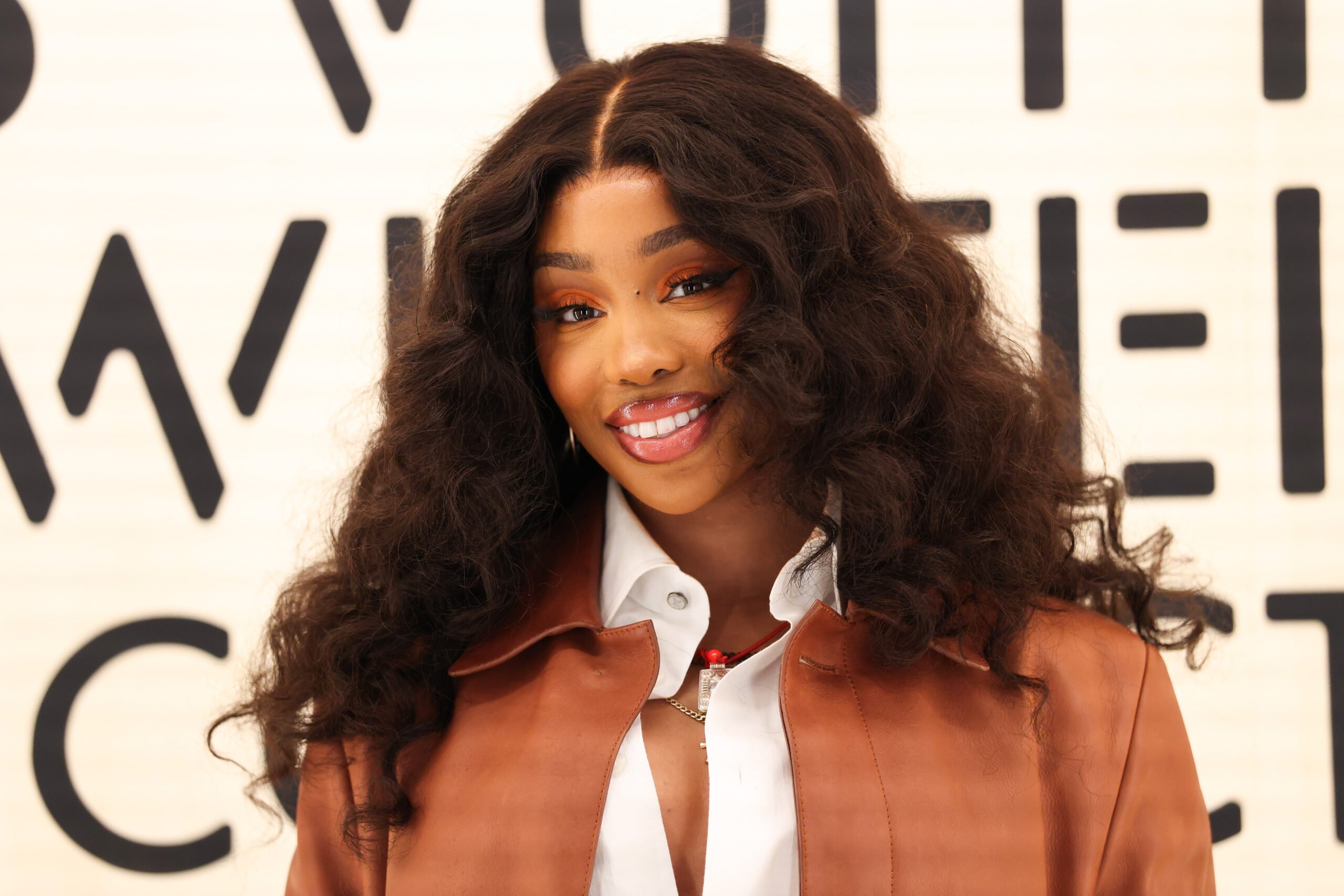
Receiving a medical diagnosis later in life can be a deeply emotional and eye-opening experience, finally bringing answers to questions that went unanswered for decades. Grammy-winning R&B star SZA recently shared a personal milestone of her own when she revealed on a private social media account that she has been diagnosed with Autism Spectrum Disorder (ASD), specifically high-functioning autism and Asperger’s syndrome. To help her fans understand, News Nation reports that the 36-year-old singer shared her clinical documentation, which noted challenges with social interactions as well as a strong sensitivity to sounds, touch and the textures of certain clothing.
In her typically straightforward style, SZA linked her diagnosis to her sharp pattern-recognition skills and strong sense of justice – especially regarding the rise of creative AI. By sharing her story so openly, she has sparked a global conversation about how often adults, particularly Black women and girls, are diagnosed later in life. Her experience invites us to take a closer look at the science of autism, how it affects the body, and what the diagnosis actually means.
Is SZA neurodiverse?
Yes, SZA is neurodiverse and part of a larger group of famous people in the public eye who are proud of how their brains are wired. Neurodiversity is a general term that claims brain differences like dyslexia, ADHD and autism are equally human as any others and are not diseases, explains Harvard Health Publishing.
SZA’s diagnosis was in the modern, clinical classification of ASD. She was diagnosed with “high-functioning autism,” a phrase that is often used to refer to autistic people who are self-supporting and able to make a life for themselves. Asperger’s syndrome has been officially deprecated as a medical diagnosis and has been incorporated into ASD. Although it remains popular for adults to use to refer to their special cognitive patterns, such as high language ability and intense interests.
Are you born with autism or do you develop it?
Researcher Tunde Rasheed tells Blavity Health, “Autism is not contagious; you cannot catch it from someone or develop it later in life because of the environment. SZA’s diagnosis paperwork specifically lists that her mother remembered these neurodivergent traits when SZA was a kid, though they were not as apparent back then.”
The Centers for Disease Control and Prevention (CDC) defines autism as a lifelong, congenital, neurodevelopmental condition. The connections in the brain of an autistic child are developed early in the prenatal stage in the womb. Some infants show obvious differences in communication and eye contact in the first year; others, particularly females, may not show highly visible differences until social demands outpace their coping abilities in adolescence or adulthood.
What’s happening in your body
ASD is a neurological and sensory-processing disorder, and the autistic brain processes, filters and interprets information in the environment differently from a neurotypical brain, notes the Cleveland Clinic.
Peer-reviewed research monitored by the National Institutes of Health (NIH) reveals that autistic subjects exhibit distinct structural and functional imaging patterns in neural pathways.
- Sensory processing alterations: The brain’s sensory cortex is impaired in regulating outside stimuli. This can result in significant sensory defensiveness, in which common triggers such as the sensation of clothing, noise and lights may be overwhelming, leading to a high level of anxiety.
- Atypical neural connectivity: In autistic brains, there is a possibility of localized hyper-connectivity (highly detailed local processing, e.g., superior pattern recognition) and decreased long-range connectivity (between different brain areas). Being socially involved and reading subtle nonverbal cues can be very exhausting for someone with this unique wiring.
Causes of Autism Spectrum Disorder
Although there is no one single cause of autism identified by medical science, there is massive clinical research to show that there are genetic and biological factors that play a significant role in the cause of autism.
The most prominent factor is genetic heritability, according to the NIH. The chances of the next child being autistic are greatly increased for a family that already has one child with autism.
Hundreds of genes and random changes in them have been associated with ASD, especially those that regulate brain cell communication. Furthermore, non-genetic risk factors may interact with genetic vulnerabilities to affect brain development, including parental age at conception, low birth weight and in utero exposure to certain environmental toxins.
Health risks and complications
An undiagnosed autistic profile through childhood and early adulthood has enormous secondary health risks and psychological issues involved.
The Mayo Clinic reports that many autistic people use a coping mechanism called “masking” or “camouflaging,” particularly women. This means that they have to actively conceal who they are, act like neurotypical people and block out sensory overload to fit in. A mask can be useful for the wearer to move about in society, but it is also a very exhausting process. This constant suppression can manifest as chronic mental fatigue, severe clinical depression, generalized anxiety disorders and debilitating autistic burnout.
Why is autism so common now?
The apparent increase in the number of autism cases is not due to some new biological epidemic but to massive improvements in the criteria for diagnosis, public awareness and clinical screening.
“The biggest misconception is that rising numbers mean autism itself is suddenly becoming more common,” says Dr. Aggie Papazyan, a Los Angeles-based psychologist specializing in Autism Spectrum Disorder. “That’s scary to some people, but there’s no new autism ‘epidemic.’”
The CDC estimates that today, autism affects approximately 1 out of every 31 Americans. Diagnostic criteria were essentially arbitrary for a long time and were defined solely by how the condition presented in young boys with severe speech delays. Nowadays, doctors have a much better understanding of the symptoms of autism in both females and males, as well as in people of various cultures and ethnicities.
This greater clinical sensitivity and a major decrease in public stigma have paved the way for millions of adults who, as children, were merely described as “eccentric” or “problematic” to seek formal, late-in-life clinical assessments.
What to do about autism spectrum disorder
As autism is a natural, lifelong variation of human neurobiology, the term treatment is not about curing or trying to change. Clinical support, on the other hand, is dedicated to self-discovery, learning accommodations and enhancing your life every day.
The best thing newly diagnosed adults can do is find an adult autism specialist, a neurodiversity-affirming therapist or a counselor. They can support you in finding your specific sensory sensitivities, breaking down tiring masking patterns and setting healthy boundaries around your energy. Furthermore, being part of adult support groups offers an invaluable opportunity to connect with others who are neurodivergent, share experiences and learn strategies for coping.
For those who tend to feel physically exhausted or anxious in noisy, crowded situations, consider using high-quality, high-fidelity earplugs or noise-canceling headphones. By proactively managing the sensory environment, you can help shield your nervous system from overload, maintain your cognitive energy and avoid a sensory crash.
When to see a doctor
If you have ongoing issues with social communication, extreme sensory sensitivities and/or frequent unexplained mental fatigue, you may want to consider having a professional clinical assessment by an adult-focused neuropsychologist or specialist psychiatrist.
An evaluation is usually formal, conducted with extensive clinical interviews and specific behavioral questionnaires, as well as consideration of early developmental history. Getting an adult diagnosis may be difficult, but with answers in hand, you can access legal workplace accommodations, request academic accommodations and finally get a compassionate and accurate understanding of your own mind.
Bottom line
SZA’s openness about her autism diagnosis at an older age underscores the intricate nature of neurodiversity in adulthood and the prevalent phenomenon of sensory masking. Autism is a lifelong, genetically based neurodevelopmental disorder resulting in a way of thinking that is different from the normal way of thinking about social communication and sensory input. The neurodiversity-affirming care and healthy sensory boundaries that autistic adults seek in their practice can help them to maintain their mental health, lower their risk of burnout and live their lives on their terms.
Frequently Asked Questions
Which Black celebrities have autism?
A prominent group of Black stars have openly shared their autism diagnoses, including Grammy-winning singer SZA, television star and advocate Holly Robinson Peete and acclaimed musical artist Armani White.
What country has the highest autism rate?
The United Kingdom and the United States report some of the highest documented autism rates globally, which researchers attribute directly to their advanced diagnostic screening access and robust public awareness campaigns.
Citations
Donnellan S. Grammy-winning singer reveals ‘high-functioning’ autism diagnosis. nj. Published June 2026. https://www.nj.com/entertainment/2026/07/grammy-winning-singer-reveals-high-functioning-autism-diagnosis.html
Baumer N, Frueh J. What is neurodiversity? Harvard Health Publishing. Published November 23, 2021. https://www.health.harvard.edu/blog/what-is-neurodiversity-202111232645
Cleveland Clinic. Autism Spectrum Disorder (ASD) Symptoms & Causes. Cleveland Clinic. Published 2023. https://my.clevelandclinic.org/health/articles/autism
Hashem S, Nisar S, Bhat AA, et al. Genetics of structural and functional brain changes in autism spectrum disorder. Translational Psychiatry. 2020;10(1):1-17. doi:10.1038/s41398-020-00921-3
Sandin S, Lichtenstein P, Kuja-Halkola R, Hultman C, Larsson H, Reichenberg A. The Heritability of Autism Spectrum Disorder. JAMA. 2017;318(12):1182. doi:10.1001/jama.2017.12141
Bostwick JM, McKean AJS. On the Spectrum: High-Functioning Autism and Its Contemporary Relevance. Mayo Clinic Proceedings. 2026;101(5):846-853. doi:10.1016/j.mayocp.2026.02.016
CDC. Data and Statistics on Autism Spectrum Disorder. Autism Spectrum Disorder (ASD). Published April 15, 2025. https://www.cdc.gov/autism/data-research/index.html