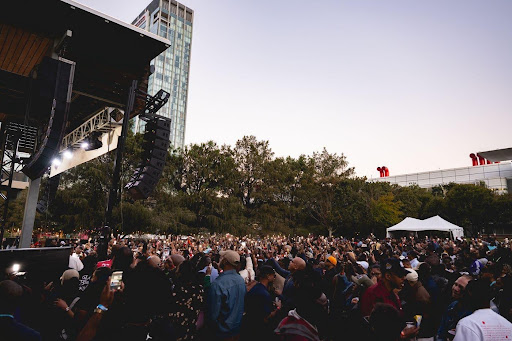
Every fall, as tickets to the AfroTech Conference go on sale and Houston’s hotel blocks begin to fill, the flurry of activity revives a familiar question: Is AfroTech worth it? It is a fair question. After all, between the ticket, the flight and a week away from work, this Black tech conference asks for a real commitment, and beyond that, a gathering of 40,000 people can seem more than most people could take in.
Coming from someone who has attended the conference twice, the answer is yes. AfroTech Conference is completely worth it, provided you arrive knowing exactly what you want out of it.
AfroTech 2026 at a glance
Where is AfroTech 2026 held?
George R. Brown Convention Center in Houston, Texas, November 2 to 6, 2026.
How much do AfroTech tickets cost?
Tickets range from $350 for AI Edge to $2,250 for All-Access.
Who can attend AfroTech?
Anyone 18 or older. You do not have to work in a technical role to attend.
How big is AfroTech?
40,000+ expected attendees, 300+ speakers, 15 tracks and 11 stages.
What AfroTech feels like from the inside
I first heard about AfroTech in college, and for years it stayed on my list of things I needed to experience firsthand. When the chance finally came, I signed up to volunteer. No one asked me to. I wanted to understand, from the inside, what everyone had been talking about.
That first year was in Austin, and the scale of it overwhelmed me. There were more sessions than one person could attend, more people than one person could meet, and nearly all of them were Black. For anyone used to being one of few in a conference hall or an office, that reversal registers before anything on the agenda does, and it was what I carried home that week. I left prouder than I had expected to be.
The second time, I came as an attendee, and the conference had moved to Houston. I preferred it for a reason that has little to do with programming. Houston does not empty out when the convention center closes; there is always another dinner, another event, another part of the city to explore. Austin, by comparison, had gone quiet after hours. At a conference where so much happens after the last session ends, the host city is part of the program.
What AfroTech offers
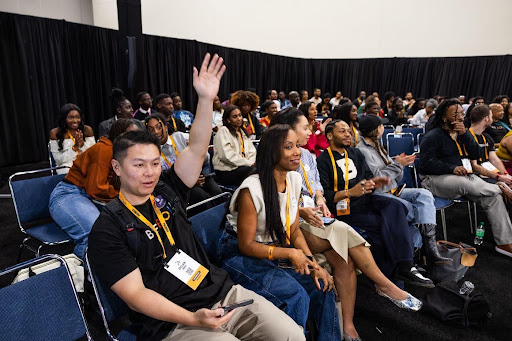
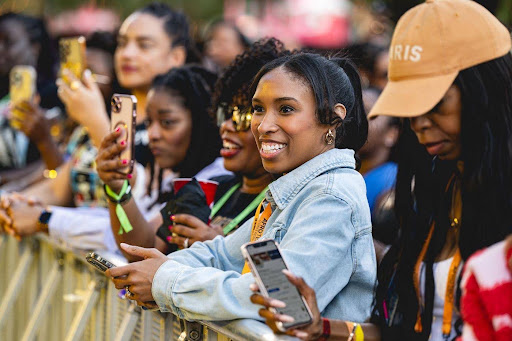
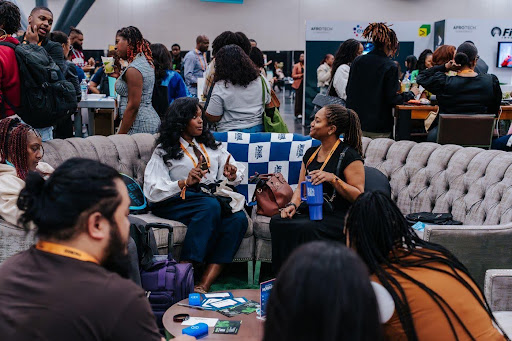
So what does AfroTech offer once you are there? More than most people expect. Over five days, the conference brings together hiring, learning, community and a full calendar of events after hours, and each one serves a different kind of attendee. Knowing what each offers is the first step to deciding what you want out of the week.
Why companies come to AfroTech to hire
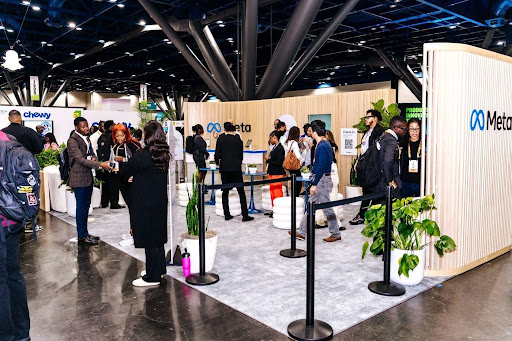
To understand the expo hall, it helps to know why AfroTech started. When Blavity co-founder Jeff Nelson explained why the first conference was held in San Francisco, he pointed to something he kept hearing from companies there: they could not find Black talent, and they did not know where to look. AfroTech was built to answer that, and ten years later, the answer fills an entire floor of the convention center.
On my visits, the companies recruiting there included Google, Netflix, Capital One and Morgan Stanley, among many others. Now that I work in a leadership role, I understand why they come. Hiring is one of the hardest parts of the job, and finding the right person can take months. So when these companies say they are at AfroTech to find talent, believe them. A strong candidate met in person makes a recruiter’s job easier, and you can feel that on the floor. Recruiters ask about your experience and listen closely, and while none of it is a formal interview, you are talking with people who influence hiring decisions. Registered attendees can also upload their résumés to Talent Infusion, AfroTech’s talent network, so companies can find them beyond the booth.
These companies are also hiring well beyond engineering. They need project managers, marketers, analysts and content strategists, which means you do not have to write code to find the right role at AfroTech.
What you learn at AfroTech
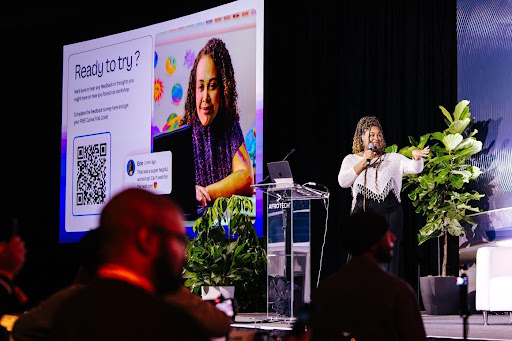
Beyond hiring, AfroTech gives you access to people you would rarely get in a room with otherwise. Some of the speakers are executives and founders whose names you already know. Many more are Black professionals doing inspiring work you may never have heard about, and the conference is where you finally learn who they are. You get to hear what they are building and ask your questions, and depending on what you came for, you either start a relationship or leave inspired.
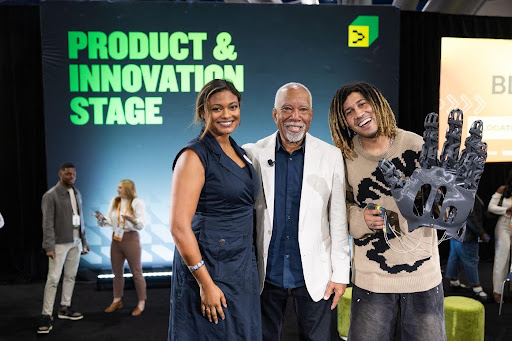
The programming is also more hands-on than people expect. There are workshops throughout the week, and on the Product & Innovation Stage, new technology is shown live in front of the audience. In 2025, that included a wearable exoskeleton concept and a robotic hand prototype. There is a coding lab as well, and during one of my visits, a coding competition ended with someone winning prize money.

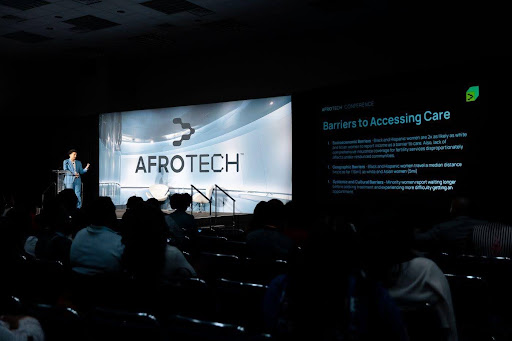
This year, healthcare professionals have even more reason to come. AfroTech is bringing HealthStack fully into the conference, and the Medical ticket includes the HealthStack Conference, specialized workshops and continuing education credits. There are also dedicated tracks on clinical AI, maternal health, telehealth, and equity and trust in care, so a nurse or physician will find as much to learn as a software engineer.
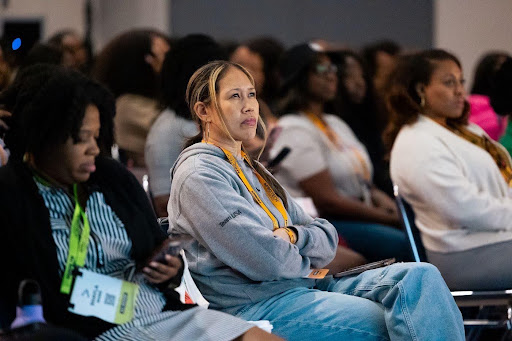
A conference built for belonging
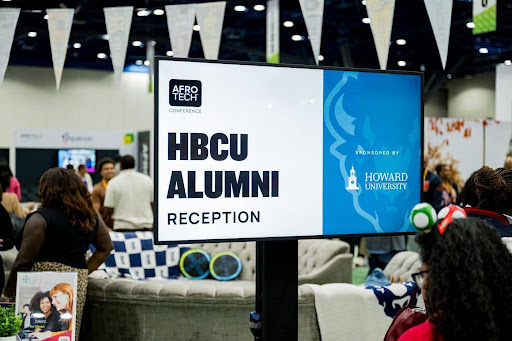
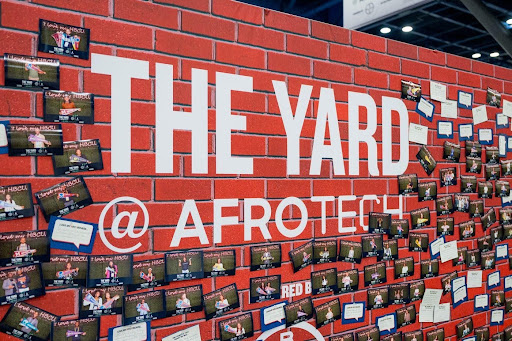
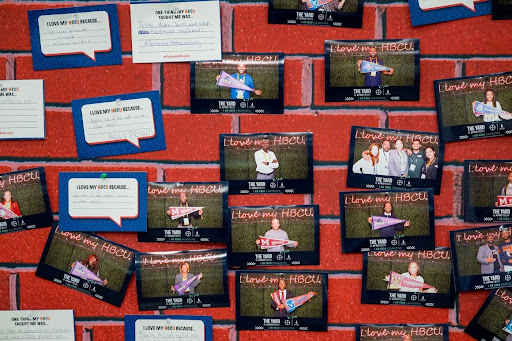
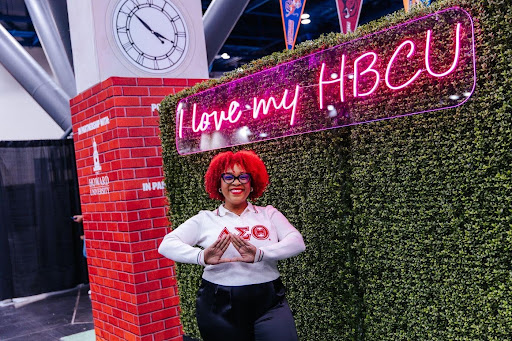
Some of the most meaningful spaces at AfroTech exist so people can find each other. In 2025, The Yard brought HBCU alumni together on the conference floor with a photo wall, a lounge and an alumni reception sponsored by Howard University. By the end of the week, the wall was covered with photos of attendees holding pennants from Morehouse, Prairie View A&M, Tuskegee and Tennessee State, each next to a handwritten note about what their school had taught them. Networking can sound transactional, but at The Yard, it looked like people who already had something in common sitting down to talk.
Students have their own entry point too, starting with a Student Orientation and AFROTECH U programming on the first day. Founders, executives and healthcare professionals each have programming built for them as well, so even in a crowd of 40,000, it is easy to find your people.
After the sessions end
At AfroTech, the day does not end when the sessions do. Official partner events run from late afternoon until midnight, and some companies host their own networking parties, separate from the general after-parties. When I went, Capital One hosted one where you could talk, dance and get to know people who work there. That is a very different kind of access from a conversation at a booth.
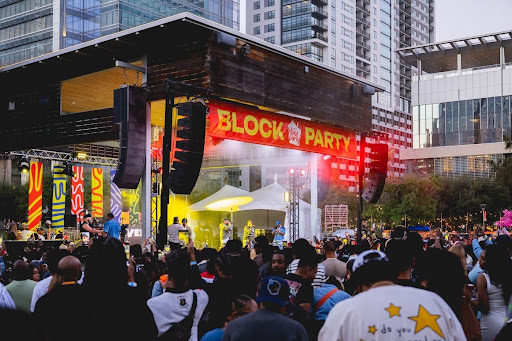
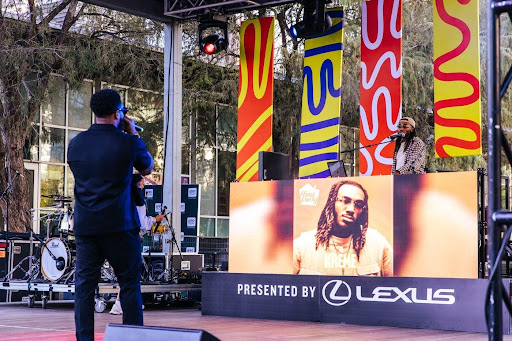
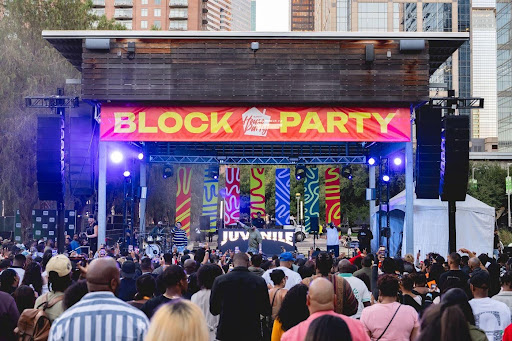
The Blavity House Party Block Party has also become one of the highlights of the week, an outdoor festival with DJs, live performances and brand activations. And for the 10th anniversary, Blavity is hosting Blavity In Black, a celebration built around the music and moments of the past decade, from 2016 to 2026, with an all-black, dressed-up dress code.
One piece of advice for these events: don’t arrive hungry, steering every conversation back to work. When you are networking socially, be yourself. People can tell when you are working the room, and they remember the people who were easy to talk to.
Why you need a plan
With this much happening, you need a plan. AfroTech runs from morning into the evening, partner events fill the night, and the 2026 agenda already lists 129 sessions across five days. Things move quickly, and without a clear goal, it is easy to let the week pass you by.
So decide what you want first. If you are there for a job, the expo hall is the center of your week. Bring printed résumés, know which companies you want to talk to, speak with current employees as well as recruiters and follow up soon after. Then use the evening events to meet more people from those same companies. If you are there to learn, choose your sessions and speakers ahead of time and visit the expo hall with specific questions. Founders will find their place in the Entrepreneurship programming, healthcare professionals in HealthStack and developers in the coding lab. And if you are mainly there for community, that is a good reason too.
Getting hired is also not the only way to measure a good week. You might leave with a mentor, a collaborator, a company you had never heard of or a single session that changes how you think about your career.
Where is AfroTech 2026 held?
AfroTech 2026 takes place November 2 through 6 at the George R. Brown Convention Center in Houston, Texas. This year is also a milestone: it is AfroTech’s 10th anniversary. The conference started in the Bay Area in 2016 with 650 attendees, moved to Oakland, went virtual during the pandemic and then relocated to Austin, where more than 25,000 people attended. Now in Houston, it expects more than 40,000.
The move to Texas was intentional. Nelson has said AfroTech brings tens of millions of dollars in economic impact to its host city, and the goal is to invest that in a city with a larger Black community. This year’s timing matters too. The conference falls during election week, about 48 hours after the midterms, and will host its first Policy Breakfast, bringing public leaders together with the companies shaping the next decade of technology.
If you are traveling in, AfroTech offers official hotel room blocks, and they tend to sell out early.
How much do AfroTech tickets cost?
- AI Edge ($350): One full day of AI training, Expo Stage access only.
- Premier ($625): General access, continuing education credits, professional development.
- Executive ($850): Premier benefits plus executive programming and peer networking.
- Medical ($925): Executive benefits plus HealthStack Conference and specialized workshops.
- All-Access ($2,250): VIP lounges, priority access and seating, exclusive programming.
Keep in mind that travel, hotel and meals add to the total. Before you pay out of pocket, ask your employer. Many companies sponsor AfroTech tickets as professional development, and AfroTech even provides a template letter you can send to make the request.
Who can attend AfroTech?
AfroTech is open to anyone 18 or older. The only exception is infants up to 18 months, who can attend with a parent or guardian. The conference is rooted in uplifting Black professionals in tech and beyond, and it welcomes people of all backgrounds. You can see that in the crowd: students, job seekers, founders, executives, creatives, healthcare workers, technologists and people curious about where their industry is headed.
So, is AfroTech worth it?
After two conferences in two cities, my answer is yes. AfroTech is for far more people than its name suggests, and what you get from it depends on what you bring. For some, it is a job lead. For others, it is a mentor, a collaborator, a new skill or a week surrounded by thousands of brilliant Black people building and leading. What makes the difference is knowing why you are going, because once you arrive, the week moves fast.
More AfroTech questions
Is AfroTech only for tech workers?
No. The 2026 agenda includes tracks in marketing, the creator economy, wealth, entrepreneurship, healthcare and civic technology, and the companies on the expo floor recruit for a wide range of roles.
Can you get a job at AfroTech?
Many attendees make hiring connections there. The expo hall is filled with companies recruiting on site, and registered attendees can upload résumés to Talent Infusion, AfroTech’s talent network.
Can my employer pay for my AfroTech ticket?
Often, yes. Many companies sponsor employee tickets as professional development, and AfroTech provides a template request letter on its employer sponsorship page.
Editor’s note: AfroTech is produced by Blavity Inc., the parent company of Blavity.