
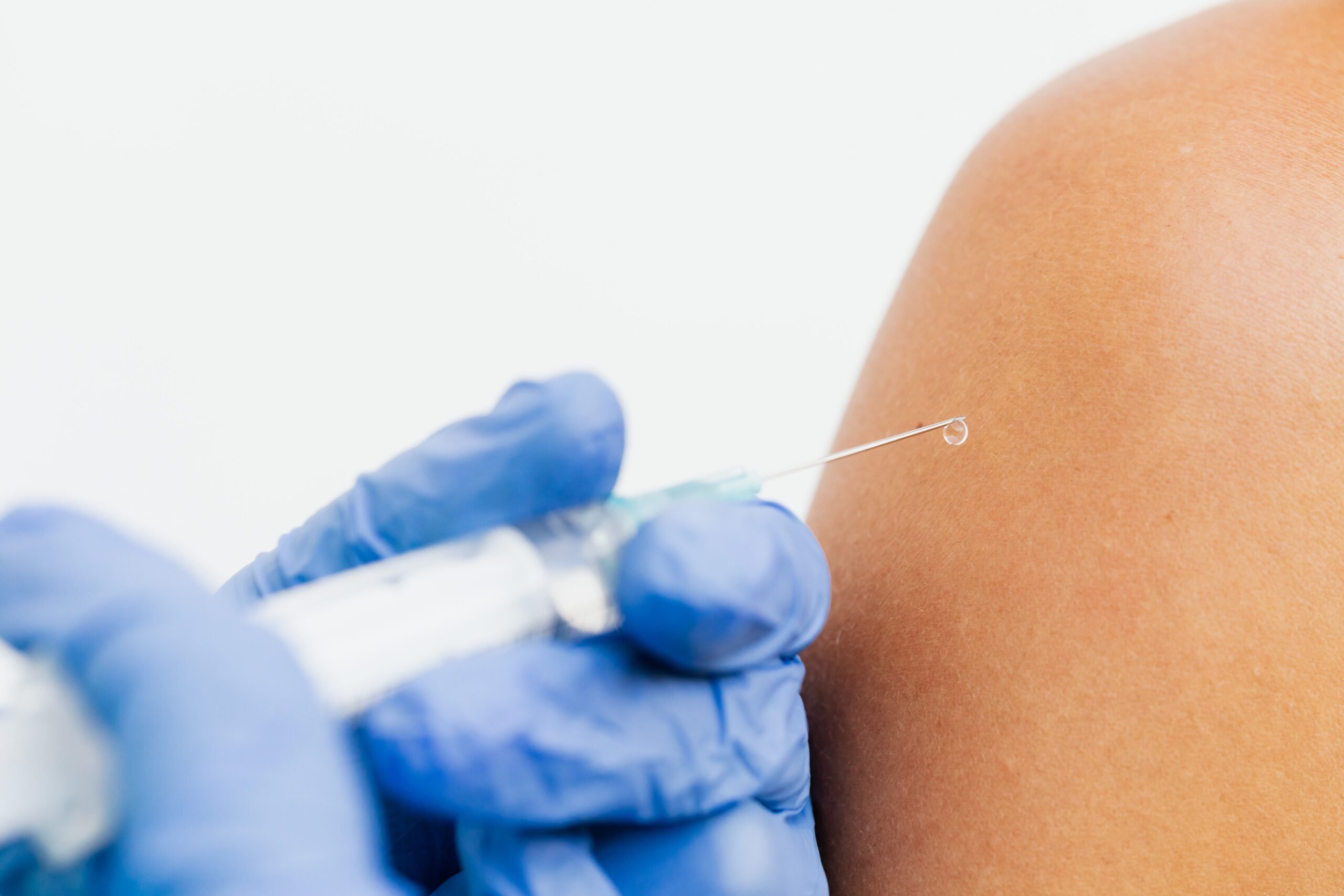
As kids head back to school, public health teams are keeping a close eye on preventable contagious illnesses in local communities. The Wisconsin Department of Health Services reported a measles outbreak in Iowa, Lafayette and Grant counties, with 102 confirmed and six probable cases as of Sept. 1. Health officials confirmed active local transmission was driving the spread, with nearly all infections occurring in unvaccinated children under the age of 18.
What makes measles such a major public health concern is just how incredibly contagious it is compared to other viruses. Because it spreads through the air, the virus can hang around in a room for up to two hours after an infected person leaves, making it easy to catch without direct contact.
Because kindergarten vaccine rates across the country have dipped below the threshold needed for herd immunity, preventable outbreaks like this one are resurfacing. Safeguarding vulnerable infants and families relies on recognizing symptoms like high fever and rash, understanding how the virus moves, and keeping routine immunizations up to date.
What is measles?
Measles, also known as rubeola, is a highly contagious acute infectious disease caused by a single-stranded RNA virus in the genus Morbillivirus, explains the Cleveland Clinic. Although declared eradicated in the United States in the year 2000 following the widespread use of measles, mumps and rubella (MMR) vaccine, the virus is still imported from international travel. It spreads easily among pockets of under-vaccinated people.
Measles spreads directly from person to person via airborne respiratory droplets or aerosolized particles from an infected person who is breathing, coughing, talking or sneezing. It has a basic reproduction number (R_0) of 12 to 18, which means that in an unvaccinated setting, a single infected person will infect up to 18 people.
What’s happening in your body
The measles virus binds to CD150 (SLAM) receptors on immune cells in the respiratory tract when inhaled.
The virus replicates quickly in alveolar macrophages and dendritic cells of the lungs, according to the National Institutes of Health (NIH). The infected immune cells then move to regional lymph nodes, where the virus enters the bloodstream (primary viremia). It then travels to other parts of the body, such as the liver, spleen, skin and central nervous system.
The virus attacks endothelial cells of capillary beds and the mucosal epithelial lining, resulting in generalized vascular dilatation and inflammation. This results in the classic maculopapular rash that extends from the hairline to the face and neck, then down the trunk and extremities, along with a high fever and watery conjunctivitis.
In addition, measles causes a dangerous biological effect called “immune amnesia,” which means that the virus kills off pre-existing memory B and T cells, resetting the immune system and leaving the patient extremely susceptible to opportunistic infections by bacteria and viruses for several months or years after the infection.
Why is measles making a comeback?
Tunde Rasheed, B.Sc. Researcher tells Blavity Health, “The recent nationwide outbreak of measles is a direct result of declining immunization rates among children and an increase in vaccine misinformation in the United States.”
The measles virus is extremely contagious, and a herd immunity threshold of at least 95% vaccination coverage in the population is needed to prevent further spread in the community, CNN notes.
But new CDC data show that, for the 2025–2026 school year, kindergarten MMR vaccine coverage in states such as Wisconsin declined to about 85.1%. As vaccination coverage drops below 90%, the protective community barrier breaks down, and imported or locally acquired cases can trigger large and rapid “clusters” of cases among unvaccinated children and those who are immunocompromised.
Causes of measles
Measles has a distinct sequence of clinical stages following a period of incubation (usually 10-14 days, but up to 21 days) after exposure.
The Mayo Clinic states that symptoms are due to the active virus destroying epithelial barriers and systemic immune inflammation:
- Prodromal Phase (The “3 Cs”): It starts with a high fever (usually 104 °F or higher), followed by cough, coryza (severe runny nose) and conjunctivitis (red, watery, light-sensitive eyes).
- Koplik Spots: After two to three days, small white spots with bluish-white centers, resembling salt grains, can be seen on the inner lining of the cheek inside the mouth.
- The Exanthem (Rash): A flat red rash of raised spots breaks out at the hairline, running down the forehead, neck, chest, arms and legs three to five days after the onset of the initial symptoms, and fading in that sequence.
Health risks and complications
Measles is NOT a harmless childhood illness; it is a serious systemic infection often resulting in debilitating and life-changing complications or death.
Potential for major complications include:
- Severe Pneumonia: Pneumonia is the leading cause of measles-related mortality among young children, occurring in up to 1 in 20 children with measles.
- Acute Encephalitis: According to the CDC, about 1 in every 1,000 infected children gets acute brain swelling (encephalitis) that can lead to permanent brain damage, intellectual disability or deafness.
- Hospitalization: About 1 in 5 unvaccinated people with measles in the U.S. will be hospitalized for respiratory problems or severe dehydration.
- Subacute Sclerosing Panencephalitis (SSPE): A rare but fatal neurodegenerative disease that develops 7-10 years after a primary measles infection, resulting in progressive mental deterioration, motor spasms and death.
- Pregnancy Complications: Pregnant women who have contracted measles have an increased risk for maternal death, spontaneous abortion, premature delivery and low birth weight.
Can you get measles twice?
No, because the vast majority of people who have either had natural measles or a complete two-dose course of the MMR vaccine have life-long, durable immunity. The NIH says the measles virus has a stable antigenic structure and very rarely changes, unlike influenza or SARS-CoV-2.
If your immune system can produce neutralizing IgG antibodies against the surface proteins of the measles virus, your memory cells will remember how to neutralize the virus if you encounter it again in the future, almost unheard of.
What to do about measles exposure and symptoms
Measles is a viral illness, so standard antibiotics will not affect it. Treatment of an active infection involves clinical isolation, supportive hydration, fever management and medical monitoring.
Children diagnosed with measles in health care settings should receive high-dose Vitamin A supplementation for two consecutive days, as recommended by the World Health Organization (WHO) and the CDC. Vitamin A helps repair the mucosal barrier in the eyes and gut, which is important and will help lower diarrhea rates, eye damage and death rates.
Post-exposure prophylaxis can prevent measles from occurring if given promptly to an unvaccinated person who has been exposed to the disease. Immediate passive protection against the infection (MMR vaccine given within 72 hours of exposure or immune globulin (IG) antibody (IgG) for infants under 12 months of age or pregnant women) may prevent or lessen the infection.
If you suspect that you or your child has been exposed to measles or is exhibiting symptoms such as a fever and a spreading rash, do not walk directly into a doctor’s waiting room or urgent care clinic. Check in with the facility in advance so that staff can be at a designated entry point, provide you with a mask and take you into a negative-pressure isolation room right away to prevent your exposure to other vulnerable patients.
Do adults need measles boosters?
Routine boosters are not recommended for adults who have had two doses of the MMR vaccine recorded in their health records or were born before 1957.
The CDC assumes that adults born before 1957 have natural immunity because they experienced decades of widespread measles transmission. Adults who have only one childhood dose (or killed-virus vaccine given from 1963 to 1967) should get a 2nd dose of MMR.
Similarly, a second dose is needed to provide full 97% lifelong protection to college students, international travelers and healthcare workers. If you have any questions about your immunization status, it’s safe to request an MMR vaccination or to look into your state’s online immunization registry.
When to see a doctor
If you get a high fever, runny nose, red eyes and a spreading red rash, you should seek medical advice, especially if you have not been vaccinated or were in a place with an active outbreak.
If a patient is having trouble breathing, severe chest pain, excessive drowsiness, difficulty waking up, confusion or sudden seizures, emergency medicine is required. Measles is diagnosed by obtaining a nasopharyngeal swab for reverse transcription polymerase chain reaction (RT-PCR) and a blood sample for measles IgM antibody testing.
“The best time to get vaccinated is before you’re exposed, but this is one of the vaccines that we can actually use after exposure too to prevent the likelihood of getting sick from measles,” says Dr. Ryan Westergaard, MD, PhD, MPH, chief medical officer with the Wisconsin DHS Bureau of Communicable Diseases.
Bottom line
Measles is an airborne viral illness that is highly contagious, characterized by a high fever and a rash, and can cause serious respiratory symptoms, brain damage and hospitalization in people who are not vaccinated. Recent outbreaks in Wisconsin illustrate the rapid spread of the pathogen in the absence of community immunity, and the declining rate of kindergarten vaccination is a major concern. The standard two dose series of the MMR vaccine offers 97% lifelong protection and is the most effective way to prevent infection and protect the community.
Frequently Asked Questions
What age is most at risk for measles?
Children under five years of age and adults over 20 face the highest risk of severe complications, hospitalization and mortality from a measles infection.
What are the odds of surviving measles?
In developed nations with access to modern medical care, the overall survival rate for measles exceeds 99.8%, though roughly 1 to 3 out of every 1,000 infected children will die from severe respiratory or neurological complications.
Citations
Cleveland Clinic. Measles: What Is It, Symptoms, Treatment & Prevention. Cleveland Clinic. Published February 28, 2025. https://my.clevelandclinic.org/health/diseases/8584-measles
Leonard VHJ, Hodge G, Reyes-del Valle J, McChesney MB, Cattaneo R. Measles Virus Selectively Blind to Signaling Lymphocytic Activation Molecule (SLAM; CD150) Is Attenuated and Induces Strong Adaptive Immune Responses in Rhesus Monkeys. Journal of Virology. 2010;84(7):3413-3420. doi:10.1128/jvi.02304-09
McPhillips D. US measles cases reach 35-year high, for second record-breaking year in a row. CNN. Published July 24, 2026. Accessed September 1, 2026. https://edition.cnn.com/2026/07/24/health/us-measles-cases-record
Glenza J. US kindergarten vaccination rates dip as exemptions hit record high. the Guardian. Published August 22, 2026. https://www.theguardian.com/society/2026/aug/22/kindergarten-mmr-vaccination-rates-dip
Mayo Clinic. Measles – Symptoms and causes. Mayo Clinic. Published April 23, 2025. https://www.mayoclinic.org/diseases-conditions/measles/symptoms-causes/syc-20374857
Centers for Disease Control and Prevention. Measles symptoms and complications. Measles (Rubeola). Published May 9, 2024. https://www.cdc.gov/measles/signs-symptoms/index.html
Clark SE, Sinn PL. Three paradoxical paradigms of measles virus. Ding S, ed. PLOS Pathogens. 2026;22(4):e1014135. doi:10.1371/journal.ppat.1014135
CDC. Questions About Measles. Measles (Rubeola). Published 2024. https://www.cdc.gov/measles/about/questions.html