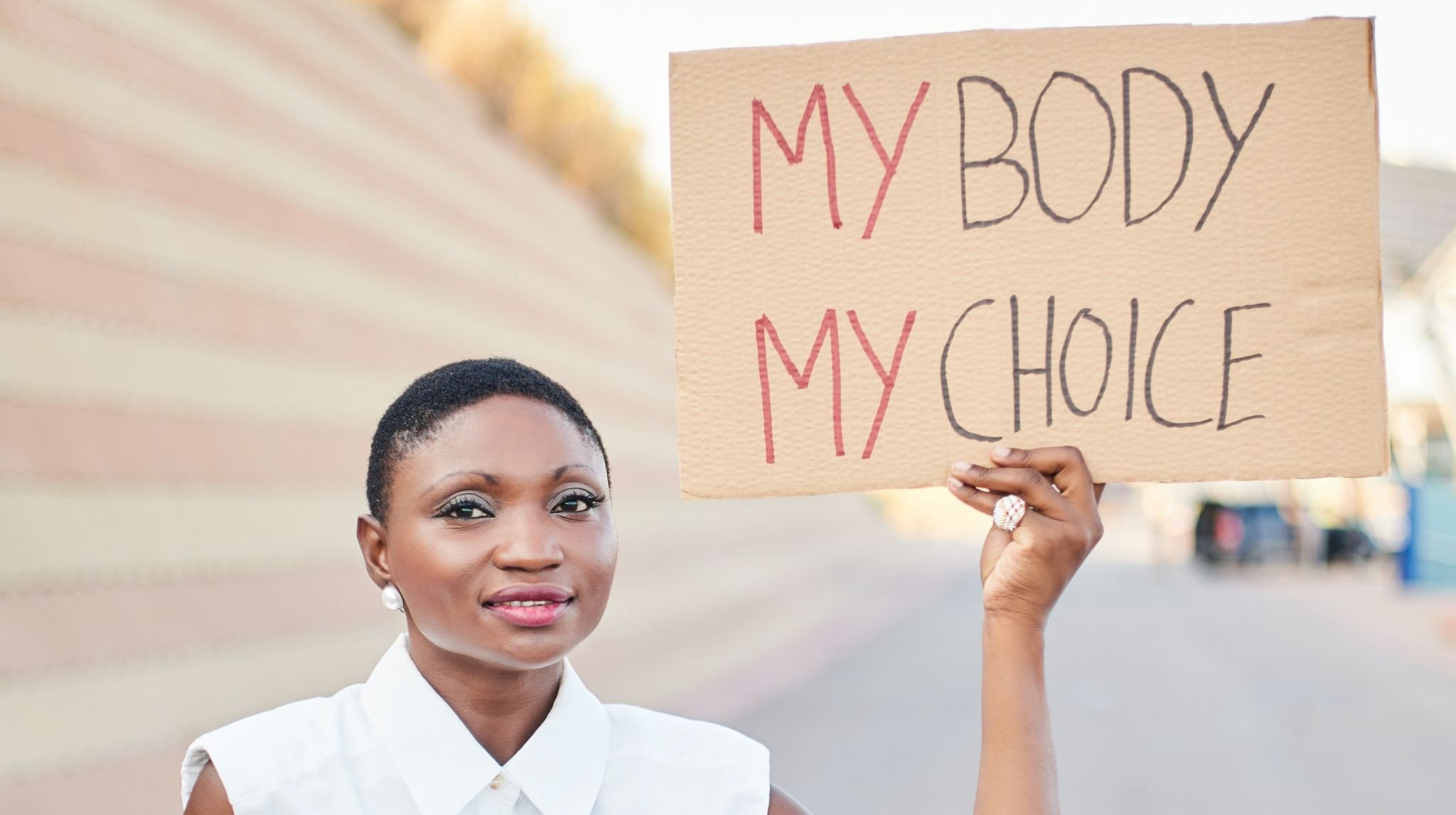
A Republican bill in North Carolina would implement the most restrictive abortion ban in the country. The proposal would not only outlaw abortion in all cases but would potentially criminalize forms of contraception as well. Most notably, the proposed law would actually allow abortion opponents to use deadly force against abortion providers or even against women seeking abortions.
NC abortion bill could allow abortion providers, pregnant women to be killed
Republican state legislators in North Carolina recently introduced House Bill 1232, which proposes an amendment to the state’s constitution to declare that “human life begins at the moment of fertilization.” After establishing a legal principle that life begins at conception, the amendment also holds that “Any person who willfully seeks to destroy the life of another person, by any means, at any stage of life, or succeeds in doing so, shall be held accountable for attempted murder or for first degree murder, respectively.” Furthermore, the amendment explicitly states that “Any person has the right to defend his or her own life or the life of another person, even by the use of deadly force if necessary, from willful destruction by another person.”
Critics quickly warned of the extreme consequences such an amendment would have. The proposed law would criminalize abortion in virtually all cases, with no exceptions stated for rape, incest or the life of the mother. This criminalization would allow for murder or attempted murder charges against doctors and health care providers who perform abortion procedures, as well as pregnant women who seek abortions. As written, the “deadly force” provision would actually allow citizens to kill abortion providers or even pregnant women seeking abortions in the name of trying to defend “the life of another person,” referring to the fetus or embryo. Experts additionally warn that the law would outlaw procedures like in vitro fertilization (IVF) that disregard unused embryos. Registered nurse Jen Hamilton noted in a video on social media that women who use IUDs for birth control, or medical professionals who implant these devices, could be killed under the law. “You can murder women for using birth control,” Hamilton warned.
Abortion bill unlikely to advance as key midterm elections approach
The bill would not implement these changes to abortion and reproductive policies. Rather, it would put the question on the November ballot in the form of a referendum for voters. It is unlikely that the bill will get to that point, however, as the proposal to amend the state constitution would first have to be approved by three-fifths of the members of each chamber of North Carolina’s legislature. As it currently stands, one of the bill’s two original co-sponsors has removed his name from the proposal. State Rep. Bill Moss says that he remains “firmly pro-life” but says that “unfortunately, portions of the bill’s current language have led to significant misunderstandings and differing misinterpretations,” leading him to withdraw his support. The remaining co-sponsor, State Rep. Keith Kidwell, has previously attempted to define legal personhood for fetuses and embryos; Kidwell recently lost the Republican primary for his seat.
Although Kidwell’s name and his proposed legislation are unlikely to be on November’s ballot, the anti-abortion bill was likely proposed with the general election in mind. The ultra-restrictive abortion proposal could have been a rallying cry to increase Republican turnout in a midterm election year that is thought to favor Democrats as opinions of President Trump sour. The abortion bill gambit could have backfired, however, by mobilizing Democrats in opposition to the radical proposal. Currently, North Carolinians remain divided on the issue of abortion, with nearly equal numbers supporting and opposing the current state ban on abortion after 12 weeks in most cases.
Even without a polarizing abortion debate, November’s election will be a closely watched contest in the state, with popular former Democratic Gov. Roy Cooper hoping to flip the U.S. Senate seat currently held by retiring GOP Sen. Thom Tillis.
The extreme abortion bill currently under consideration is unlikely to make it to the November ballot, but the existence of the proposal has likely sent a signal that some within the state seek to add additional abortion restrictions to North Carolina law. As such, voters in North Carolina may still be motivated by the fight over reproductive rights as they head to the polls for a vote that may significantly impact the state and could potentially determine who controls the U.S. Congress as well.