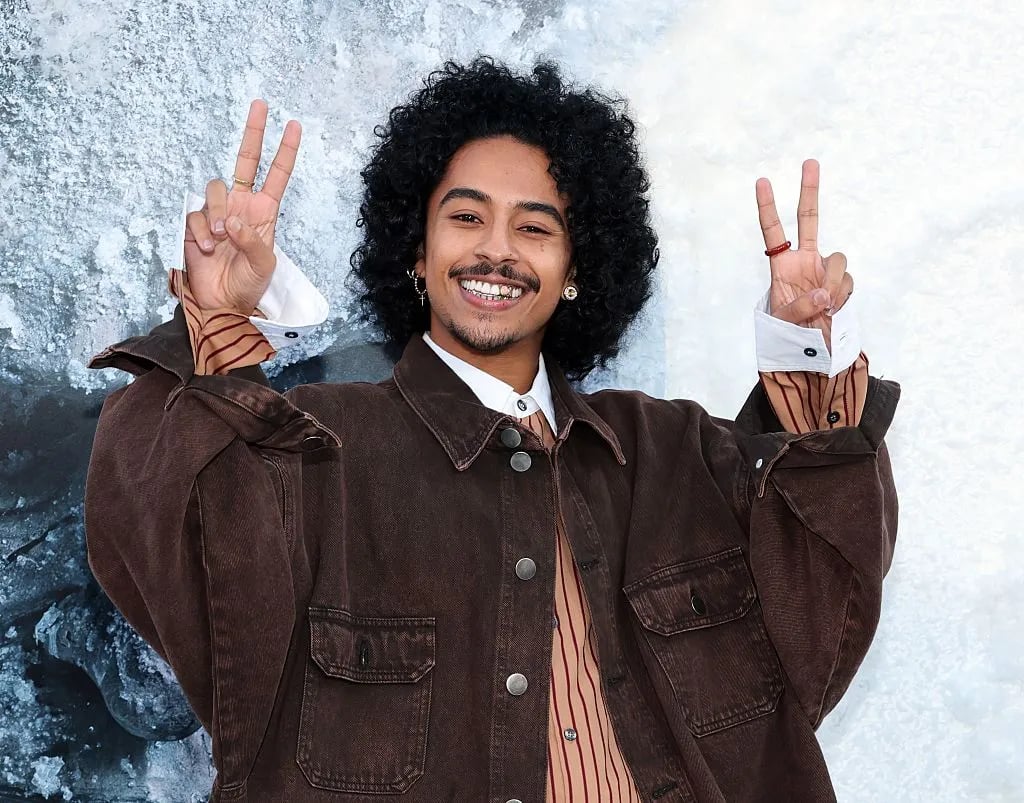
Princeton Perez is entering a new era — one shaped by hard-earned freedom, emotional honesty, and a passion for dance music. The Lost in a Daze EP is a departure from what fans may expect, but for Perez, it’s his most personal project yet.
“Oh, my God, the inspiration behind the Lost in a Daze EP — I was at a place where, in my personal life, I felt confused on who to trust and where to go,” he said in a recent interview with Blavity. “Then in my professional life, I felt the same way. I was having this battle with myself because I wanted to really show who I was through my art, but then I had all these preconceived notions. Then my personal life, I also was dealing with betrayal and dishonesty. I just was really lost.”
He found clarity through nature — and solitude. “I’m from LA, and I started going to the sunsets and just taking a little break and breathing. It was something about being in that atmosphere, listening to the music that I like, and imagining how I would be as an artist — that was really inspiring. I took the sunset as the first jump-off of this whole era… whatever that energy was gave me peace. It motivated me. It made me feel like nothing else mattered but me in this moment. I just wanted to put that into some music.”
Returning to his roots through dance music
“I’ve always been a fan of house music. I’ve always loved dance music, house music, my whole life,” he said when talking about the sound of his new project. “I think being in an R&B group, you tend to stick to what the fans want, what the team wants. While I’m at the gym, I’m listening to who I’m listening to, and I’m imagining my music.”
That imagination took shape when he started going out more and finding joy in the music that moved him. “I felt like I started dating later on in my life, so with that came going out and going to festivals. I just started experiencing different artists who were my age and were making the music that I wanted, and I just completely dove deep into that.”
He added, “When I was really sad and when I was really heartbroken or I felt lost, putting on some house music made me want to dance again. That’s also the core of who I am. Before all the music, I’m a dancer first. Whatever makes me want to get up and dance is what healed me, and it inspired these projects.”
For Perez, Lost in a Daze wasn’t just another release — it was a personal pivot. “I think just life happened. I needed to really meet people. I needed to experience everything that I experienced,” he said. “I needed time to just honestly get comfortable with the feeling of saying, ‘You know what? F what everybody thinks.’ That sometimes takes somebody a cool minute. As somebody who grew up in the industry and was a people pleaser, the last thing I would ever want to do is piss people off. I felt like me showcasing the fashion that I like or me showcasing the music that I like and just how I want to put that in my music — I would lose fans doing that, and that just really scared me.”
He added, “You get to a point when people in your personal life are just walking away, and you find yourself in a place where you’re like, ‘You know what? F it. I’m just going to put myself forward.’ Just time, really. I think right now is the best time, too. I feel like I’ve experienced enough life to put into my art.”
Letting go of the past — and reclaiming identity
Perez also reflected on how modeling and acting helped him rediscover his self-image. “Even some of the other career moves that I made with modeling and with acting — I was able to really discover myself through that and put that into my music, especially with my look,” he said.
“For the longest, the first thing I did after the group was cut all my hair off, because I felt like having long hair was the brand that they built, and I wanted to separate myself from that. It was always a fear if my hair looked a little too similar. Then I started modeling, I started booking gigs, and they wanted my hair out, and they started styling my look a little different. Then it gave me my confidence back, and then I was able to put it into my music. Yeah, it was just time — an experience for me to do that.”
When it comes to being remembered for his time in Mindless Behavior, he said his relationship with that chapter has shifted.
“Honestly, I’ve learned to just surrender to it,” he said. “I’ve been through so many different phases of that — being like, ‘I don’t want no one to ever think I’m associated with that group.’ Then, when the group first ended, I was like, ‘No, I’m proud to be in this. I’m coming from this.’ Then now it’s like this nostalgia feeling, which I’m not the biggest fan of. It’s like, ‘Ah, this is weird.’ I’ve just learned to surrender it.”
“Just from my own mental, I think right now my goal is to really just showcase who I really am through my art, because there’s Princeton and then there’s Jacob. For the longest, it was like Princeton was one person, Jacob is one person — keep it there. I don’t know, the more comfortable that I am with myself, I think that I want to just showcase Jacob through Princeton a lot more. That’s really just my own focus. Whatever people want to take from that is where people want to take it.”
He’s also aware of what his old group means to a generation. “It’s so crazy to me because I think being in it, for me personally, I knew we were a success story and we were big, but it isn’t until the older I get and I see people that I look up to — actors that I watch, musicians that I like — and they’re like, ‘Oh, my God, you were my first concert, my first celebrity crush.’ It really puts everything into perspective.”
He continued, “We were so sheltered from everything that… I mean, for the longest, we didn’t have social media. Our manager controlled all of that. We only saw each other, the hotel, and the stage for so long that, once the peak of everything was going on to the next, that’s when the rise of Instagram was coming around. We were in that weird space where people were still doing music video,s and there was still 106 & Park, but also, Vine and Instagram were being created. The nostalgia is so crazy. It’s cool to know. Just for me personally, it’s so dope to know that Black culture got affected by it, because that’s so much of who I am. Just to see people grow up — and we were a positive group — so it’s fun. I love it. A friend of mine was like, ‘You know what? If they’re going to remember you from something, just be thankful they remember you from something that was successful and winning.’ I’m like, ‘You’re right. Yeah, there’s nothing to run away from there.’”
His deepest influence
Prince remains a creative North Star. A few years ago, he said he’d like to portray him in a biopic, and that is still a goal.
“I think growing up, I had this weird obsession with artists who submerged themselves into their work,” he said. “They didn’t care what was happening. They would eat and sleep their art. I don’t know what it was. Maybe because it felt so dramatic. I thought it was so cool. He was the first artist besides John Lennon that I would just study and go, ‘Wow, he really wakes up, and he puts us onto this,’ and that’s the type of artist that I’ve always wanted to be.”
He continued, “He’s opened up doors for artists like me who want to be able to tap into the androgynous side and the pretty side and be able to balance both. I just have looked up to him so much. He passed on my birthday. He passed on April 21st, on my 20th birthday. I just know that I could do it justice, but you know what? It’s in God’s hands. I put it in the air. I love Prince so much. I’m the biggest fan of… I don’t know if that’s a genre… but men of that caliber — Lenny Kravitz, Jimi Hendrix, Freddie Mercury, Michael, Prince — all the men that weren’t afraid to dress the way they want and make the music that they want.”
Watch the full interview below: