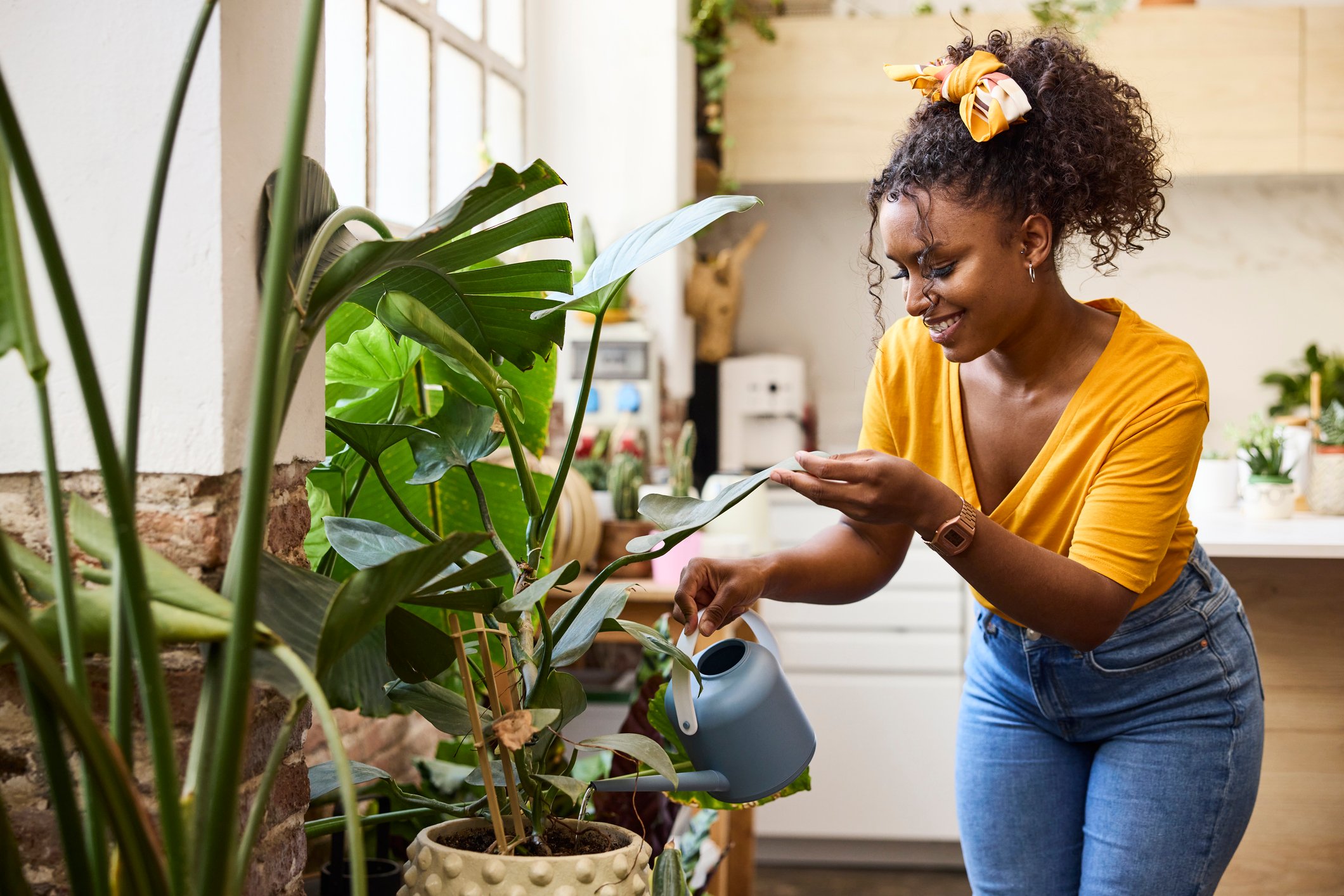
Students at Spelman College have developed an artificial intelligence system that allows anyone to communicate verbally with their plants. PlantGPT allows houseplant owners to monitor their plants’ health and needs via conversation.
What is PlantGPT?
PlantGPT is a tool using data sensors, artificial intelligence and text-to-speech technology to translate the needs and conditions of a plant into speech. It was developed by Spelman College students Joy Rutledge, Temple Dees, Grace Burch, Jessica Obi and Devyn Washington.
“PlantGPT is a way to be able to talk to your plant,” one of the students said in a video shared by Spelman College earlier in February. “When your plant is dying, you need to know what type of information or resources it needs — water, sunlight, nutrients. We created sensors and connected them to an AI so you can get real-time data and adjust the conditions.”
The team first developed the project using ChatGPT but later moved to TinyLlama, an AI model that runs locally without the need for internet access, according to Shine My Crown.
“My classmate, Grace Burch, initially started the project using an Arduino to gather data,” one student explained, per Shine My Crown. “That data was sent to an AI model, which generated tailored care recommendations, and then sent to a Python text-to-speech library so the plant could ‘speak.’ My contribution was switching the AI model to TinyLlama and expanding features like written responses.”
The project was launched for home gardening, but the students say they would like the technology to benefit local communities.
“The next step is expanding it to small farms and urban gardens,” a student said, Shine My Crown reported. “That way local farmers can detect plant health issues early, protect crops and help ensure food security for the community.”
The team gained national recognition for their invention
The team of students was formally recognized for their invention and came in first in the 2025 American Association for the Advancement of Science’s Making & Innovation Showcase competition hosted in September.
“The project started as a plant sensor that had the capacity to talk back to you! With the ingenuity of my teammates and advisor, we started thinking of ways to scale it and build more features on it each with our own touch and expertise,” Rutledge told the association in a news release. “We started asking: How can this tool not only monitor plant health but also empower people to better understand their environment? In what ways can we truly personify the plant so that you would want to care for it? Those questions pushed us to scale the idea and integrate new features that promote accessibility and sustainability.”
Rutledge hopes to pursue a career using technology to protect the earth’s biodiversity, climate and food systems amid climate change. Washington said she would like to have a career in either software or game development, according to the news release.
The team shared words of encouragement for HBCU students who may be interested in innovation, invention or entrepreneurship.
“Don’t wait for the perfect idea to get involved. Talk to people, get their feedback and continue to iterate,” Dees said, per the news release.
“A mentor once told me to “learn by doing,” so don’t wait to create or build just because you don’t know how yet. The best way to learn is to start doing!” Rutledge added.