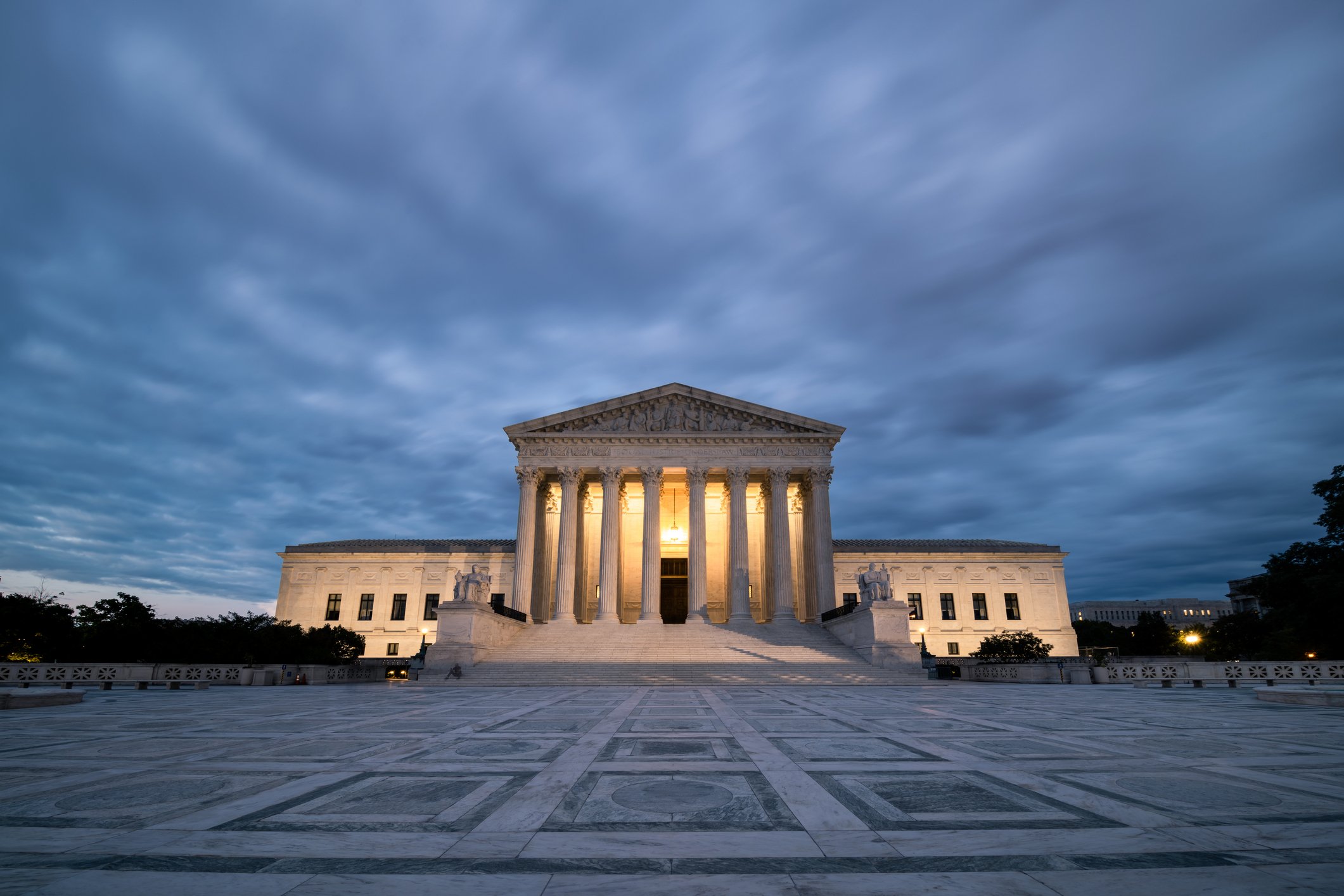
The U.S. Supreme Court’s ruling in Louisiana v. Callais is expected to have sweeping effects beyond congressional redistricting, with legal experts warning that Black political representation on local bodies such as school boards, county commissions and city councils could be at risk.
More than a dozen lawsuits have been filed over changes to Voting Rights Act
An NPR review of federal court records found at least 17 ongoing legal disputes involving state and local voting maps or election systems now facing new challenges under the court’s decision.
The ruling raises the legal standard for proving racial discrimination under Section 2 of the Voting Rights Act by shifting the focus to intentional discrimination, a legal standard that both experts and critics say is difficult to prove in court.
Michael Li, a redistricting expert with the Brennan Center for Justice, said the weakening of Section 2 protections could reshape local political power structures.
“What Section 2 did is it helped break down political fiefdoms that existed in the South in both partisan elections and nonpartisan elections. And the real danger now is you’re going to see the white majority in these places reassert its primacy and really design maps to lock it in,” he said, per NPR.
Li and other experts warn that the ruling could particularly affect local governments, where Section 2 cases have historically helped create districts that allowed minority communities greater opportunities to elect the candidates they want.
Minority representation at the local level could be at risk due to Supreme Court ruling
The ruling raises the burden for proving racial discrimination claims under Section 2 of the Voting Rights Act, a shift legal experts and voting rights advocates argue could make it harder for minority communities to challenge maps they believe dilute voting power.
Maureen Edobor, an assistant law professor at Washington and Lee University, said changes at the local level could revive systems that reduce minority representation, NPR reported.
“Instead of electing representatives from geographic districts, at-large systems really allow the majority to win. So in communities with racially polarized voting, that can actually mean that the majority population will win every single seat,” Edobor explained. “At-large districts can effectively render minority votes wasted. They won’t count because you’ll never clear the threshold of a majority required to elect the candidate of your choice.”
Advocates also fear the decision could create ripple effects for state and local districts nationwide. North Carolina state Rep. Rodney Pierce, a Democrat, recently dropped a lawsuit he and another Black voter filed in 2023 over the state’s Senate map. Pierce called the Supreme Court’s ruling on the Voting Rights Act “a meaningless law with no teeth.”
“Because of that decision, there is no longer a path open to us to protect the voting rights of Black citizens in my part of the State so we have dismissed the suit,” Pierce added in a statement obtained by NPR. “It’s a sad day for our democracy.”