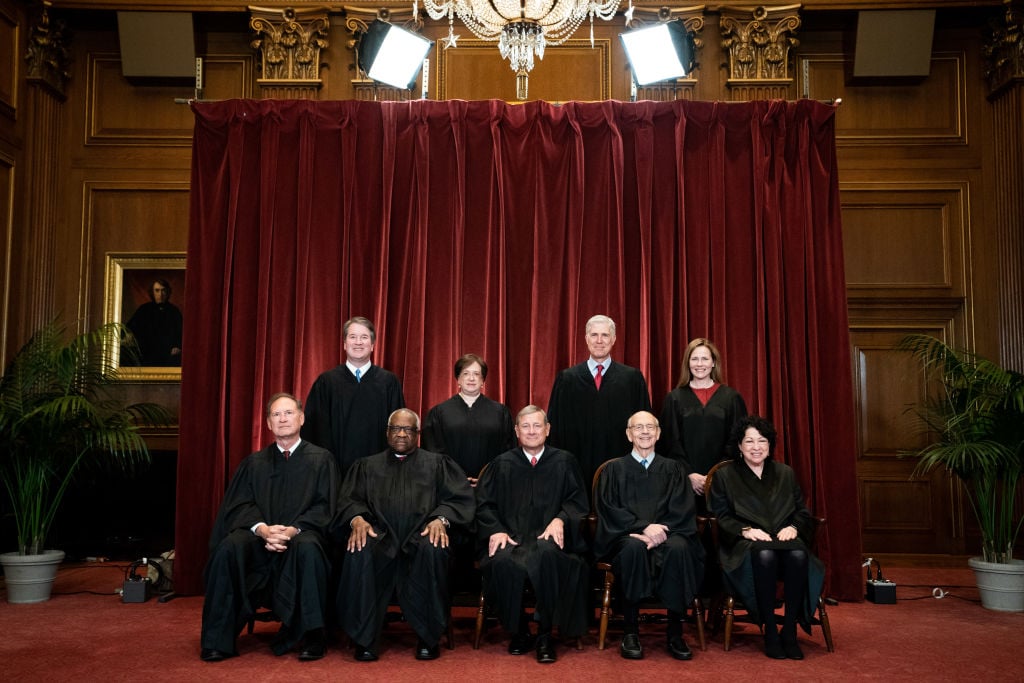
Senate Democrats have reintroduced legislation that would impose 18-year term limits on future Supreme Court justices, reviving a proposal they first unveiled in 2023 as part of a long-term push to reshape the nation’s highest court.
The proposal, led by Sen. Sheldon Whitehouse, D-R.I., faces little chance of advancing in the GOP-controlled Congress. But Whitehouse and the bill’s co-sponsors say reintroducing the legislation is part of a longer-term strategy to build public support for Supreme Court reform.
Whitehouse recently told Courthouse News the goal is to keep “trying the case” with the American public as debates over the court’s ethics, transparency and legitimacy continue.
What would the bill do?
The Supreme Court Biennial Appointments and Term Limits Act would replace lifetime active service on the Supreme Court with 18-year terms for future justices. Current justices would keep their lifetime appointments, meaning the proposal would apply only to people confirmed after the law takes effect.
Under the legislation, a new justice would be appointed every two years, creating a predictable rotation instead of vacancies occurring only when a justice retires or dies. After completing an 18-year term, justices would transition to senior status, allowing them to continue serving as federal judges in other capacities.
In announcing the bill, Whitehouse said the current system has turned every Supreme Court vacancy into a high-stakes political battle because each appointment can shape the court for generations.
“Americans deserve a Supreme Court they can trust,” the Rhode Island senator said in a statement. He argued that regular appointments and fixed terms would make the confirmation process less politically charged while helping restore confidence in the institution.
The legislation is the latest in a series of Democratic proposals aimed at reforming the Supreme Court following years of scrutiny over ethics controversies involving several justices, including questions surrounding undisclosed gifts and luxury travel.
Why does the bill matter?
Unlike presidents, senators or members of the House, Supreme Court justices currently receive lifetime appointments under the Constitution. As a result, a single justice can influence American law for decades.
In recent years, the Supreme Court has issued landmark rulings that have reshaped access to abortion, ended race-conscious college admissions, narrowed the Environmental Protection Agency’s authority to regulate greenhouse gas emissions and weakened parts of the Voting Rights Act. Those decisions have had far-reaching consequences for millions of Americans, including Black communities, underscoring why proposals to change how long justices serve continue to draw national attention.
One reason supporters settled on 18-year terms is that the proposal would allow every president to appoint two Supreme Court justices during a four-year term. The Brennan Center for Justice says that predictable schedule would make appointments less dependent on chance, such as when a justice retires or dies.
Opponents, however, argue that lifetime appointments help protect judicial independence by shielding justices from political pressure. Some legal scholars have also questioned whether Congress has the authority to impose term limits without first amending the Constitution, while others contend the proposal could withstand legal scrutiny because justices would remain federal judges after leaving active service on the Supreme Court.
While the proposal faces slim odds in the current Congress, Democrats are betting that keeping the issue in the public eye could make Supreme Court reform a more viable legislative priority in the years ahead.