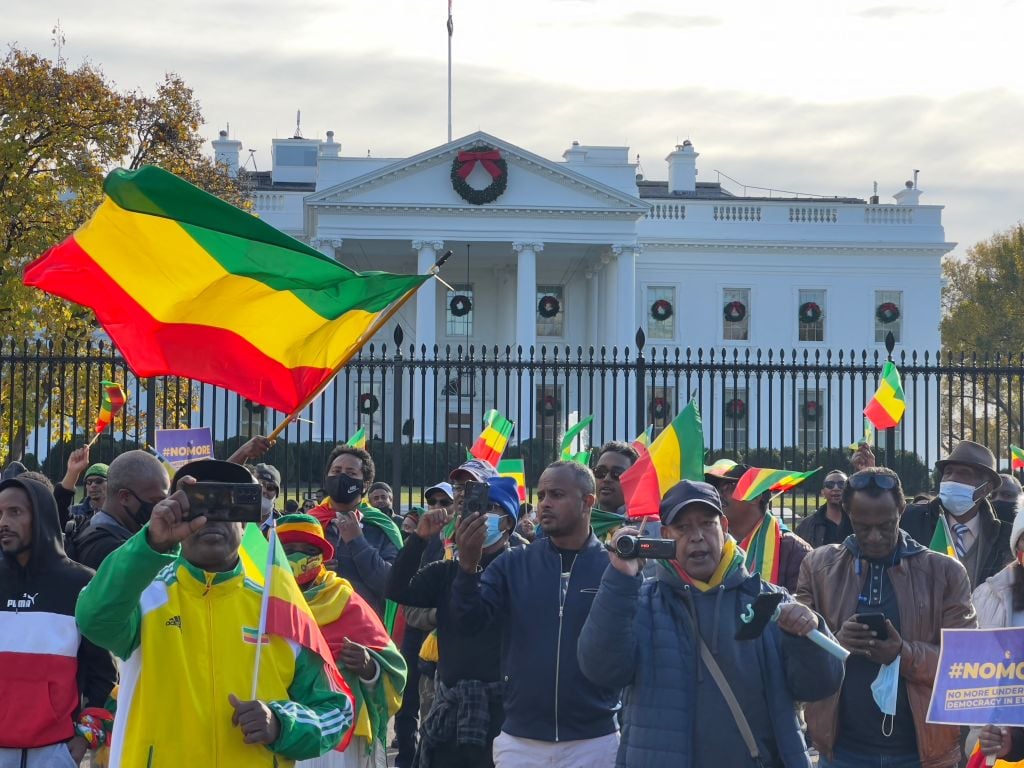
As President Trump continues his hardline crackdown on both legal and unauthorized immigration, a federal court has cleared the way for the administration to remove thousands of Ethiopians who had been legally residing in the U.S. The ending of protections for Ethiopians follows similar moves made against Haitians and others who had sought relief in the United States due to dangers in their home countries.
Judge allows Trump to remove deportation protections for Ethiopians in US
On Tuesday, US District Court Judge Brian E. Murphy ruled that President Trump could remove Temporary Protected Status (TPS) for approximately 5,000 Ethiopians currently in the United States. TPS is a federal policy that allows the administration to maintain a list of countries facing significant threats, such as natural disasters or civil unrest, and grants nationals of the listed countries a special status to temporarily live and work within the United States while conditions in their home country remain dangerous. A bloody civil war engulfed northern Ethiopia from 2020 to 2022, and President Biden in 2022 extended TPS designation to Ethiopians who had recently arrived in the United States. Biden’s Department of Homeland Security (DHS) Secretary, Alejandro Mayorkas, extended TPS for Ethiopians in 2024 due to ongoing danger in that country.
Under President Trump, DHS sought to cancel Ethiopia’s TPS designation earlier this year, a move that was blocked based on a lawsuit brought by the advocacy organization African Communities Together. While Judge Murphy’s ruling allows for the lawsuit to continue, including the accusation that Trump’s cancelling of TPS for Ethiopia “was motivated by racial or national origin animus and therefore violates the Fifth Amendment Equal Protection Clause,” the judge denied the request to block Trump from removing the TPS designation while the courts weigh the claims against the administration. Murphy’s ruling leans upon a recent Supreme Court ruling that affirms Trump’s authority to remove TPS designation for Haiti and Syria.
Despite possible racial bias, Supreme Court upheld Trump’s power to remove TPS
As Blavity previously reported, Trump had long sought to remove TPS designation for hundreds of thousands of Haitians residing in the United States despite legal and legislative pushback to this move. In June, the Supreme Court’s conservative majority ruled that Trump had the authority to remove Haiti, as well as Syria from the TPS list. The court rejected an argument that Trump’s goal of removing Haitians was based on racial bias; Justice Elena Kagan noted in her dissent that the court was ignoring blatantly racist statements made by Trump and members of his administration concerning Haitians. That decision has left hundreds of thousands of Haitians, as well as thousands from other countries such as Syria, no longer able to legally work in the United States and facing possible deportation.
Now, thousands of Ethiopians face similar uncertainty and threat of deportation. As African Communities Together stated in its previous legal filing:
Should TPS for Ethiopia be terminated, all Plaintiffs will face impossible choices: to uproot their lives yet again in search of a pathway to safety in a third country; to remain in the United States without lawful immigration status, at risk of imminent immigration confinement and removal; or to relocate to Ethiopia, a country still suffering violent conflict.
The Department of Homeland Security, meanwhile, responded to Judge Murphy’s ruling with a blunt message. “ALL TPS terminations are now IN EFFECT,” DHS posted on social media. “Those with terminated TPS should leave NOW. If they don’t, we will DEPORT them.”
The merits of the current lawsuit against the Trump administration have yet to be decided, but the Supreme Court’s recent ruling has cleared the way for the administration to potentially remove Ethiopians while the case is being decided. As the justices’ previous decision raises doubt that they will ultimately curb Trump’s TPS authority, thousands of Ethiopians now face the same risk of deportation that hundreds of thousands of people from Haiti and other countries are already experiencing.