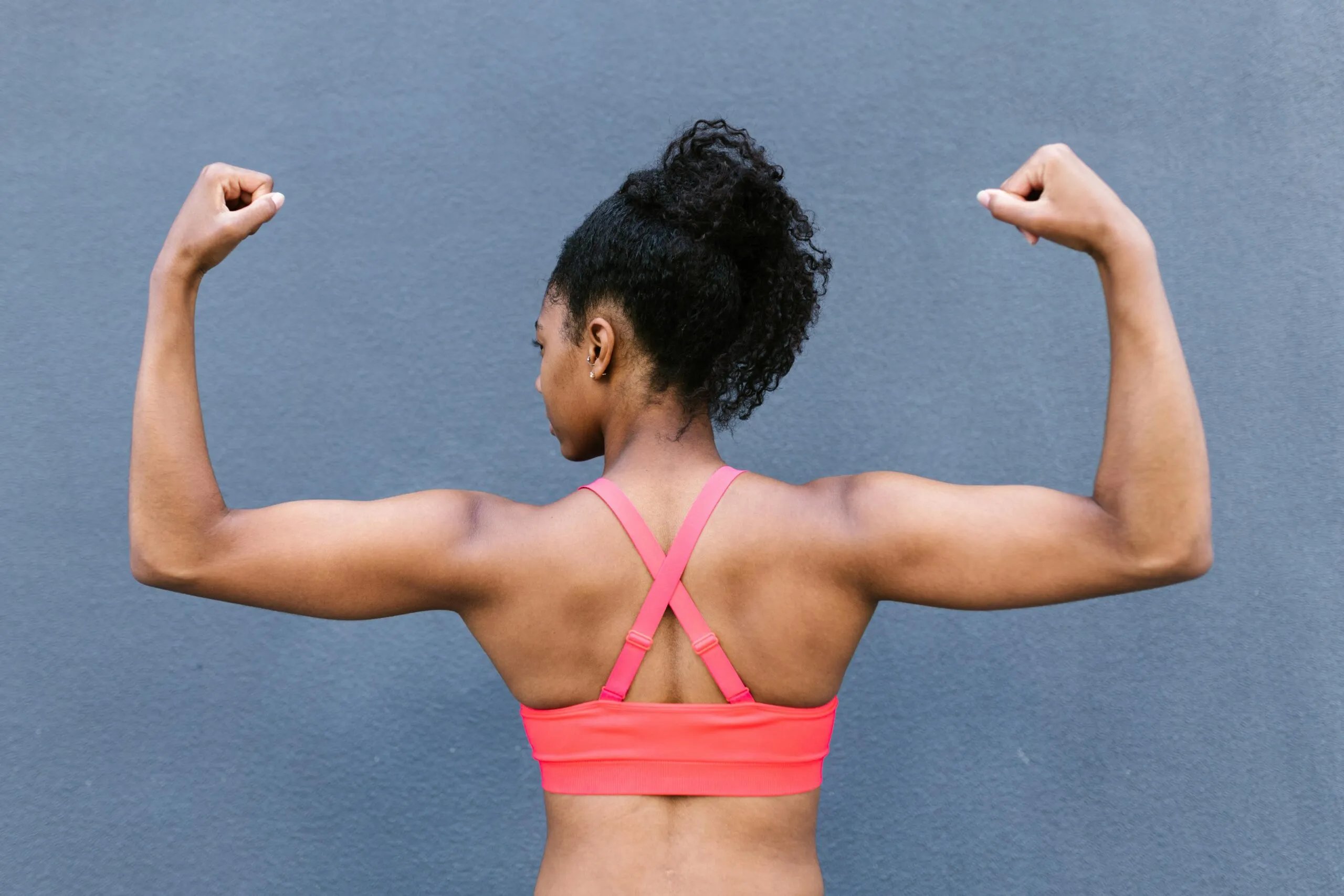
“Back day” has become a staple of fitness social media, often framed through aesthetics alone. Many people have shifted from making sure their “face card” doesn’t decline to focusing on their “back card.” Toned lats and sculpted shoulders are considered the visual markers of strength. But beneath the trending clips and gym selfies, it’s important to remember that back training is one of the most important investments women can make in how they move, feel, and carry themselves every day.
For women seeking strength that goes beyond appearance, back training plays a critical role in posture, spinal health, and long-term confidence. And when training is approached with an understanding of the menstrual cycle, those benefits can become even more sustainable.
Why Back Strength Is Foundational
The back is responsible for supporting the spine, protecting the discs, and helping the body remain upright during movement. Yet it is often one of the most undertrained areas, particularly among women.
“Most of the women I work with come in showing signs of poor posture — contracted necks, rounded shoulders, and a sore lower back,” says Alex Lee, Co-Founder, Physiotherapist, and Fitness & Recovery Expert. “In my experience, it’s usually a lack of strength in the back muscles. When those muscles get stronger, pain reduces and movement becomes easier.”
Lee’s perspective stems from years of observing how bodies move in real life. He believes that strengthening the back supports the entire upper body, creating a foundation that improves both daily function and long-term physical confidence.
The muscles that make up the back, including the latissimus dorsi, trapezius, rhomboids, and erector spinae, work together to regulate shoulder movement, stabilize the spine, and maintain posture.
“Well-developed back muscles assist in making you look taller by pulling your shoulders back,” Lee explains. “But a strong-looking physique comes from moving effectively. Function always precedes form.”
This relationship between movement quality and appearance is central to building a physique that looks strong because it is strong.
How Your Cycle Impacts Training
Hormonal changes throughout the menstrual cycle can influence strength output, fatigue levels, and recovery capacity. Many women experience higher energy and strength during the follicular phase, particularly in the days following menstruation, while the luteal phase can bring increased fatigue and a greater need for recovery.
Understanding these shifts allows women to adjust intensity without sacrificing progress. Heavier lifts and higher output may feel more accessible mid-cycle, while controlled movements, focused technique, and intentional recovery may be more supportive later in the cycle. Rather than limiting performance, this awareness helps women train in alignment with their bodies.
Training the Back Safely and Effectively
For both performance and longevity, safe mechanics matter. Lee explains that slow, controlled movements help protect joints while allowing the shoulders and spine to move through healthy ranges of motion. Proper breathing plays a key role in maintaining spinal control, while engaging deep stabilizing muscles helps protect the back during compound lifts.
Katie Breaker, Sales Director at BirdieBall Golf, whose work focuses on strength, injury prevention, and performance, agrees with Lee’s sentiments.
“We always tell our clients to engage their lat muscles first before performing any lifts,” Breaker explains. “Deep breathing creates internal pressure that protects the vertebrae during the entire set.”
Breaker also believes in the importance of cycling training intensity. Alternating between lighter, skill-focused days and heavier block days allows for muscle growth while reducing overuse injuries. According to her, this approach can increase force production by as much as 30 percent compared to training without cycling.
Common Back Training Mistakes Women Make
Despite the growing popularity of back workouts, form errors remain common and costly.
“The most common mistake women make is trying to train their lats with poor form on pulldown machines,” Breaker says. “Flaring the elbows can shred cuff tendons.”
She also points to improper cueing during deadlifts, where arm movement is prioritized over scapular retraction. This, she notes, can contribute to disc problems. After correcting these cues for one client, Breaker observed a noticeable reduction in pain within six weeks. This serves as a reminder that small technical adjustments can have outsized effects.
Effective back training requires attention to the upper, mid, and lower regions. Breaker’s team uses a “power pyramid” approach, with approximately 30 percent of focus on the upper back, 50 percent on the mid-back through movements like renegade rows, and 20 percent on lower-back holds. Weekly variation and video monitoring help reduce asymmetry and allow for spinal rotation without pain.
In practice, this balanced approach has led to tangible performance gains.
Exercises That Support Strength and Aesthetics
From a clinical perspective, Lee frequently incorporates movements such as lat pulldowns or assisted pull-ups to develop upper-back strength and improve posture. Seated rows and dumbbell rows help build the middle back, providing support for the shoulder blades. Face pulls relax the neck while maintaining proper shoulder alignment, while Romanian deadlifts strengthen the lower back and hips. Bird dogs and back extensions are also key for improving spinal stability and balance.
Breaker adds that assisted archer pull-ups with a wider grip can help carve out the lats while supporting shoulder health. Landmine Meadow’s rows to the hip help define the rhomboids, while slow-paced bird dog rows build endurance and improve posture within weeks.
Back training places significant stress on muscles and connective tissues, making recovery essential for progress. Recovery allows tissues to heal, adapt, and grow stronger.
“At Saunny, we use infrared heat therapy to enhance circulation, relax muscles, and decrease stiffness,” Lee explains. “Many clients feel looser and ready to train again after proper recovery.”
Especially during phases of the menstrual cycle when fatigue may be higher, prioritizing recovery can be the difference between consistent progress and burnout.
Strength That Shows Up Everywhere
A strong back changes how you move through the world, way beyond aesthetics. Breaker notes that strong rhomboids help square the shoulders, reducing slumping and promoting confidence. Clients report feeling significantly better both mentally and physically, while strong erector spinae muscles reduce low-back pain and make everyday activities easier.
“When a woman has strong erector spinae muscles, she feels stronger in every step and movement she makes,” Breaker says. “That confidence carries into everything she does.”
Navigating fitness with intention can be difficult to balance, but once you find that sweet spot, your back card will never decline.