For more than two decades, attorney Ben Crump has stood on the front lines of the nation’s ongoing civil rights battles.
Known as “Black America’s Attorney General,” Crump has been acknowledged as one of the Most Influential People of 2021 by Time, one of Ebony Magazine’s Power 100 Most Influential African Americans, and is listed among the National Trial Lawyers Top 100 Lawyers.
As the founder and principal owner of Ben Crump Law, he’s taken on some of the most high-profile and landmark cases tied to social and environmental justice for Black communities. He represented the families of George Floyd and Breonna Taylor, as well as the residents of Flint, Michigan, affected by the city’s contaminated water crisis. Through his courtroom advocacy, Crump has helped shape the national conversation around accountability, policing and systemic inequity. In 2019, he penned Open Season: Legalized Genocide of Colored People, a powerful reflection on some of his most consequential legal fights.
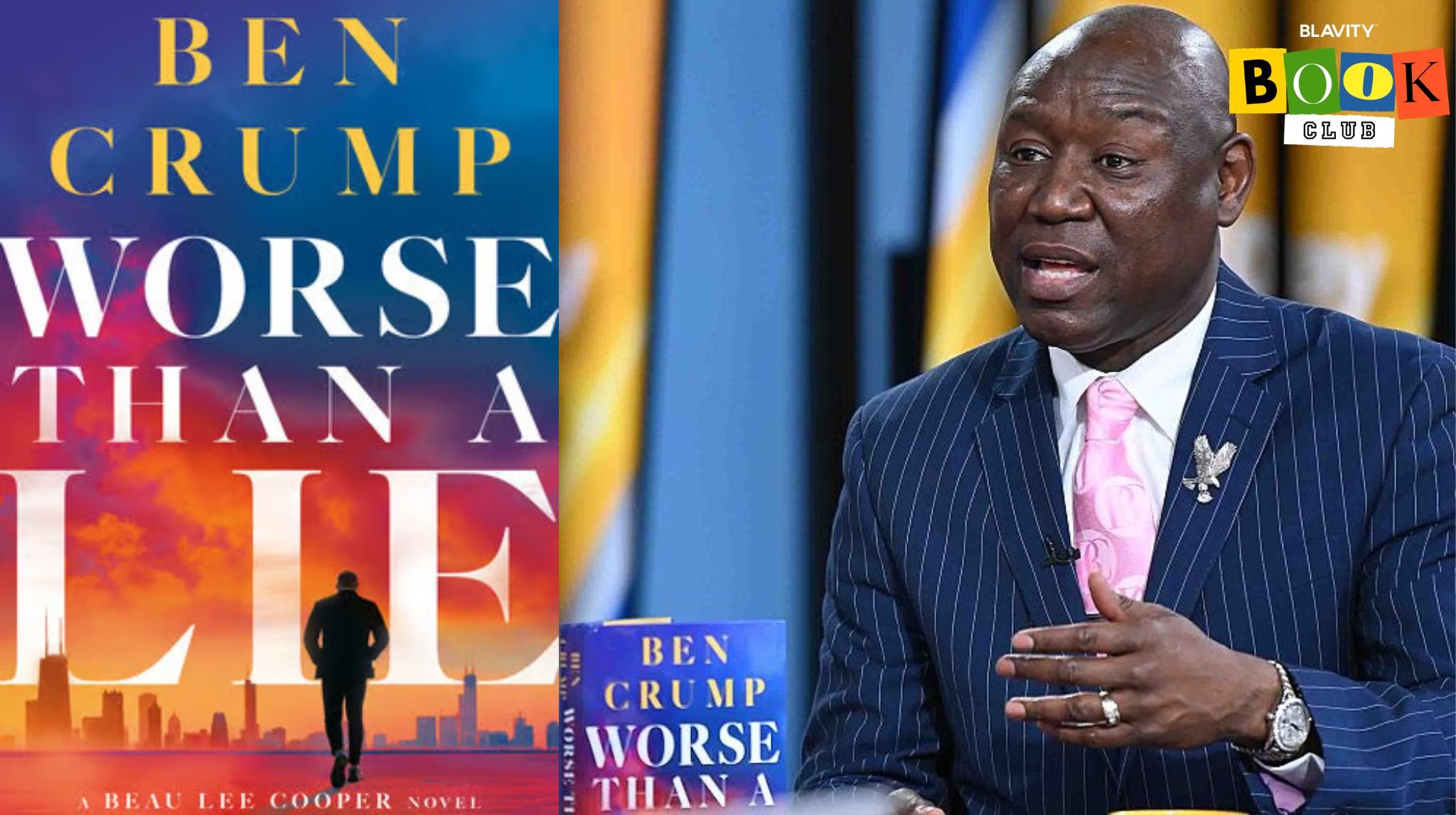
Now, Crump is channeling that same courtroom insight and intensity into fiction with his new legal thriller, Worse Than a Lie.
The novel follows Beau Lee Cooper, a civil rights attorney whose relentless pursuit of truth and justice echoes Crump’s career. Grounded in familiar social tensions, the story paints a vivid portrait of the legal and systemic challenges — and hard-won victories — that often define the Black experience in America.
Set on the historic night of Barack Obama’s presidential election, the novel opens with a former Black police officer, Hollis Montrose, shot by four white officers and left clinging to life. From that moment, Cooper is pulled into a complex legal and moral battle to uncover what really happened. The story serves as a sobering reminder that no matter how fiercely truth and justice are pursued, the system often resists accountability when Black lives are at stake.
Blavity spoke with Crump about how Worse Than a Lie serves as a creative extension of his lifelong mission to challenge America’s conscience and push the nation toward a more equitable vision of justice.
You’ve been one of the most consistent voices for justice in some of the most defining cases in modern history. What inspired you to channel that same pursuit of truth into a work of fiction?
My personal hero, Thurgood Marshall, once said, “Most people will never get to see what goes on in a courtroom,” and wrote his legal briefs to be very engaging and instructive. So, I began writing this novel to engage readers by telling a different kind of story, a civil rights legal thriller based on my work. My goal with this novel is to entertain and educate.
How did your idea of wanting to create a “Black superhero in the legal world” shape Beau Lee Cooper, and what qualities make him your version of a hero?
When I was a kid, I watched Perry Mason with my grandmother. Later, I read John Grisham novels, James Patterson’s Alex Cross series, and Michael Connelly’s The Lincoln Lawyer. Those stories mattered to me, but the lawyers and heroes were always white. I think it’s time for a Black legal hero to come from a novel like this and for audiences to see justice through the lens of Black and brown heroes.
Beau Lee Cooper and his partners form a dynamic team. Were they inspired by real people you’ve worked with or experiences from your career?
Like Beau Lee Cooper, my team at Ben Crump Law is made up of some of the most zealous attorneys and advocates, fiercely dedicated to the work we do each and every day.
The book opens on the night of Barack Obama’s historic election. Why did you choose to begin the book on that night, and how does it frame the story?
I intentionally created the allegory in which symbolic characters set in events would represent abstract ideals and moral principles, such as the election of the first Black president of the U.S. and the belief that we would have a post-racial America. It wasn’t true then, and it’s certainly not true today. In the book, at one point, someone essentially tells Beau Lee that he’s going to go out of business as a civil rights attorney because racism is over now that America has a Black president. I wanted to show the juxtaposition of those feelings of hope associated with President Obama’s election with the reality of what Black people were experiencing.
How did your real-life courtroom experiences influence the way you approached writing the novel?
Great lawyers are masterful storytellers. We have to frame our clients’ cases by telling their stories in a way that appeals to the jury’s hearts and minds. We also focus much of our advocacy on telling our clients’ stories in the court of public opinion to get ahead of narratives that try to dehumanize them. So, it’s only a natural progression that I use my real-life experience as inspiration to tell a masterful civil rights legal thriller wrapped in culture.
What were your biggest challenges when it came to balancing fiction with courtroom/legal facts and reality? I
I don’t recall having too much of a challenge. Honestly, the real challenge may be having so many experiences to pull from. By that, I mean we do not have a shortage of stories to tell.
The novel tackles police violence and systemic injustice — issues you’ve confronted throughout your career. How did writing about these topics through fiction feel different from arguing them in court?
It was therapeutic for me. I drew on the idea that books always inspire readers. Even as I was writing and re-reading the book, I became even more inspired and energized to continue the fight. I hopeWorse Than a Lie has the same impact on the reader.
In what ways do you see this story contributing to the conversation around criminal justice and truth in media narratives?
I endeavored to write a gripping legal thriller that pays homage to Black culture and Black liberty to the highest degree. We try to expose how a broken criminal justice system attempts to oppress the truth. The book grapples with biased investigations, excessive bail and false arrest, which many of our people deal with on a daily basis. The book demonstrates, in a very entertaining way, how stacked the odds are against you and how justice can still prevail.
Worse Than a Lie is the first novel in a series. Can you give us a glimpse of what’s next for Beau Lee Cooper?
Worse Than a Lie is a novel with a different kind of flavor, one not seen in the legal thriller genre. This is the first time you see a brother with a very diverse cast of social justice warriors using their brilliance, resources and community engagement to defy a biased legal system never meant to ensure marginalized people receive equal justice under the law.
What message do you hope readers, especially young Black readers, may take from Beau Lee’s fight for justice?
want to inspire the next generation of civil rights lawyers and social justice advocates, just like books like To Kill a Mockingbird and Native Son inspired me to become a civil rights lawyer.