
You are at the healthcare provider’s office, and they tell you that you need an MRI scan with contrast dye. You might feel a little nervous about having chemicals put into your body. You might wonder, “Do I really have to get the dye? Can I say no?” The quick answer is yes, you can absolutely refuse the contrast dye. You always have the right to refuse any medical test or treatment. It is your body, and it is your choice. However, before you refuse, you need to understand why the doctor wants to use it.
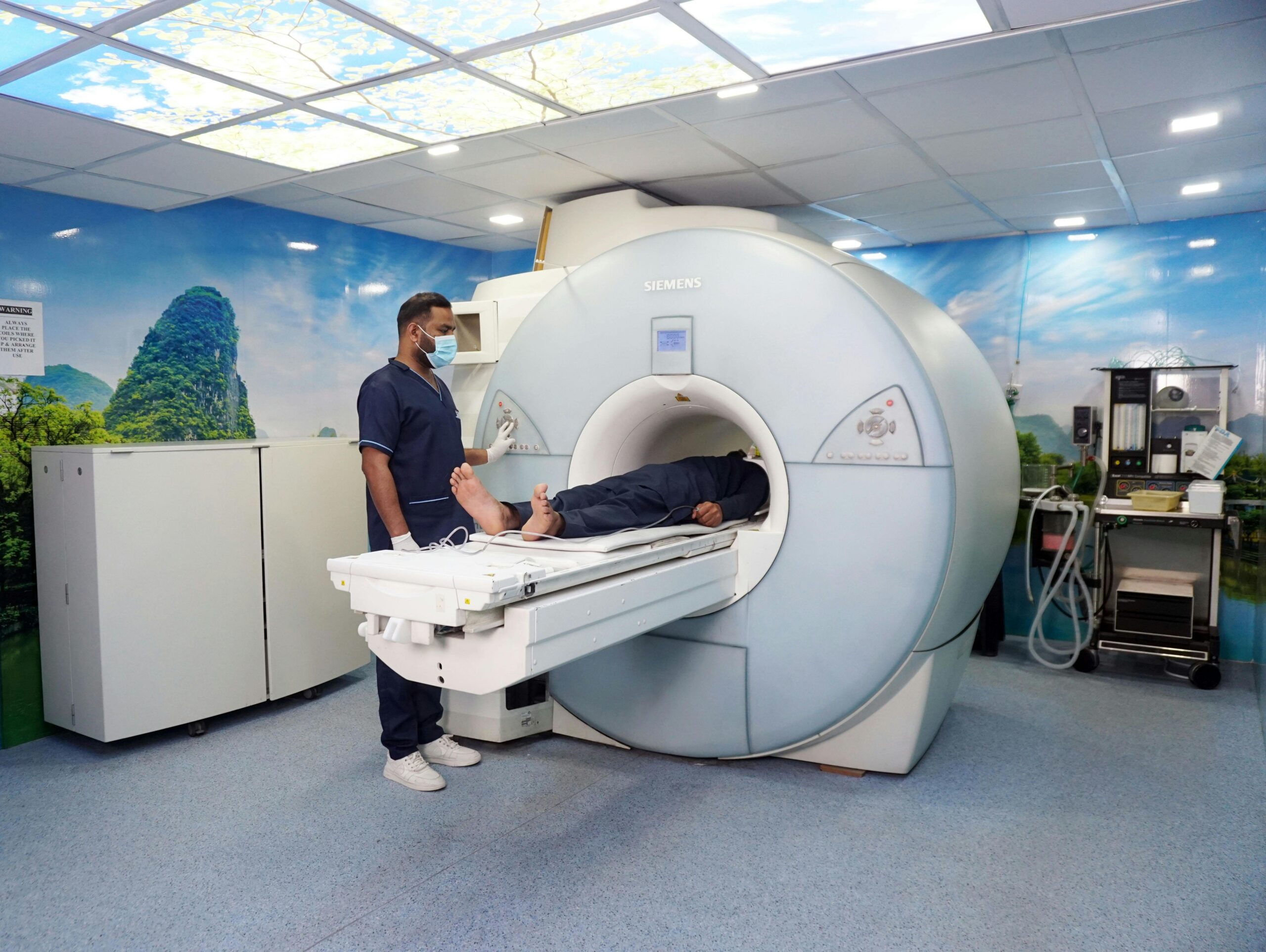
An MRI is a large, tube-shaped device that uses strong magnets to take pictures of the inside of your body. Sometimes the plain pictures just aren’t clear enough. The contrast dye helps show hidden problems, like a tiny cancer spot or a swollen blood vessel, that they might miss without it.
The science behind MRI contrast dye
The dye used in an MRI is not like the food coloring you put in cake frosting. It is a specialized medical liquid made from the rare earth metal gadolinium. When you get to your appointment, a nurse will insert a tiny needle into your arm and inject the liquid into your bloodstream. The gadolinium travels through your blood vessels and goes all over your body.
Tunde Rasheed, B.Sc. Researcher explains, “When the giant MRI magnets turn on, the gadolinium acts like a bright flashlight inside your body. This special metal makes certain tissues, such as tumors or infected areas, appear very bright white on the computer screen. This bright glow makes it incredibly easy to distinguish between healthy and diseased tissue.”
Why safety is a concern
For many years, healthcare providers thought that all the gadolinium dye washed right out of your body in your pee within a few hours. But recently, science has shown that this is not entirely true.
People started to worry when it was uncovered that tiny amounts of the heavy metal can actually be left behind. The Mayo Clinic notes that trace amounts of gadolinium can stay stuck inside a person’s brain, bones and skin for months or even years after their MRI test.
Even though healthcare providers have not found proof that this leftover metal causes brain damage or sickness in healthy people, the idea of having metal stuck in the brain makes many patients feel very nervous and want to refuse the dye.
Risks and side effects
Just as taking an aspirin or getting a vaccine carries risks, injecting contrast dye into your bloodstream does too. Most of the time, the side effects are mild and go away quickly.
When the cool liquid first touches your arm, you might feel a sudden chill run up your shoulder. You might also get a strange, salty or metallic taste in your mouth. Some people feel a little bit dizzy or feel like they need to throw up for a few minutes.
A more serious risk is an allergic reaction. A very small number of people are allergic to the dye. Their skin might break out in itchy red hives, or their throat might feel tight. There is also a very rare but dangerous risk for people with bad kidneys, called Nephrogenic Systemic Fibrosis (NSF). This rare disease causes the skin and internal organs to become thick and hard, like wood, according to the Cleveland Clinic.
Who should avoid MRI contrast dye?
Because the kidneys filter the dye from the blood into the urine, people with severe kidney disease should not receive contrast dye. If your kidneys are broken, the heavy metal will stay in your body too long and can cause the dangerous NSF sickness mentioned above.
Pregnant mothers are also usually told to avoid the dye. The Centers for Disease Control and Prevention (CDC) explains that doctors do not fully know if the heavy metal can cross over into the mother’s belly and hurt the growing baby. Unless it is a life-or-death emergency, the MRI will be done without the dye to keep the unborn baby completely safe.
Safer alternatives
If you decide you do not want the dye, or an expert determines it is not safe for you, there are other ways to get good pictures of your body. The easiest alternative is to ask for a “non-contrast” MRI. The healthcare provider will still take the pictures, but without the dye. Sometimes, plain pictures are perfectly fine for seeing what is wrong!
If you absolutely must use the dye to find a hidden tumor, you can ask for a “macrocyclic” gadolinium dye. This is a newer, safer type of dye that binds to the heavy metal much more tightly, making it far less likely to leave any metal behind in your brain, according to a PubMed Central publication.
You can also look for a hospital that has a newer “3 Tesla” MRI machine. These new machines have much stronger magnets, which means they can produce incredibly clear images using much less dye, according to the Mayo Clinic.
How many contrast MRI scans can you get in one year?
When it comes to contrast MRI scans, there isn’t a “one-size-fits-all” legal limit or a specific number that triggers an automatic “stop” in a calendar year. Instead, the frequency is determined by a careful risk-benefit analysis performed by your medical team.
The primary reason for restraint is the use of gadolinium-based contrast agents (GBCAs). While these dyes are excellent for highlighting tumors or inflammation, research has shown that trace amounts of gadolinium can remain in the body –specifically in the brain, bones, and skin – long after the scan is over. While the long-term health effects of this “gadolinium deposition” are still being studied, the FDA suggests a conservative approach, especially for patients who require multiple scans.
How do you protect your kidneys from contrast dye?
To keep your kidneys safe from medical dye, the most important step is to drink plenty of plain water, the National Kidney Foundation explains. This helps your body wash the dye out of your system through your pee. You should drink extra water before and after your test. Always ask your healthcare provider first whether your kidneys are healthy.
Think of your kidneys like a sponge that you use to wash dirty dishes. If you want to rinse the dirty soap out of the sponge, you have to run plenty of clear water through it. You should drink several large glasses of water before your MRI and keep drinking plenty of water for the rest of the day after you go home. This extra water helps your kidneys quickly flush the heavy-metal dye into your bladder and out of your body before it can cause any trouble.
What to do the night before an MRI
Getting ready for an MRI is very easy. You should relax and try to get a good night’s sleep. Usually, you can eat your normal dinner and breakfast unless your healthcare provider tells you to have an empty stomach for a special stomach picture. The most important thing to remember is to leave all your metal jewelry, watches and hair clips at home. The MRI is a giant magnet, and it will pull hard on any metal you wear!
Bottom line
You can always refuse contrast dye for an MRI, but doing so might make it harder to see serious hidden problems like tumors or swollen blood vessels. While the gadolinium dye is generally safe, tiny amounts can stay in the body, and it poses special risks for pregnant women and people with bad kidneys. By drinking plenty of water and talking openly with your healthcare provider, you can safely decide whether the dye is right for your health.
Frequently Asked Questions
How many people get an MRI with contrast?
Millions of people safely undergo these scans every year, and about one in three MRI tests ordered by healthcare providers include contrast dye.
What is the longest you can be in an MRI?
Most regular scans take about 30 to 45 minutes, but very complex scans that examine multiple body parts can keep you inside the tube for up to two hours.
Why can’t you drive home after an MRI?
You can usually drive yourself home just fine, unless the healthcare provider gave you a special medicine to make you feel sleepy and calm because you were scared of the tight tube.
Citations
National Institute of Biomedical Imaging and Bioengineering. Magnetic Resonance Imaging (MRI). National Institute of Biomedical Imaging and Bioengineering. Published 2025. https://www.nibib.nih.gov/science-education/science-topics/magnetic-resonance-imaging-mri
Mayo Clinic. MRI. Mayo Clinic. Published 2023. https://www.mayoclinic.org/tests-procedures/mri/about/pac-20384768
Cleveland Clinic. Nephrogenic Systemic Fibrosis (NSF): Causes, Symptoms & Treatment. Cleveland Clinic. Published 2023. https://my.clevelandclinic.org/health/diseases/17783-nephrogenic-systemic-fibrosis-nsf
CDC. Risk Factors and Pregnancy. Childhood Lead Poisoning Prevention. Published May 24, 2024. https://www.cdc.gov/lead-prevention/risk-factors/pregnancy.html
Al-Muhanna A. Gadolinium retention after contrast-enhanced magnetic resonance imaging: A narrative review. Saudi Journal of Medicine and Medical Sciences. 2022;10(1):12. doi:https://doi.org/10.4103/sjmms.sjmms_198_21
Mayo Clinic. Brain MRI (brain magnetic resonance imaging) – Mayo Clinic. Mayoclinic.org. Published 2025. https://www.mayoclinic.org/tests-procedures/brain-mri/about/pac-20582237
National Kidney Foundation. 6 Tips To Be “Water Wise” for Healthy Kidneys. Kidney.org. Published 2024. https://www.kidney.org/news-stories/6-tips-to-be-water-wise-healthy-kidneys