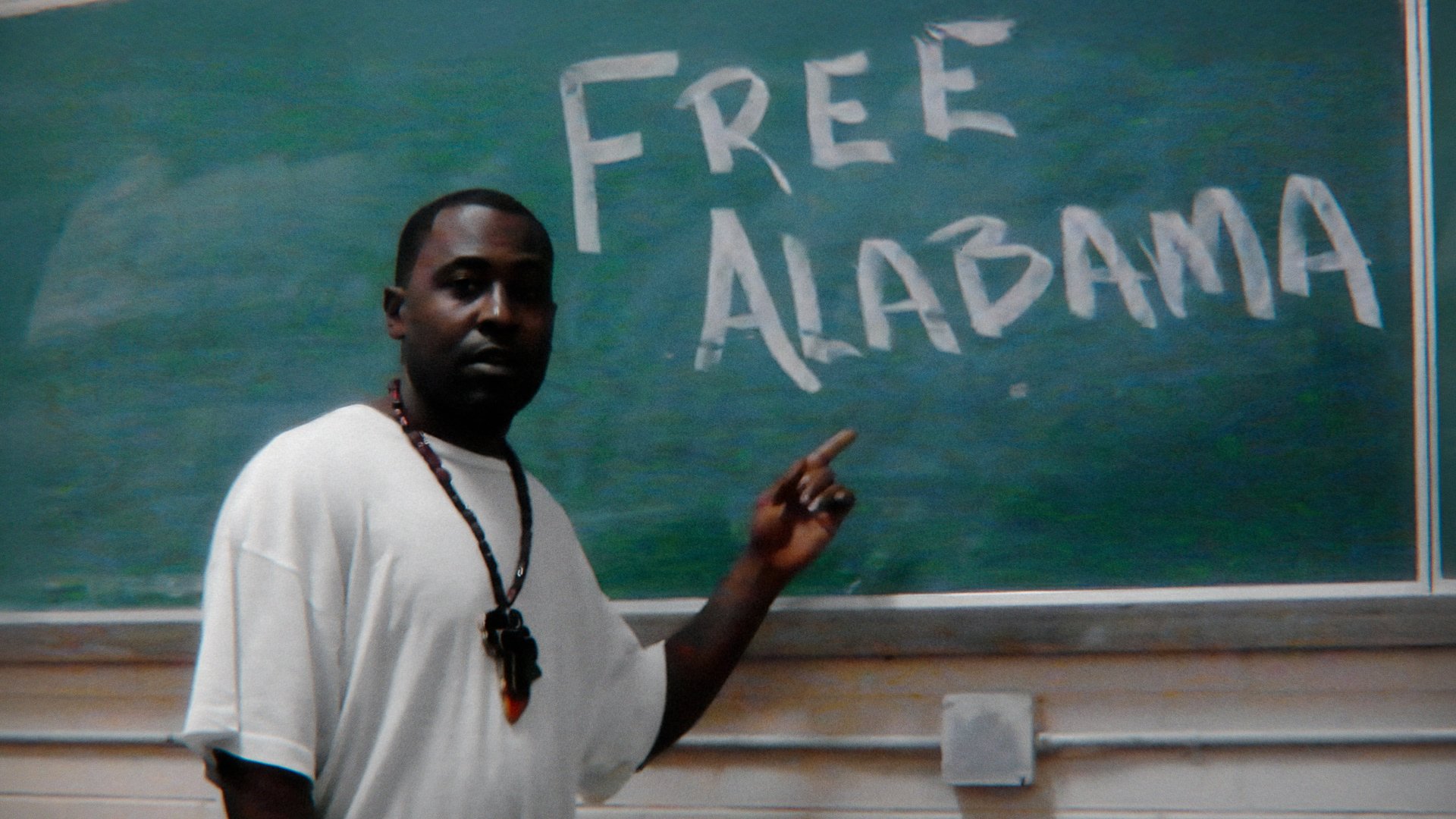
Alabama is in the throes of a prison crisis. With an incarceration rate of 898 per 100,000 people — which accounts for “prisons, jails, immigration detention, and juvenile justice facilities,” according to the Prison Policy Initiative — the state locks up a higher percentage of its population than any independent democratic country on earth. Those harrowing statistics are brought to life in HBO’s The Alabama Solution, a 2025 documentary directed by Andrew Jarecki and Charlotte Kaufman that is nominated for the upcoming Oscars’ Best Documentary Feature award.
Using real footage shot by Alabama inmates recorded on contraband cellphones, The Alabama Solution uncovers the violence and inhumanity at the core of Alabama’s penal system. The documentary’s findings — which are in line with conclusions of a 2020 Justice Department report on Alabama’s Department of Corrections, The Marshall Project reported — trace how rampant abuse, often at the hands of corrections officers, has affected families and local communities as well as how it has led to 1,500 prisoners dying behind bars in Alabama in recent years, Jarecki told Deadline earlier this year.
“They’re dying at the rate of around one person a day. That’s shocking. There’s no reason for that. And all the things that they’re dying of and all the things that are happening to them are preventable,” he told the outlet.
Here’s more on The Alabama Solution and the true story behind the documentary.
Jarecki and Kaufman visited an Alabama prison in 2019 and discovered conditions ‘ain’t fit for human society’
According to The Guardian, the road to The Alabama Solution began in 2019, after Jarecki and Kaufman visited Alabama’s Easterling prison. On the surface, it seemed like an ethical facility — Easterling allowed the filmmakers to capture its volunteer-run barbecue, which saw inmates, the majority of them Black, enjoy a sunny day, sermons and a good meal. Jarecki and Kaufman filmed them dancing and laughing, but they soon found that the barbecue couldn’t be further from the reality of their lives.
While at Easterling, Jarecki and Kaufman soon became acquainted with the horrific beatings, unreported violent incidents, and conditions that were described as “ain’t fit for human society,” per The Guardian. When Jarecki tried to investigate cries that traveled from dorms caked in dirt and debris, Easterling quickly shut down filming — a decision they said was to protect the filmmakers’ safety.
“It was very clear that there were areas of the prison that we were not allowed to see,” Jarecki said, according to The Guardian. “They use the idea that it’s all about safety and security because they don’t want you to understand what they’re doing. These prisons are like black sites.” During their time at the prison, the crew received this message repeatedly: “We don’t have access to the outside world. Please share this.”
That experience inspired Jarecki and Kaufman to reach out to men inside Alabama’s Department of Corrections, which also has the highest overdose, murder and suicide rates in the U.S., and they were connected with two long-incarcerated activists: Melvin “Bennu Hannibal Ra-Sun” Ray and Robert Earl “Kinetik Justice” Council. Ray and Council, along with Alabama inmate Ricardo “Raoul” Poole, gathered a network of inmates who provided Kaufman and Jarecki with secret recordings and eyewitness accounts of violence at the hands of guards, overcrowding and other inhumane conditions, Deadline reported.
‘The Alabama Solution’ also follows Sandy Ray, the mother of an inmate who was killed while incarcerated
The Alabama Solution also follows Sandy Ray, the mother of Steven Davis, a man who was beaten to death at the William E. Donaldson Correctional Facility in Bessemer, Alabama, in 2019, as she searches for answers and justice. According to the Alabama Reflector, in October 2019, Davis was rushed to UAB Hospital with critical injuries after an incident involving multiple corrections officers inside a “behavior modification unit.” He was taken off life support the next day and a medical examiner ruled his death as a homicide caused by “blunt force injuries of head sustained during an assault.”
Sandy found out on the news that the the Alabama Department of Corrections claimed Davis threatened officers with a knife and officers responded with physical force as self-defense, The Guardian reported. But several incarcerated witnesses told Ray’s lawyer that the knife was plastic and even though he yielded it immediately, four officers fatally beat him anyway.
According to a witness, one of the officers, Roderick Gadson, stomped on Davis’ head on the prison’s concrete floor “like a basketball,” according to The Guardian.
Sandy filed a wrongful death lawsuit against the Alabama Department of Corrections in 2020, and after years of trying to get justice for her son, Alabama Attorney General Steve Marshall told Ray he would not be pressing criminal charges against the officers involved, The Guardian reported. The Alabama Department of Corrections settled Ray’s lawsuit for $250,000.
“It never leaves you,” Sandy told the Alabama Reflector of her son’s death in 2024. “If they hadn’t killed him, I wonder if he’d be here right now helping me. I wonder if he’d have kids. What they took from me will never go away.”
Council, Ray and Poole were moved to solitary confinement despite not having ‘any pending disciplinary actions’ in January
In January, according to Jarecki and Kaufman, Council, Ray and Poole were removed from the general population of their respective prisons to a solitary confinement unit at Kilby Correctional Facility in Mt. Meigs, Alabama, Deadline reported. Their transfer came after activists outside of the prison system advocated for a non-violent prison work stoppage to protest inhumane conditions and forced labor embedded in Alabama’s prison system.
“None of them had any pending disciplinary actions,” Tuskegee-based civil rights attorney Tiffany Johnson Cole told Deadline. “As I understand it, they have not been given any official paperwork or documentation as to why they’re [in solitary]… We still are not really clear on why they were moved and how long they’re going to be there.”
Kaufman added, “What’s so disturbing is that [state prison officials] don’t have to give a ‘why.’ They can transfer people abruptly from the place where they are living into a new facility where they’re essentially being held incommunicado and take away all of their belongings, cut them off from their family members, cut them off from the outside world.”
Though Kaufman, Jarecki and Cole did not comment on whether Council, Ray and Poole’s removal from the general population was inspired by the labor stoppage, Julie Sledd, a woman The Associated Press described as being close to Poole, believes their transfers were “straight-up retaliation.” She continued, “They’ve all three been very involved in standing up for the rights of incarcerated citizens.”
In January, Council’s mother, Earnestine Council, and Ray’s mother, Ann Brooks, both said they hadn’t heard anything from their sons, according to The Guardian.
“I don’t know what is going to happen or what could happen,” Brooks said, according to Alabama Public Radio.
The Alabama Solution is available for streaming on HBO/HBO Max.