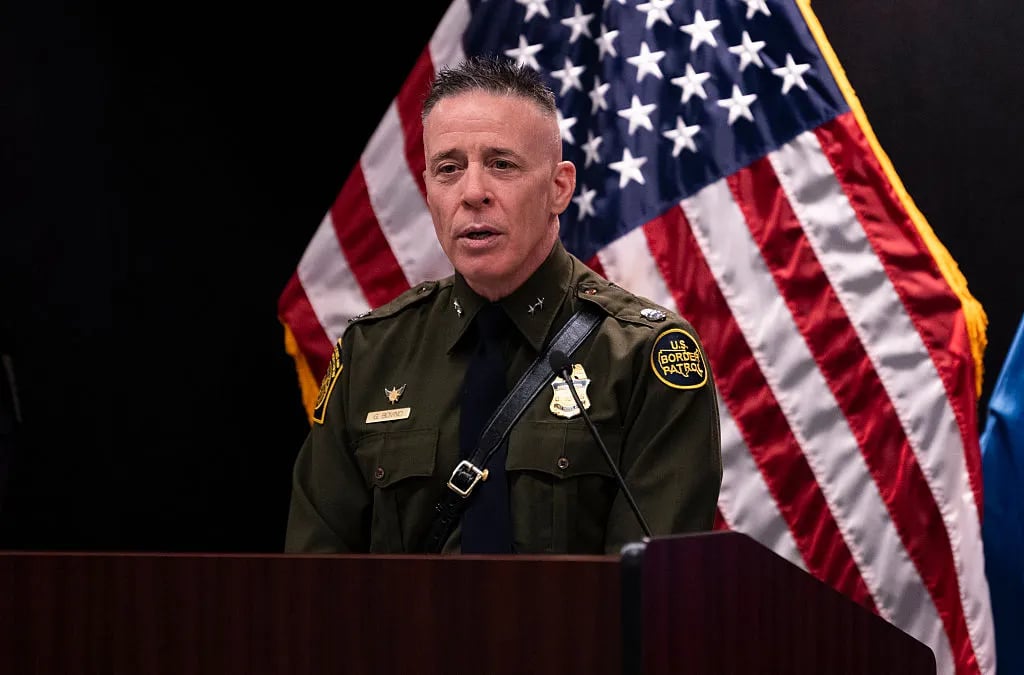
The man in charge of the controversial federal operation in Minnesota is leaving the state and may be losing his position within the Trump administration’s immigration enforcement forces. The change appears to be part of a larger shift as President Donald Trump responds to bipartisan anger over the killings of Renee Good and Alex Pretti.
Bovino, the leading Border Patrol commander, was ordered out of Minnesota
Gregory Bovino, who has become the leading on-the-ground commander in Trump’s aggressive immigration policy, is being pulled out of Minnesota after Pretti’s shooting death by Border Patrol agents on Saturday. The Atlantic reported that Bovino was being relieved of his position as Border Patrol’s “commander at large” and was returning to his post in El Centro, California. Citing several sources, including a Department of Homeland Security official, the outlet mentioned Bovino is expected to retire soon.
The decision to remove Bovino from Minnesota comes as criticism grows against him and against Border Patrol and Immigration and Customs Enforcement agents after the killings of Pretti and Good. In the immediate aftermath of Pretti’s killing, Bovino told reporters that the shooting resulted from “a situation where an individual wanted to do maximum damage and massacre law enforcement,” an assessment that didn’t match the video evidence of the encounter that ended with Pretti’s death.
Bovino also spent significant time on social media clashing with journalists and both Democratic and Republican critics of the immigration operation in Minnesota, such as Sen. Bill Cassidy, R-La.
CNN reported that the administration took Bovino’s access to his social media accounts after the flurry of online spats.
Bovino out as Trump changes tone on Minnesota
Tricia McLaughlin, the assistant secretary for public affairs at the Department of Homeland Security, disputed the circumstances surrounding Bovino’s removal, saying, “Chief Gregory Bovino has NOT been relieved of his duties” and repeated the Trump administration’s position that Bovino “is a key part of the President’s team and a great American.”
While it’s unclear what Bovino’s role will be going forward, his removal from Minnesota appears to be a step down for the man who has come to be the face of Trump’s aggressive immigration policies. Bovino, whose official role placed him in charge of a section of California’s southern border with Mexico, rose to prominence as the commander in charge of last summer’s federal intervention into Los Angeles. Bovino then led similar ICE and Border Patrol incursions into cities such as Chicago and Charlotte before being sent to Minnesota earlier this month.
Bovino’s removal appears to be part of a larger pivot Trump is making concerning Minnesota. The White House is distancing itself from rhetoric by top administration officials like Bovino, Homeland Security Secretary Kristi Noem and top Trump advisor Stephen Miller, who initially characterized Pretti as a dangerous “domestic terrorist.” Taking a more sympathetic tone, White House press secretary Karoline Leavitt said, “Nobody in the White House, including President Trump, wants to see people getting hurt or killed in America’s streets.” Trump has also sent border czar Tom Homan, who Trump characterized as “tough but fair,” to Minneapolis to oversee the immigration enforcement operation going forward. Trump also indicated on social media that he had “a very good call” with Minnesota Gov. Tim Walz about the situation in the state, and the president separately posted that he had “a very good telephone conversation with Mayor Jacob Frey, of Minneapolis. Lots of progress is being made!”
These efforts suggest that Trump may be lowering the temperature in Minnesota or at least distancing himself from the lethal actions of immigration agents and the false statements of others within his administration. As the administration shifts rhetoric and leadership concerning its operation in Minnesota, it remains to be seen if federal forces on the ground will change tactics and prevent more killings by agents in the state.