
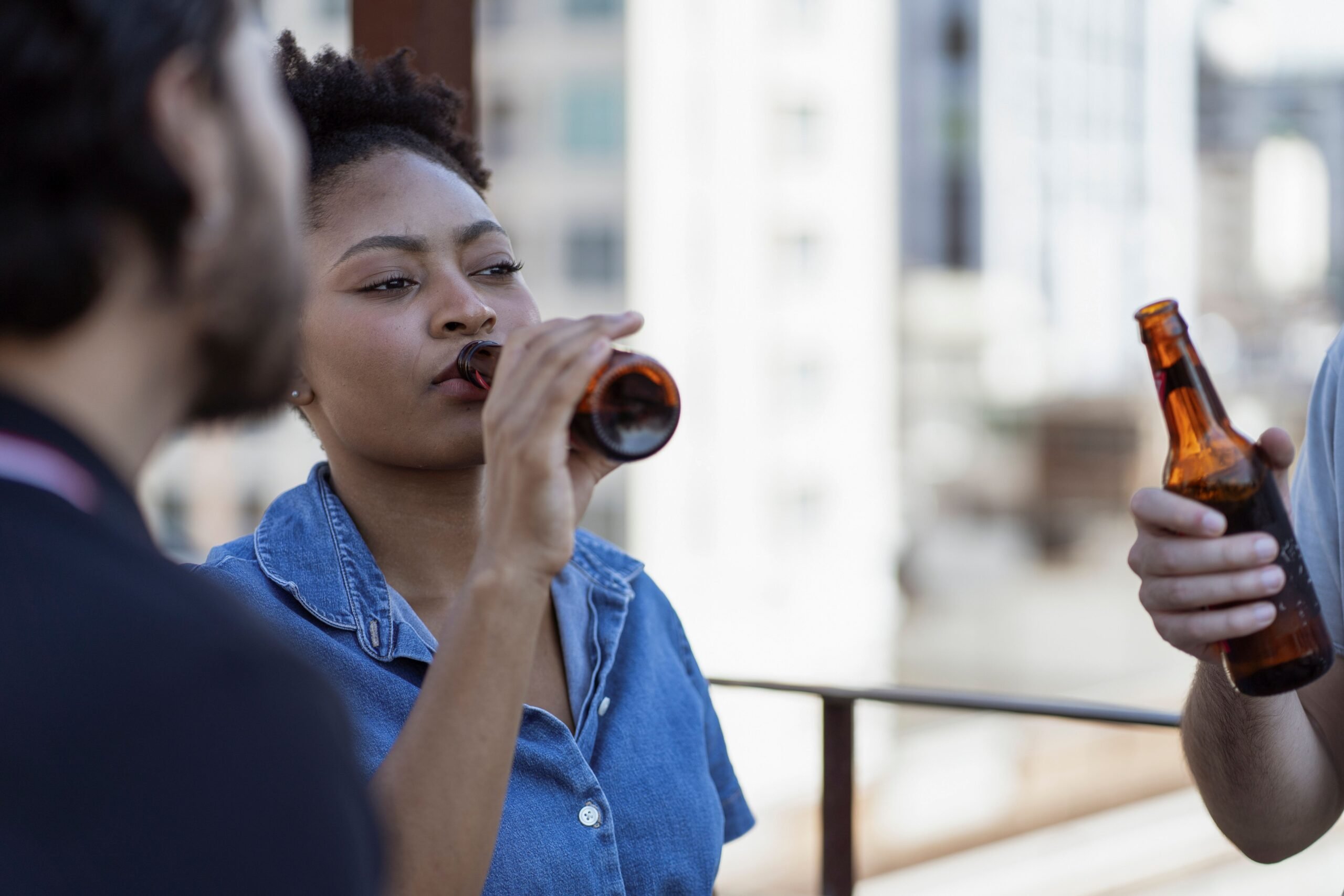
A new study has finally put a hard number on a warning researchers have been repeating for years. Alcohol-attributable cancer deaths in the United States doubled between 1990 and 2023, climbing from 11,361 a year to 23,126. The analysis came out of Sylvester Comprehensive Cancer Center at the University of Miami Miller School of Medicine. It was published in The Lancet Regional Health – Americas.
As it turns out, alcohol and cancer are connected across at least 10 tumor types, not just liver cancer. Risk increases with intake, and no amount has been shown to be safe. But alcohol is also a modifiable risk factor, which means the next drink you skip still counts for something.
The science behind alcohol and cancer risk
Your body treats alcohol as a chemical problem to solve. The liver breaks ethanol down into acetaldehyde, which the National Cancer Institute calls a toxic chemical and a probable human carcinogen. Acetaldehyde damages DNA and proteins directly. Recent evidence also suggests it forms in the mouth, where the oral microbiome may influence how much accumulates.
That is only the first pathway. The alcohol and cancer relationship actually runs through several at once. Alcohol generates reactive oxygen species, which damage DNA, proteins and fats through oxidation. It also blocks your body from absorbing nutrients tied to lower cancer risk, including folate, vitamin A and vitamin D. It raises blood levels of estrogen, which explains much of the breast cancer connection. Finally, it acts as a solvent in the mouth and throat, so carcinogens from cigarette smoke slip into the tissue more easily.
Genetics shift the picture for some people, too. Certain inherited variants of the enzymes that process alcohol allow acetaldehyde to build up faster. That buildup is why some drinkers flush, and it raises risk for esophageal and head and neck cancers among those who keep drinking anyway.
None of this is new science. The International Agency for Research on Cancer classified alcohol as a Group 1 carcinogen in 1987. That is the same tier that holds tobacco smoke and asbestos. The National Toxicology Program added alcoholic beverages to its list of known human carcinogens in 2000.
Why no amount is considered risk-free
Most people picture the alcohol and cancer problem as something that starts with heavy drinking. The evidence says otherwise. Women who have one drink a day carry a higher breast cancer risk than women who have less than one drink a week. Risk climbs further with heavy or binge drinking.
The 2025 Surgeon General’s Advisory laid the absolute numbers out plainly. Among 100 women who have less than one drink per week, about 17 will develop an alcohol-related cancer. That figure rises to 19 among women who have one drink a day, and to roughly 22 among those who have two. For men, the count moves from 10 to 11 to 13 across those same groups.
Federal guidance still caps moderate drinking at two drinks a day for men and one for women. Even so, that advisory called for the limits to be reconsidered, because alcohol and cancer risk rise together at or below them. It also recommended cancer warning labels on bottles and cans. Public awareness, meanwhile, remains far lower for alcohol than it is for tobacco.
Ankrehah Trimble Johnson, D.O., a board-certified family medicine physician and owner of Brownstone Healthcare & Aesthetics in Birmingham, Alabama, frames it this way for her own patients. “There is no safe number of alcoholic drinks that will totally decrease the risk of cancer. However, the risk appears to grow with the more alcohol you consume regularly. So cutting back is a great idea. If you decide to drink socially or on holidays, just know that it does not eliminate your risks.”
Which cancers are linked to alcohol?
Liver cancer accounted for the most alcohol-attributable cancer deaths in 2023, at 7,686. Esophageal cancer followed with 4,902, then colorectal cancer with 3,818. Liver cancer also showed the steepest climb over the study period, with its age-standardized mortality rate rising 113.9% since 1990.
Men accounted for 17,477 of the 2023 deaths, compared with 5,649 among women. Adults 55 and older accounted for 19,460. But the younger numbers deserve the most attention. Among adults ages 20 to 54, colorectal cancer was the leading alcohol-attributable cancer death in men, while breast cancer ranked first in women. In both groups, colorectal cancer surpassed liver cancer.
“The most surprising finding was the breadth of alcohol’s potential impact across cancer types,” said Chinmay Jani, M.D., the study’s corresponding author and chief fellow in hematology and oncology at Sylvester. He noted that the liver connection is widely recognized. Alcohol’s contribution to colorectal, esophageal, breast, pancreatic and prostate cancers is far less understood by the public.
Geography mattered too. In 2023, Washington, D.C. recorded the highest alcohol-attributable cancer mortality rates in the country, while Utah recorded the lowest.
What the alcohol and cancer gap means for Black communities
This study cannot answer the question of disparity on its own, and the authors say so directly. The Global Burden of Disease database lacks patient-level data on race, ethnicity and social determinants of health. That gap limits any read on how the burden falls across groups.
Other research fills the space, and it is not reassuring. According to American Cancer Society statistics for 2025, death rates among Black people run 40% to 50% higher than among white people for colorectal, breast, cervical and liver cancers. Those are four of the cancers most closely tied to drinking. Black women are 38% more likely to die of breast cancer than white women, despite a 5% lower likelihood of being diagnosed.
Then there is the liver. The Southern Community Cohort Study followed more than 81,000 mostly lower-income adults. Moderate drinking was associated with roughly double the risk of liver disease death among Black participants. Researchers found no significant association at that level among white participants.
Researchers call this pattern the alcohol harm paradox. Jessica B. McClintock, Ph.D., a licensed psychologist practicing in California, Nevada and New Mexico, points to what sits underneath it. Black Americans tend to suffer more alcohol-related illness and death even while drinking the same amount or less than other groups on average, she said. She attributes that to riskier drinking patterns, higher-risk beverage types and less consistent access to care.
Minority stress theory adds another layer, McClintock said. Chronic exposure to racial discrimination and structural oppression creates an added baseline of psychological distress. So when alcohol enters that picture, “It’s more likely to serve as a coping mechanism for that stress rather than casual use, which can make drinking more damaging per drink.”
Does quitting alcohol reverse cancer risk?
Partly, and slowly. Studies show that stopping alcohol is associated with lower risks of oral cavity and esophageal cancers. The evidence also points toward possible reductions for throat, breast and colorectal cancers. But the National Cancer Institute is direct about the timeline. It may take years for the risk to fall back toward that of people who never drank.
So quitting is not a reset button. The alcohol and cancer risk you have accumulated does not vanish overnight. It is a slope you start walking down instead. As the NCI puts it, it is never too late to stop drinking and reduce the risks.
Cutting back counts, too. “These findings highlight alcohol as a potentially modifiable risk factor,” Jani said. He added that the lowest safe dose is not yet known, and that reducing consumption to the lowest feasible amount for each individual may help reduce the impact on cancer risk and overall health.
One more thing is worth knowing. For cancers of the mouth and throat, alcohol and tobacco together do more harm than either one alone. The combined effect is multiplicative rather than additive. So if you drink and smoke, dropping either habit changes the math considerably.
Safer alternatives
Lowering your alcohol and cancer risk starts with knowing what you are actually pouring. Most people underestimate, because home pours rarely match the standard measure.
A standard U.S. drink holds 14 grams of pure alcohol, according to the National Institute on Alcohol Abuse and Alcoholism. That means 12 ounces of beer, 8 to 10 ounces of malt liquor, 5 ounces of wine, or 1.5 ounces of 80-proof liquor. A generous glass of wine at dinner can easily count as two.
Best practices
- Set drink-free days. Weekly caps beat daily willpower.
- Alternate with water. It slows the pace without leaving you empty-handed.
- Lean on the zero-proof shelf. Non-alcoholic beer and spirits have gotten genuinely good.
- Do not start for your heart. Federal guidance tells non-drinkers not to begin for any reason.
- Stay current on screening. Colorectal screening now begins at 45 for average-risk adults.
- Give your doctor an honest number. Underreporting skews the advice you get back.
Shame complicates that. “I’ve noticed a lot of underreporting and shame around drinking and other substance use in my work,” McClintock said. “Clients are often afraid of being judged, or they just haven’t fully come to terms with the fact that their drinking has become a problem.” Getting help is not guaranteed either, she added, since it depends on local availability and insurance.
Johnson pushes the same point from the exam room. “At the next well visit, be honest with the amount of drinks you are actually consuming, so that if you need instructions or help cutting back, you can do so safely,” she said. “Oftentimes, people aren’t honest with their physicians, so we may miss that the added alcohol is actually a risk factor as well.”
Bottom line
Alcohol-related cancer deaths in the U.S. have doubled since 1990, and the damage reaches well past the liver into colorectal, breast, esophageal and pancreatic cancers. Risk begins below the level most people consider heavy drinking. Black communities also carry a heavier share of the resulting mortality, despite drinking less on average. The encouraging part is that the alcohol and cancer link runs through one of the few risk factors you can adjust starting today.
Frequently Asked Questions
How common is it to get cancer from alcohol?
Alcohol accounted for about 5% of U.S. cancer cases and roughly 4% of cancer deaths in 2019, which came to nearly 100,000 diagnoses and about 25,000 deaths.
Is red wine linked to cancer risk?
Yes, and a recent meta-analysis found no difference in overall cancer risk between red and white wine, so resveratrol does not cancel out the ethanol.
Citations
Jani C, et al. Alcohol-attributable cancer mortality in the United States, 1990–2023. The Lancet Regional Health – Americas. Published 2026. https://www.thelancet.com/journals/lanam/article/PIIS2667-193X(26)00229-2/fulltext
University of Miami Miller School of Medicine. Alcohol-related cancer deaths have doubled in the United States since 1990. EurekAlert! Published September 2026. https://www.eurekalert.org/news-releases/1142337
National Cancer Institute. Alcohol and cancer risk. National Cancer Institute. Reviewed May 2, 2025. https://www.cancer.gov/about-cancer/causes-prevention/risk/alcohol/alcohol-fact-sheet
Office of the Surgeon General. Alcohol and Cancer Risk: The U.S. Surgeon General’s Advisory. US Department of Health and Human Services. Published 2025. https://www.hhs.gov/sites/default/files/oash-alcohol-cancer-risk.pdf
Saka AH, Giaquinto AN, Star J, Jemal A, Siegel RL. Cancer statistics for African American and Black people, 2025. CA: A Cancer Journal for Clinicians. 2025;75(2):111-140. doi:10.3322/caac.21874 https://acsjournals.onlinelibrary.wiley.com/doi/full/10.3322/caac.21874
Fan L, Zhu X, Shingina A, Kabagambe EK, Shrubsole MJ, Dai Q. Racial disparities in associations of alcohol consumption with liver disease mortality in a predominantly low-income population: a report from the Southern Community Cohort Study. American Journal of Gastroenterology. 2022;117(9):1523-1529. doi:10.14309/ajg.0000000000001768 https://pmc.ncbi.nlm.nih.gov/articles/PMC9437117/
National Institute on Alcohol Abuse and Alcoholism. What is a standard drink? National Institute on Alcohol Abuse and Alcoholism. https://www.niaaa.nih.gov/alcohols-effects-health/overview-alcohol-consumption/what-standard-drink
Islami F, Marlow EC, Thomson B, et al. Proportion and number of cancer cases and deaths attributable to potentially modifiable risk factors in the United States, 2019. CA: A Cancer Journal for Clinicians. 2024;74(5):405-432. doi:10.3322/caac.21858 https://acsjournals.onlinelibrary.wiley.com/doi/full/10.3322/caac.21858