
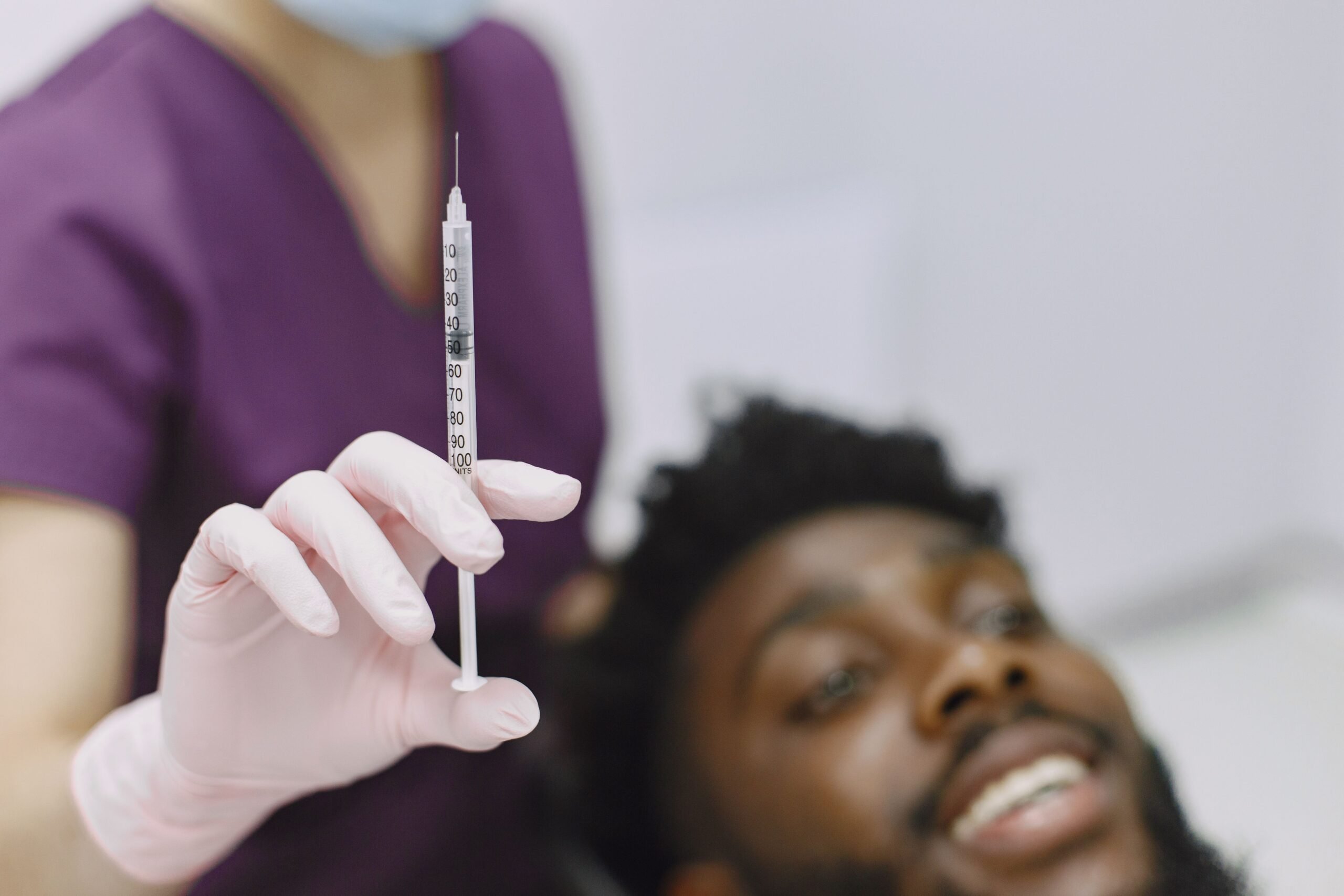
Driven by social media trends and the rise of wellness travel, elective cosmetic procedures are more popular than ever. However, even minimally invasive treatments carry significant health risks when performed on delicate areas rich in blood vessels. This danger made global headlines when 43-year-old British-Nigerian businessman and lifestyle icon Igho “Tiny” Ubiribo tragically passed away after receiving a non-surgical penis enlargement injection at a private clinic in Bangkok. The subsequent London coroner’s inquest has sparked an international debate about safety standards and ethics in medical tourism, per Advocate.
The procedure itself involves injecting a hyaluronic acid gel into the shaft of the penis to temporarily boost girth, often marketed as a fast, low-effort tweak. In reality, the area contains a complex web of high-flow blood vessels and sensitive nerves. If the filler material accidentally enters a blood vessel or is used in excessive amounts, it can travel through the bloodstream with catastrophic consequences, ranging from irreversible tissue damage and pulmonary embolisms to fatal complications.
What are penis fillers?
Often referred to as non-surgical penile girth enhancement or soft-tissue filler phalloplasty, penis enlargement injections are strictly cosmetic. As the Cleveland Clinic points out, this elective procedure is designed solely to alter the visual appearance of the penis, rather than fix or restore any underlying urological function.
The difference between the two is that filler enhancement does not require incisions, general anesthesia or massive amounts of tissue being cut apart. The most commonly used substance is hyaluronic acid (HA), which is a naturally occurring glycosaminoglycan present in all human connective tissues, skin and cartilage.
HA can capture large numbers of water molecules, creating a temporary volumetric scaffold that expands the surrounding tissue. The practice of using dermal fillers for penile enlargement is still an “off-label” use, which means that it has not been evaluated or approved by the U.S. Food and Drug Administration (FDA) and other medical authorities around the world.
How penis fillers work
Penile filler injections involve precise spatial maneuvers as the substance is injected mechanically in order to avoid damage to the underlying erectile and neurovascular structures and to volumize the penis effectively.
A medical professional inserts a needle or preferably a blunt-tipped microcannula into the underneath surface of the penis, in the subcutaneous plane, just beneath the outer skin and Dartos fascia, but above Buck’s fascia under local topical or regional nerve block anesthesia. Buck’s fascia is a strong fibrous sheath that surrounds and protects the deep dorsal vein, dorsal arteries, dorsal sensory nerves and the paired erectile chambers or corpora cavernosa.
After the safe insertion of the cannula tip into this potential space, the clinician slowly injects small bands of hyaluronic acid gel on either side of the shaft and on top, avoiding the sensitive underside of the shaft that contains the urethra. The gel mechanically presses against the skin, increasing the shaft’s circumference. The added physical mass and weight also make it more difficult for the penis to retract back towards the pubic bone during the flaccid state fully, so the penis may feel visually longer when flaccid, but the same amount of erect length produced in the erectile chambers is still there.
How much does penile enhancement surgery cost?
There is no set price for penile enhancement surgery, as it depends on the type of enhancement used, whether temporary or permanent and the type of fillers that are injected.
The average price of nonsurgical hyaluronic acid fillers in the U.S. ranges from $8,500 to $12,000 per treatment session, depending on the amount of product required and the injector’s geographic market. Hyaluronic acid naturally breaks down within 12 to 24 months, so a series of touch-ups is needed to maintain the results, which means a long-term financial investment.
However, any type of permanent surgical procedure, including, but not limited to, autologous fat grafting, surgical division of the suspensory ligament (ligamentolysis), and skin grafting, will typically cost between $10,000 and more than $25,000. These surgical procedures come with extra facility charges, general anesthesia charges and extended recovery times. These procedures are not medically necessary, and therefore, public healthcare or private health insurance plans do not cover them.
What happened to Igho Ubiribo?
The case of Igho Ubiribo, who died following a simple cosmetic outpatient procedure, is an example of how rapidly an apparently benign procedure can escalate into an uncontrollable situation affecting the cardiovascular system.
The London coroner’s court stated that Ubiribo had been a frequent patient at an aesthetic clinic in central Bangkok since 2024, when he had four penile filler treatments in 2024 and 2025. Ubiribo returned to the clinic on Mar. 5, 2026, and had another 40 milliliters of HA filler injected into him in one single sitting, an extremely large amount for a single session, reports AFP. The practitioner was advised in the clinical record to divide the large volume into two separate sessions, but the entire volume was administered in a single session.
Hours after leaving the clinic, Ubiribo suddenly complained of crushing chest pain, extreme shortness of breath and collapsed unconscious twice while he was getting a massage with his wife. Emergency medical services took him to a hospital in Bangkok, where he was suspected of having pulmonary embolism.
He was pronounced dead in the early hours of Mar. 6, despite being put on cardiopulmonary resuscitation (CPR) for more than 100 minutes by emergency physicians. The complete post-mortem toxicology and histological examination identified the cause of death as acute pulmonary embolus, i.e., a blockage of his pulmonary arteries, with the foreign cellular material being consistent with the cross-linked hyaluronic acid filler that was directly found in the blocked pulmonary arteries.
Limitations
Although non-surgical face fillers are marketed heavily, they have a number of clinical, structural and physiological constrictions that patients are not always aware of.
First and foremost, dermal fillers do not make the penis longer in terms of functionality. It is the internal size and stretch capacity of the corpora cavernosa that determines true penile length while erect, and the superficial layers of skin will not be lengthened with soft tissue injection of any of the gels.
Also, hyaluronic acid fillers are naturally non-permanent. Hyaluronidases are enzymes that naturally occur in human tissues, gradually metabolizing and degrading the gel matrix, which is injected every 12-36 months to maintain cosmetic benefits.
Furthermore, the penis is a dynamic and mobile organ, that is, it expands and contracts between flaccid and rigid states, so injected gel may be easily shifted through mechanical friction, pressure or during sexual intercourse. This physical shift often causes the asymmetry, unsightly lumpiness, nodule formation and irregularity of the shaft.
Risks and safety considerations
“When it comes to penis enlargement, men should be very cautious about promises of a quick or permanent solution,” Dr. Arthur L. Burnett II tells Blavity Health. “There is a great deal of misinformation surrounding penis size, and many of the procedures and products marketed for enlargement have not been shown to provide the results men are looking for and can carry significant risks. Surgery is not something a man should pursue simply because he feels he is not large enough.”
He adds, “Before considering any procedure, it is important to understand what is actually possible, what the risks are, and whether there is a medical reason for intervention. In many cases, the first step should be an honest conversation with a qualified urologist rather than turning to an unproven product or procedure.”
The anatomy of the genital region makes injections in that area inherently complex and carries localized tissue risks as well as significant systemic vascular risks. Clinical reviews from the Mayo Clinic state that soft-tissue fillers can be accidentally injected into the blood vessels. A provider may accidentally pierce a deep dorsal vein or the complex network of veins (pampiniform venules) that connect them, allowing the thick hyaluronic acid gel to be pushed back into the veins.
Venous blood enters the right side of the heart directly and then goes straight to the pulmonary vascular bed, so the migrating filler gel quickly lodges in the pulmonary arteries. This blockage leads to massive pulmonary embolization, deprivation of blood flow to the lung tissue, right heart failure and rapid cardiovascular collapse.
The incidence of localized complications is also high and difficult to manage. A localized “compartment-like” syndrome may develop, compressing the microvessels around the injection site and causing death and shedding of skin tissue on the shaft, a condition known as ischemic skin necrosis. Patients also face a risk of long-term bacterial infections, chronic foreign-body granulomas, significant scarring, pain during sex, penile deformity and loss of sensation in the nerve.
If you are considering elective cosmetic treatments overseas, carefully check the doctor’s credentials and medical board licensing, as well as the clinical emergency procedures. Do not have mega-volume filler injections in one place, and make sure the clinic has emergency reversal drugs, including high-concentration injectable hyaluronidase, and protocols for emergency transport.
Alternatives
Anyone distressed about their genital appearance or function should have a thorough examination by a urologist and a psychological examination prior to embarking on risky cosmetic changes.
The initial step in a comprehensive medical examination is an objective consultation with a board-certified urologist to obtain accurate anatomical measurements. Epidemiological urological databases show that the overwhelming majority of men who undergo enlargement surgery are completely within the statistical averages of normal flaccid and erect sizes (usually 5 to 6 inches).
The Mayo Clinic explains that, many times, the distress over size is attributed to the presence of Body Dysmorphic Disorder (BDD) or Penile Dysmorphic Fears (PDF), in which a person has a distorted and exaggerated view of their own physical inadequacy. In these situations, non-invasive cognitive behavioral therapy (CBT) and psychological counseling can be very helpful and therapeutic and avoid the surgical risk that the patient would be exposed to.
Reconstructive urologists use formal surgical methods for men who have been clinically documented to have very short penises resulting from conditions such as Peyronie’s disease, congenital micropenis or traumatic injury. These can be traction therapy tools, surgical removal of plaque and pericardial or buccal mucosal grafting (PMBG), or a penile inflatable prosthesis (IPP). These surgical pathways are conducted in controlled hospital settings, with strict surgical standards, reducing the life-threatening vascular embolisms caused by illicit and/or off-label injections of fillers.
“When performed by an experienced provider, serious complications are rare but can include vascular issues, inflammatory reactions, or infection. Proper sterile technique, detailed aftercare instructions, and preventative medication all help minimize these risks,” Aesthetic Nurse Practitioner Chris Bustamante, DNP, NP-C says.
Bottom line
The death of influencer Igho Ubiribo is a stark reminder of the serious, and even life-threatening, vascular risks of cosmetic “filler” injections done “off-label” on the penis. Although hyaluronic acid fillers are often marketed as being very safe, injecting high volumes of product into highly vascular areas has many potential risks for unintentional intravascular injection, tissue necrosis and potentially fatal pulmonary embolisms. Those patients who are distressed about how their bodies look should talk to board-certified urologists and licensed mental health experts about safe, evidence-based solutions, instead of undergoing unverified and high-volume cosmetic procedures abroad.
Frequently Asked Questions
At what age does the penis stop growing?
The penis typically reaches its full adult biological size and completes growth by the end of puberty, which generally occurs between ages 18 and 21.
Is it possible to enlarge the penis size permanently?
There are no safe, medically endorsed non-surgical methods or pills that permanently enlarge penile size, and invasive surgical procedures carry severe risks of erectile dysfunction, scarring and loss of sensation.
Citations
Messman-Rucker A. How penis filler led to the death of a wealthy influencer. Advocate.com. Published September 8, 2026. https://www.out.com/celebs/igho-tiny-ubiribo
Cleveland Clinic. Penis Enlargement Surgery: How It Works, Pros & Cons. Cleveland Clinic. Published July 25, 2022. https://my.clevelandclinic.org/health/treatments/23530-penis-enlargement-surgery
Center for Devices and Radiological Health. Dermal Fillers (Soft Tissue Fillers). U.S. Food and Drug Administration. Published February 21, 2024. https://www.fda.gov/medical-devices/aesthetic-cosmetic-devices/dermal-fillers-soft-tissue-fillers
AFP Staff. Thailand investigates after Briton dies from penis enlargement. CP24. Published September 9, 2026. https://www.ctvnews.ca/health/article/thailand-investigates-after-briton-dies-from-penis-enlargement/
Mayo Clinic. Penile Implants – Mayo Clinic. www.mayoclinic.org. Published 2026. https://www.mayoclinic.org/tests-procedures/penile-implants/about/pac-20384916
Mayo Clinic. Body Dysmorphic Disorder – Symptoms and Causes. Mayo Clinic. Published December 13, 2022. https://www.mayoclinic.org/diseases-conditions/body-dysmorphic-disorder/symptoms-causes/syc-20353938