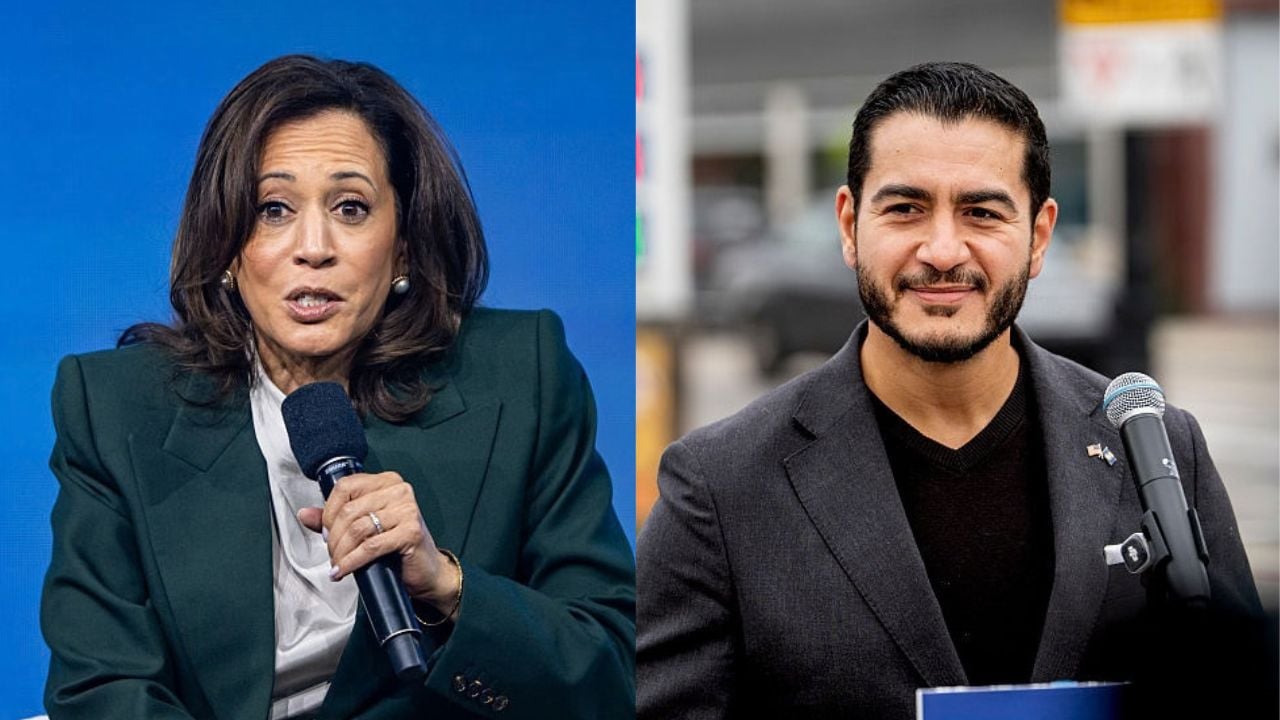
Even as her own political future remains uncertain, former Vice President Kamala Harris is hitting the campaign trail for other Democrats in the runup to the 2026 midterm elections. Harris is visiting Michigan on Monday to campaign for a crucial Senate seat while also potentially working to repair some of the rifts within the party that developed during her last presidential run.
El-Sayed welcomes support from Harris as others speculate about her plans for 2028
Harris will be in Michigan on Monday to campaign for Abdul El-Sayed as he seeks to hold the state’s Senate seat, currently held by retiring Democratic Sen. Gary Peters. El-Sayed spoke of the decision to campaign with Harris, even when some other Democratic candidates have declined to appear with her during this election cycle, reminding the hosts of NBC’s Morning Joe that he quickly endorsed Harris when she became the 2024 presidential nominee despite his previous support for the Uncommitted Movement, which sought to cast protest votes in the 2024 presidential primary over the Biden-Harris administration’s stances on Israel and the war in Gaza. El-Sayed acknowledged “some hurt feelings about the engagement with the Arab and Muslim community around the 2024 election. Folks saying, well, if your community couldn’t stand up for Vice President Harris, why should we stand up for you?” El-Sayed particularly noted the ability of Harris to reach out to Black voters in Michigan. “This is an opportunity for us to come together,” he said, explaining that Harris would be talking about “maternal and infant mortality disparities,” noting his own work on the issue when he served as health director in Detroit.
The appearance by the former vice president in Michigan comes as pundits continue to discuss her political future. If she decides to run for president in 2028, Harris could gain from increased support in states such as Michigan, which will be one of the first six states to hold Democratic presidential primaries in 2028 according to the new Democratic Party calendar. Speculation about another Harris presidential run in 2028 has met with mixed reactions. Some candidates and supporters of the Democratic Party have distanced themselves from Harris during this election cycle for fear of being tied to political baggage from the Biden administration, while members of Biden’s family and inner circle have been critical of Harris lately. Axios reported that even members of her previous campaign team are doubtful that she will run again in 2028. On the other hand, Harris remains one of the most recognizable and popular potential Democratic candidates, with California Gov. Gavin Newsom, a likely 2028 candidate, recently announcing that he would not run for president if Harris was running.
Harris, El-Sayed could boost one another’s weaknesses within the Democratic Party
Given Democrats’ hopes for Michigan and for the U.S. Senate and the potential for another Harris presidential run, Monday’s campaign stop is potentially beneficial for both El-Sayed and Harris. El-Sayed’s victory in the Michigan Democratic Senate primary over moderate Rep. Haley Stevens came as part of a larger wave of progressive wins over more centrist and establishment-backed Democrats. The competition between the Democratic Party’s progressive and moderate wings has threatened to create a rift in the party that could hurt its chances of retaking Congress from Republicans in November. A number of high-profile Democrats have attempted to promote party unity for the general election, including former President Barack Obama, who reached out to both El-Sayed and Stevens after the Michigan primary. Harris has the potential to boost El-Sayed among more centrist Democrats and particularly with Black Democrats, who are important to the Democratic base in Detroit and other areas of Michigan. While in the state Monday, Harris will participate in a roundtable discussion in Detroit about Black maternal health and meet with Black church leaders including Rev. Wendell Anthony, who also leads the Detroit branch of the NAACP.
Harris, meanwhile, is still reckoning with her 2024 presidential loss, which largely resulted from her losing swing states such as Michigan, where her stances on Israel and the war in Gaza hurt her among the state’s significant Muslim voting base and alienated some progressive voters more generally. Harris has been reaching out to influential Muslim and progressive voices within the Democratic Party, such as New York City Mayor Zohran Mamdani and pro-Palestinian activists, including the founder of the Uncommitted Movement. A mutually supportive relationship with El Sayed could potentially help Harris in Michigan and among other voters who objected to her stance on Palestine when she ran in 2024 as part of the Biden administration.
In the short run, the visit by Kamala Harris to Michigan is meant to boost El-Sayed’s campaign to win that state’s U.S. Senate seat, which would in turn get Democrats one step closer to regaining control of Congress in 2026. While Harris has publicly focused on this midterm election, her ability to boost other Democrats and potentially strengthen her own weak spots within the party may also be critical for her own plans for 2028.