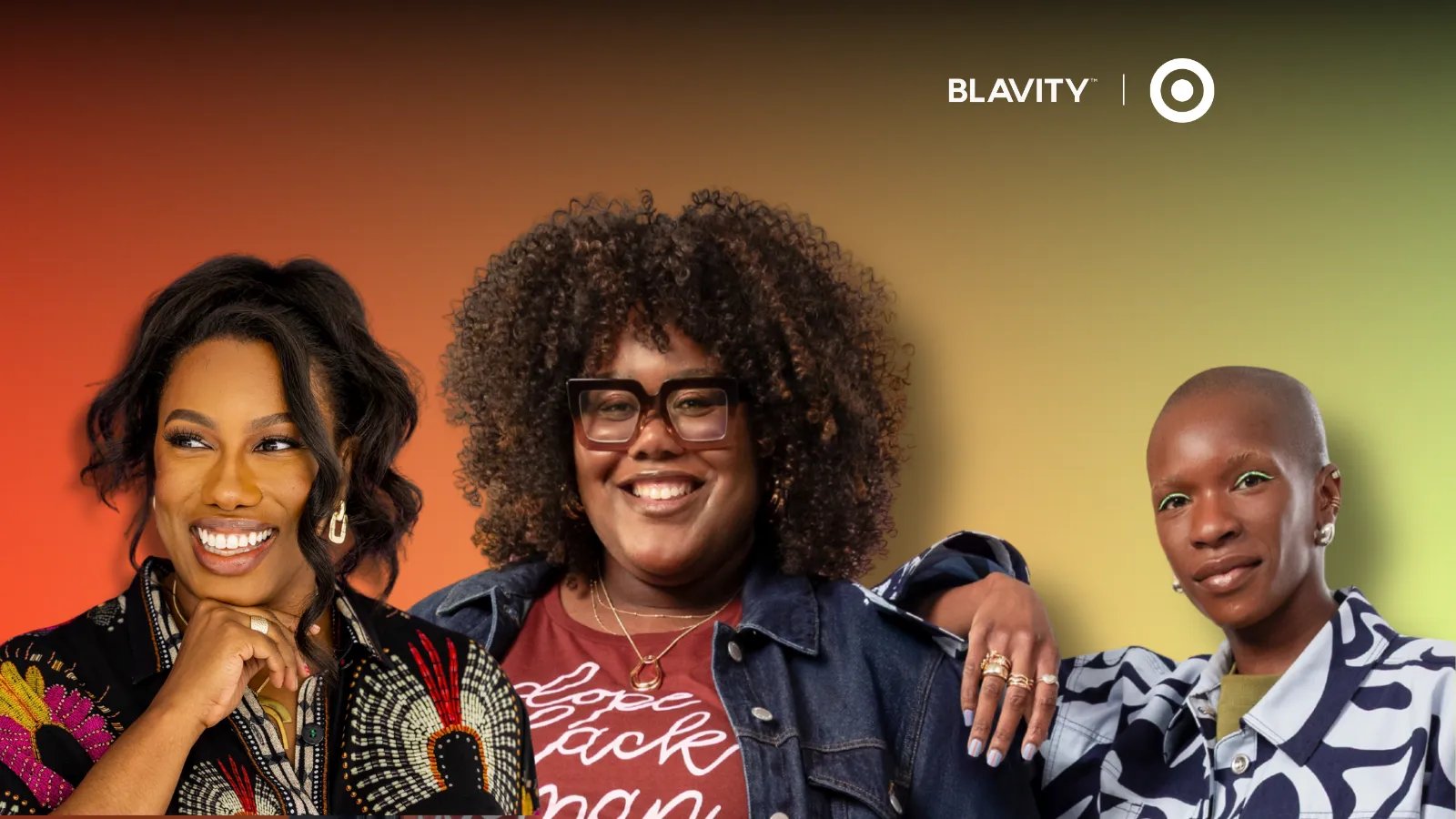
For many Black creators, design is often a love language, a way of translating lived experience into something tangible and deeply affirming. It’s where memory, culture, and imagination take shape, created by visionaries and built to empower.
That intention is reflected in the work of Jasmin Foster of Be Rooted, Raven Gibson of Legendary Rootz, and designer Monica Ahanonu. This trio of creatives aren’t just designing products, they’re building solutions, affirmations, and moments of representation. From apparel, to stationery items, to artwork that reframes how Blackness is seen and celebrated, each offering is rooted in clarity, cultural understanding, and deep intention.
The individual journeys of Foster, Gibson and Ahanonu showcase how thoughtful design can transform everyday routines into acts of self-recognition. Through partnerships with retailers like Target and their Black History Month Collection, these women are able to bring their purpose-driven creations to a wider community just in time for the 100th anniversary of Black History Month.
We caught up with Foster, Gibson and Ahanonu to explore their creative thought processes and backgrounds, as well as get perspective on how they plan to push Black creativity and culture forward.
Jasmin Foster, Founder of Be Rooted

Redefining Representation in Everyday Goods
For Jasmin Foster, stationery was never just paper; it was about possibility. When Be Rooted launched in 2020, her focus wasn’t on trying to disrupt an already-crowded market; Foster was responding to an absence that felt personal and pervasive.
From planners, to calendars, to even holiday gift wrap, Be Rooted’s earliest products were a direct response to that gap in the marketplace, offering Black consumers the choice to see themselves reflected in everyday items.
“When I first started Be Rooted, there was such a lack of representation,” Foster says. “There was nothing like what we were doing on shelves in mass retail.” The problem wasn’t just visibility; it was accuracy. “When people were depicted in art, it was never someone who looked like me: my skin tone, my body shape, my style, my vernacular… [Be Rooted] exists to change that.”
That clarity is reinforced by Foster’s background in retail. Before founding Be Rooted, she worked as a buyer at Target, an experience that quietly shaped her brand from its inception. “I had the privilege of reviewing hundreds of brands a year,” she explains. “I understood innovation pipelines, shelf-ready packaging, margin structures… all of it.” Even before retail partnerships were a reality, Foster was building for the community.
Today, Be Rooted is not only available at Target, but also releasing special products for Black History Month, an opportunity Foster sees as creative freedom. “[My products] being featured online and at Target is amazing because it creates consistency for customers,” she says.
Be Rooted has now expanded its range of products from stationery to mugs, laptop bags, makeup bags, and gift sets that wouldn’t traditionally live in the category but still feel true to the brand’s art-forward DNA. “It gives customers a new way to experience us,” Foster explains. “And from a business standpoint, it also helps show demand for what could become future in-line opportunities.”
At its core, though, Be Rooted’s mission remains deeply emotional and unmistakably clear. When someone encounters the brand for the first time, Foster hopes the message lands instantly. “Black culture deserved to be celebrated,” she says. “And consumers deserved to have the choice.”
Raven Gibson, Founder of Legendary Rootz

Wearing the Message, Living the Mission
From the beginning, Legendary Rootz has operated at the intersection of affirmation, style, and cultural pride, creating pieces that make a statement and speak for the people wearing them.
Many of the brand’s most recognizable messages began organically, first as tweets, Instagram captions, or shared thoughts that resonated deeply with founder Raven Gibson’s audience. Some of her most notable designs early on included her “You Can’t Pour From an Empty Cup” mug and the “Dear Black Woman” drinking glasses.
“Seeing what people connected with allowed me to turn those moments into designs,” Gibson explains.
Legendary Rootz is about more than memorable phrases. Gibson is meticulous about ensuring that every design not only resonates emotionally but looks good in real life. “Whatever phrase I use, it has to look cute on a shirt, a mug, or a bag,” she says. “My designs go through different iterations to make sure the feel is right.”
That balance between meaning and aesthetics is where Legendary Rootz thrives. “I love that my supporters can wear cute, empowering art that speaks for them,” Gibson says.
Now entering its third consecutive year in Target’s Black History Month Collection, Legendary Rootz continues to deepen that connection with customers. Gibson believes what draws people in is a mix of intention and relatability.
“It’s about having a platform to share our brand, our mission, and our values,” she explains. “I really appreciate companies like Target that create space for Black History Month to have its own moment to celebrate our history intentionally.”
At the heart of Legendary Rootz’s growth is community, a digital sisterhood that fuels the brand’s reach and relevance. “I love hearing that someone is walking down the street and another person says, ‘I love your shirt; where did you get it?’” Gibson beams. “That moment builds confidence. It helps with self-esteem. And it connects them automatically to my other customers. We’re not a monolith. We like different things.”
Legendary Rootz’ Black History Month Collection reflects that range, with reds, pinks, blues, creams, blacks, and browns woven throughout. “Through that assortment, we’ve been able to touch everyone,” Gibson explains.
When Gibson thinks about the legacy of Legendary Rootz, her vision extends far beyond the product: “I hope it inspires the next generation to stay the course and follow their dreams.”
Monica Ahanonu, Artist & Illustrator
Turning Feeling Into An Art Form
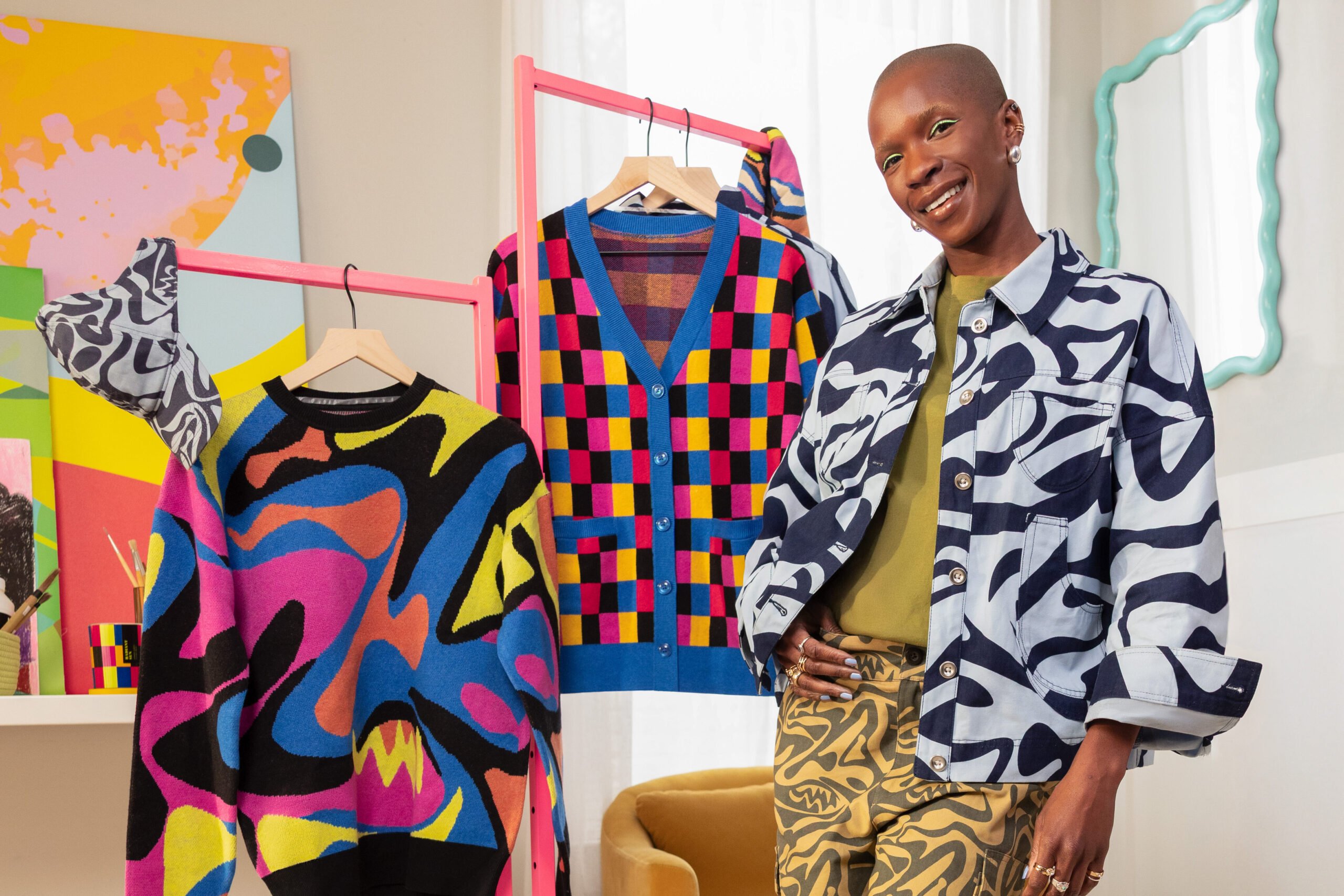
For Monica Ahanonu, art has always been about more than what you see; it’s about what lingers. Known for her bold use of color, emotional intimacy, and expressive compositions, Ahanonu creates dramatic artwork that has been featured by Netflix, Vanity Fair, and Google. Translating that sensibility into functional, retail-ready products like portraits, digital work, and wall art required not a shift in voice, but an expansion of how her art could live in the world.
“I focused on how color could live with people in a practical way,” Ahanonu explains. “Not just be observed in a single art piece.” That meant thinking beyond the gallery, considering scale, repetition, and the emotional impact of seeing certain color relationships throughout an entire day. “The goal was to create pieces that still feel expressive and energetic, but also intuitive,” she says. “Objects that quietly energize or ground you in everyday life.”
When deciding which works would make the transition from art to object, Ahanonu let intentionality guide every choice. While the process of working with Target on the Black History Month Collection was collaborative, she said she felt a sense of freedom designing masterpieces ranging from holiday gift cards to wall art that would be sold both online and in retail stores.
Seeing her work accessible in a mass retail space during Black History Month is both emotional and affirming. “It feels very full circle,” Ahanonu says. “Celebratory and affirming.” For her, creating art that people can live with every day, has been a long time coming. “Being able to see how people respond and what they gravitate toward feels incredibly valuable,” she says.
There’s also joy in the personal symbolism of the moment. “I keep thinking about my African father,” Ahanonu shares with a laugh. “He’ll finally forgive me for not becoming a doctor.” The ability for family members to walk into a store and see her work on display carries deep meaning. “I know that will make him incredibly proud.”
When it comes to her own legacy, Ahanonu remains rooted in feelings of cultural expression. She says, “I hope my work leaves people feeling energized, motivated, and inspired.”
The Future is a Colorful Impact
The work of Foster, Gibson, and Ahanonu shows that taking up space, in every form and at every scale, is itself an act of representation; one that sparks change, fuels growth, and brings moments of joy into everyday life.
By turning lived experience into products that affirm identity and invite belonging, each woman proves that visibility isn’t just seen, it’s felt. Not just during Black History Month, but every single day.To learn more about these creators and other Black founders shaping culture with intention, visit Target.com.