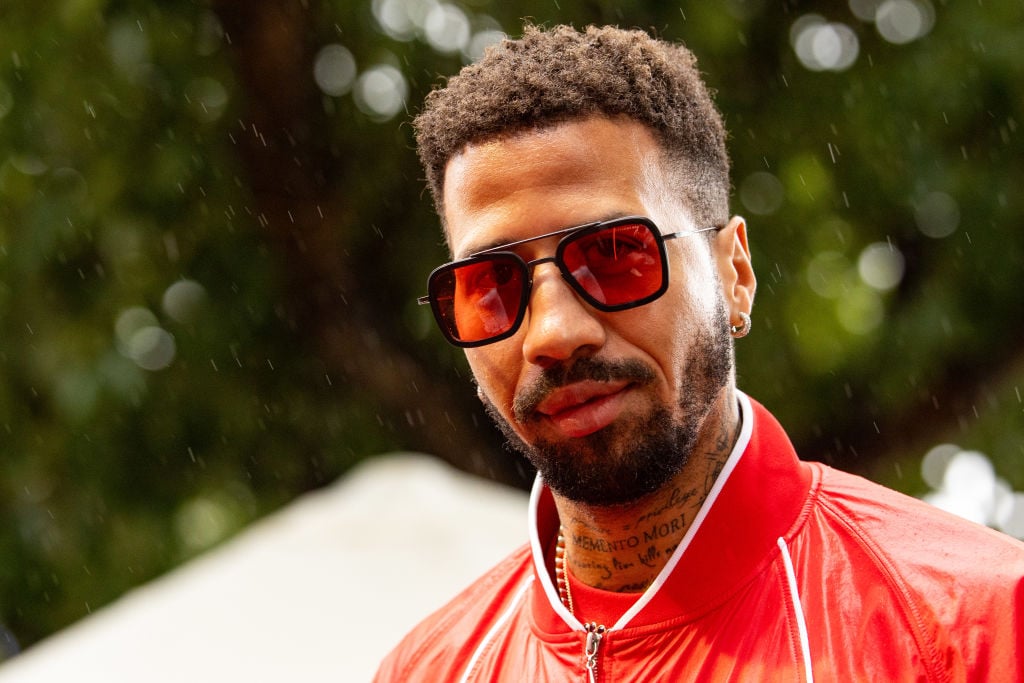
As an Olympian and world champion fencer, Miles Chamley-Watson has never fit neatly into the boxes people created for him. Since his historic 2013 win as the first male U.S. fencer to capture the individual gold medal, Chamley-Watson has continued to disrupt expectations in a sport historically defined by exclusivity and a lack of diversity. Beyond fencing, he is carving out another lane—one that merges athletic excellence with financial empowerment.
In his latest partnership with Robinhood for the Your Money, Your Move campaign, Chamley-Watson uses his voice to challenge the discomfort around money conversations, especially as a Black man and an athlete.
He is working with the platform to shift the narrative around the Black family’s relationship with finances, which has historically been shaped by systemic inequities and generational caution. Chamley-Watson is also placing a strong emphasis on his fellow athletes, who are often thrust into high-earning professional environments without the foundational knowledge needed to sustain long-term wealth. He encourages them to understand the importance of ownership and investments, and to recognize that exercising financial literacy is just as important as practicing their craft.
Blavity spoke with the Olympian about the partnership and how he’s working with the platform to spread the message that wealth is not just something to earn but something to understand, protect and grow.
What drew you to partner with Robinhood for ‘Your Money, Your Move,’ and how does this campaign align with your personal mission when it comes to financial literacy?
What drew me to “Robinhood: For Your Money, Your Move” was how much it spoke to me, since it’s something that really reflects how I live every day. As a kid, my goal was simple: to always have a full fridge. That grew into wanting to go out without checking my balance, and eventually into learning to invest and only spend a small percentage of my endorsement money. That became my smartest move, investing in myself. Nothing matters more than educating yourself.
How did you think about bringing authenticity to this campaign while staying true to your own story?
For this campaign, I wanted to bring authenticity by just being myself and also by showing people who might not know me what my mission is to grow my sport and change it forever.
When did you first realize that financial literacy and discipline were as essential to your success as physical training?
I learned the importance of financial literacy and discipline the moment I signed my first deal with Nike. My dad, Colin, always told me, “The money you see isn’t the money that goes into your account.” He made sure I understood the real value of a dollar. Those lessons shaped how I approach my investments and assets today.
What were some of your early challenges/successes in learning how to make your money work for you along your journey of financial discipline?
Early on, one of my biggest challenges was finding endorsements and seeing real financial growth. In fencing, it’s tough to make a living just off winnings, even with a perfect season. Now, with more knowledge, I invest smarter, fully understanding both the risks and rewards.
Why do you think money conversations remain difficult within the Black community, especially for Black athletes?
I think it’s still difficult because many of us were never given the education, fairness, or tools to truly succeed. Too often, we’re taken advantage of simply because we don’t know enough. That’s why educating ourselves is the first and most important step.
For young Black athletes from families where financial success is new territory, how can we shift early money conversations from fear and scarcity toward confidence and education?
We can shift this by learning more about brands and companies like Robinhood that are genuinely committed to helping people grow. It all starts with education, which is the key to everything.
You’ve built a career in fencing, a sport that’s traditionally seen as elite and exclusive. How did that experience shape the way you think about access — both in fencing and in finance?
All those early challenges and rejections shaped who I am today. They pushed me to find new ways to succeed until people finally saw the vision. That mindset is what’s allowed me to partner with so many incredible brands.
How do discipline and ownership factor into long-term financial independence?
Discipline and ownership go hand in hand. You have to be disciplined with your life and your money, so that one day, you can own something real. I’m proud and grateful to now own several companies and to be the founder of the World Fencing League (WFL).
As one of the few Black fencers to reach the highest levels of the sport, how do you view your role in shifting cultural perceptions, not just around fencing, but around Black wealth and empowerment?
see my role as one of the most important parts of my life, the chance to change my sport and open the door for new kids who look like me. It’s about shifting how fencing is seen and who gets to be part of it. At the end of the day, the goal is financial freedom, to take care of yourself, your family, and the people you love.
What’s one piece of practical advice you wish every young athlete could learn early about money and mindset?
One piece of practical advice: read and learn what money really means, how it works, how it grows, and what it can do for you. Think about who you want to be in 2, 10, or 20 years. And find someone who understands not just where you want to go, but where you came from. Very important.