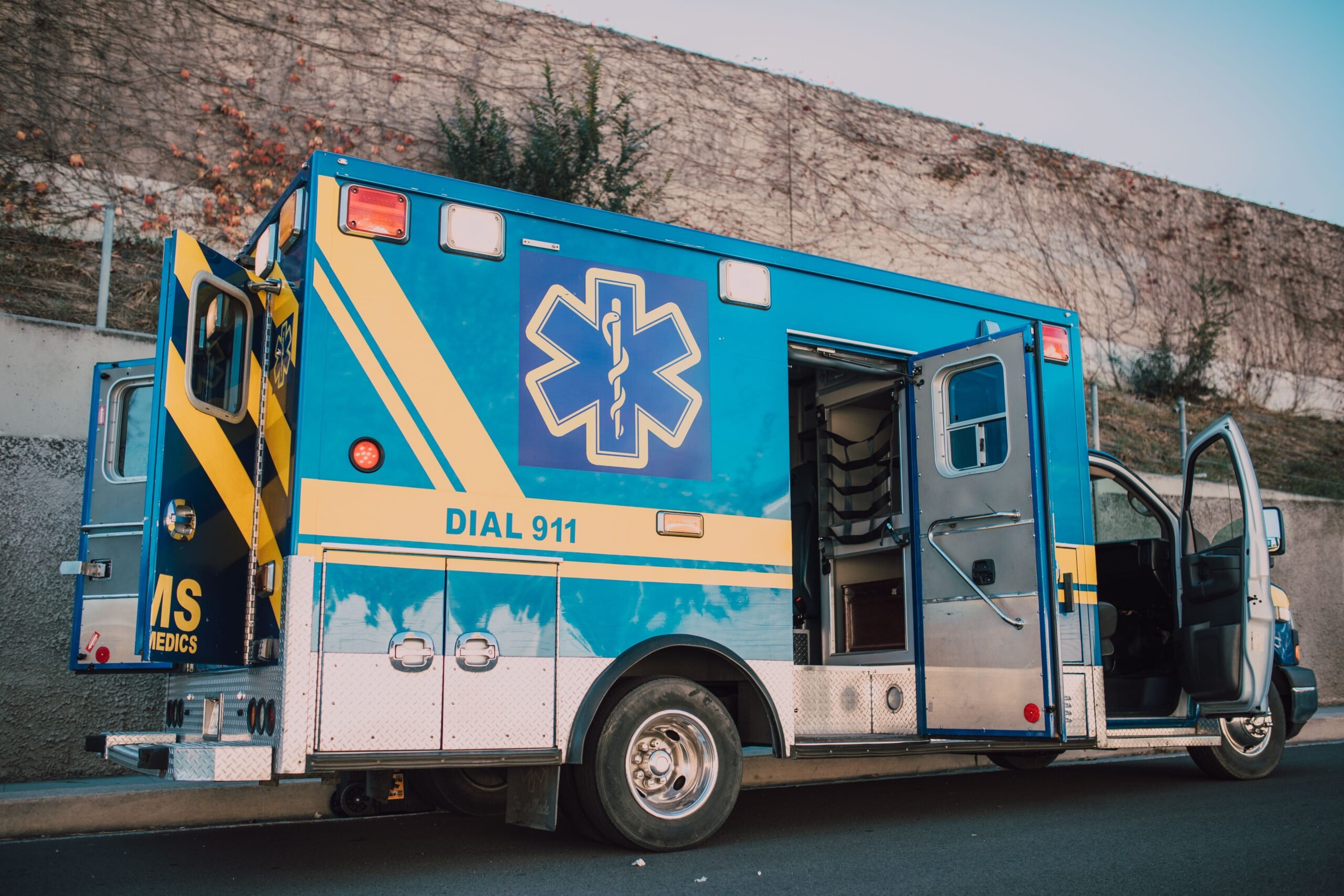
In much of rural Montana, help can be a long drive away. For example, after a heart attack on a ranch or a crash on a two-lane highway, the nearest ambulance may be in another town. In many cases, the crew is also made up of volunteers. Now, thanks to new funding for rural ambulances, some of those crews are getting better tools.
On Sept. 29, 2026, the Centers for Medicare & Medicaid Services (CMS) announced $8.7 million for Montana. Specifically, the money will help 79 rural emergency medical services (EMS) agencies replace aging ambulances and buy lifesaving equipment. It comes from the federal Rural Health Transformation Program, which was created by the 2025 budget law.
The announcement is good news for Montana’s first responders. However, it also raises bigger questions. Who can count on an ambulance in a crisis? And can short-term grants fix long-term gaps? Here’s what the rural ambulance funding covers, why it matters and what critics say.
A lifeline for rural Montana: How the $8.7 million investment will be used
Overall, the funding is split into two parts. First, four EMS agencies will get new ambulances costing about $340,000 each, according to the governor’s office. They are Absarokee Rural Fire District, Avon Volunteer Fire and EMS, Blackfeet Tribal EMS and Prairie County Ambulance Service. According to CMS, the new vehicles will replace ambulances more than 20 years old, as well as leased ambulances that aren’t fully operational.
For some crews, in fact, the upgrade is overdue. “Our current ambulances, we have two 2004 models. Our primary ambulance currently has 160,000 miles on it,” Andrea Bybee, Prairie County Ambulance Service coordinator, told Montana Right Now.
Second, 75 more agencies received money for nearly 240 pieces of equipment. In addition, three of those agencies are run by tribal governments. CMS puts the total at 79 rural EMS agencies, while the state’s announcement counts 78.
For context, the $8.7 million is a small slice of Montana’s overall award. Overall, the state received about $233.5 million for fiscal year 2026, according to CMS. That’s one of the largest first-year awards in the country. In other words, the EMS grants make up less than 4% of the state’s first-year total.
Officials also framed the investment around speed. Montana Gov. Greg Gianforte said that, no matter where residents live, “the response will be swift when a medical emergency occurs.”
Beyond new ambulances: Critical equipment for 75 agencies and tribal governments
The equipment list includes IV pump systems, ventilators, cardiac monitors, power load systems, cots and chairs. Each one also fills a specific need on a rural call.
- Cardiac monitors: These track heart rhythm, and many can record a 12-lead electrocardiogram (ECG) in the field. As a result, care for heart attack patients can start sooner. Studies have linked these field ECGs to cutting 15 to 50 minutes off the time to treatment.
- Ventilators: These support patients who can’t breathe well on their own during long transports.
- IV pump systems: These deliver fluids and medications at a precise, steady rate.
- Power cots, power loaders and patient-moving chairs: These lift and move patients, so crews don’t have to.
That last category matters more than it may seem. After all, lifting injuries can end EMS careers, and rural agencies can’t afford to lose anyone. For instance, in one Canadian paramedic study, powered stretcher and load systems cut stretcher-related injuries by 78%. As a result, the equipment can protect patients and the people caring for them.
Why rural ambulance funding matters
To see why rural ambulance funding matters, look at how long rural Americans already wait for help. In fact, a national study looked at nearly 1.8 million EMS calls. The median response time was 13 minutes in rural areas, compared with 6 minutes in cities and suburbs, according to JAMA Surgery. Even worse, nearly 1 in 10 rural calls waited almost half an hour.
Meanwhile, some people have no nearby ambulance at all. A 2023 Maine Rural Health Research Center study found that 4.5 million people across 41 states lived in “ambulance deserts.” That means they lived more than 25 minutes from an ambulance station. Notably, Montana had one of the highest shares of residents in these deserts, the Arkansas Advocate reported.
On top of that, the crews themselves are stretched thin. Volunteer EMS services cover about three-fourths of Montana, according to a state health department report covered by the Helena Independent Record. Unlike fire and law enforcement, EMS also isn’t legally mandated in the state. Nationally, 53% of the most isolated rural EMS agencies are run entirely by volunteers, compared with 14% of urban agencies, according to the National Rural Health Association.
Similarly, Montana’s 2026 Trauma System Legislative Report says EMS agencies still struggle with staffing and volunteer recruitment. They also face rising costs and a payment model tied to transports. For example, the report describes one remote community whose volunteer EMS service shut down entirely. As a result, no ground ambulance was left to respond.
Who feels EMS gaps the most
However, emergency care gaps aren’t evenly distributed. In Montana, the tribal funding stands out for a reason. From 2019 to 2023, American Indian men in the state had a median age at death of 60. Similarly, American Indian women had a median age at death of 63. That’s 15 and 18 years younger than non-Native Montanans, according to the Montana Department of Public Health and Human Services.
The strain shows up on the ground. Blackfeet Tribal EMS covers more than 1.5 million acres and responds to about 3,800 calls a year, KRTV reported. However, much of its Indian Health Service reimbursement goes toward salaries and leased ambulances. “A tribal ambulance service that has to lease its ambulances is a service that has been underfunded for a long time,” says Arelia Johnson, Ph.D., a Houston-based equity strategist and Harris County’s first chief officer of human and civil rights.
Black communities, meanwhile, face their own version of the problem. The CDC notes that EMS response times for cardiac arrest are 10% longer in low-income neighborhoods. It also points to studies showing racial disparities in EMS care. In addition, a 2025 JAMA Network Open study looked at historically redlined neighborhoods, which today have higher shares of Black residents. Residents there had 1.67 times higher odds of lacking rapid EMS access.
Meanwhile, in Montana, Johnson notes, Black residents make up fewer than 1 in 100 people, which can leave them nearly invisible in planning data. “When a community is too small to be counted, it is too small to be planned for,” she says.
The Rural Health Transformation Program (RHTP): A $50 billion shift in healthcare funding
The Rural Health Transformation Program was created by the 2025 federal budget reconciliation law, Public Law 119-21. The administration calls it the Working Families Tax Cuts Act. However, many people know it as the One Big Beautiful Bill Act.
The program sends $10 billion a year to states from 2026 through 2030. First, half is split equally among all approved states. Then, the other half is based on factors like how rural a state is and what it proposed, according to CMS. All 50 states received first-year awards, ranging from about $147 million to $281 million. Montana’s EMS grants are the latest example of rural ambulance funding flowing through the program.
Supporters say the flexible design lets states build their own solutions. For example, CMS Administrator Dr. Mehmet Oz said the Montana grants show “what rural health transformation should look like.” Similarly, some rural health researchers have welcomed the chance to test new care models, KFF Health News reported.
What critics say about the funding
The same law that created the rural health fund also cut federal health spending. In fact, KFF estimates the law will reduce federal Medicaid spending by $911 billion over 10 years. About $137 billion of that falls in rural areas. By comparison, the $50 billion rural health fund could offset only about 37% of those rural cuts, according to KFF.
Timing is also a concern. The rural health fund ends after 2030, whereas many of the Medicaid changes are permanent. That matters for ambulance services because rural EMS relies heavily on payments per patient transported. In other words, funding for vehicles in rural ambulance services helps, but someone still has to pay the crews who drive them.
Likewise, HealthStack Med notes that a similar debate is playing out in West Virginia. There, advocates argue one-time grants can’t replace steady Medicaid dollars.
Shaina Goodman, vice president of policy and government affairs at Community Catalyst, a national health justice advocacy nonprofit, puts it plainly. “Equipment is necessary but not sufficient,” she says. “Rural EMS sustainability is fundamentally an issue of financing.” She argues that payment models need to cover everything EMS crews do, including assessment, treatment and helping patients navigate care, not just transport.
Modernizing Montana’s healthcare: The five-point strategy for rural communities
Still, the EMS grants are just one piece of Montana’s broader plan. According to CMS, the state’s overall rural health funding focuses on five areas:
- Building the rural health workforce: Recruiting, training and keeping healthcare workers in rural communities.
- Strengthening rural facilities and access: Helping rural providers keep essential services running through partnerships and operational changes.
- Advancing new care and payment models: Testing approaches meant to strengthen primary care and make rural health care more sustainable.
- Expanding community-based and preventive care: Funding school-based care, mobile services and tribal workforce programs. These aim to prevent and manage conditions like type 2 diabetes and high blood pressure.
- Modernizing health care technology: Expanding remote care and data tools to reach isolated communities.
Ultimately, results will depend on how the money is spent and whether it lasts. For that reason, states must report regular progress to CMS, which says it will track outcomes.
What to do while you wait for an ambulance
Even with new funding for rural ambulances, wait times can be long, so a few simple steps can help. Caleb Sutherland, a former EMT in rural Alaska and founder of Simple Solutions Medical, an EMS device company, suggests clearing the way for responders. For example, open gates and move cars out of the driveway. He also recommends keeping a card that lists the patient’s allergies and medications.
Most importantly, stay on the phone. “I’d also recommend staying on the line with dispatch and communicating and updating them as clearly as possible,” Sutherland says. As a result, arriving crews know what they’re walking into.
In a rural emergency, the first few minutes may be up to you. In fact, CPR performed right away can double or triple a person’s chance of surviving cardiac arrest, according to the American Heart Association. Hands-only CPR is simple to learn, and many local fire departments, EMS agencies and hospitals offer classes.
Bottom line
Montana’s $8.7 million in rural ambulance funding will replace worn-out ambulances and equip nearly 80 EMS agencies, including three tribal governments. Those tools can make long, high-stakes transports safer. Still, the grants are a small, temporary piece of a much larger picture that includes deep, lasting Medicaid cuts. Ultimately, a fast response will depend on funding crews, not just equipment.
Frequently Asked Questions
What is an ambulance desert?
An ambulance desert is an area where people live more than 25 minutes from the nearest ambulance station.
Does the Rural Health Transformation Program make up for Medicaid cuts?
No, KFF estimates the fund could offset only about 37% of projected federal Medicaid cuts in rural areas.
Citations
American Heart Association. CPR facts and stats. https://cpr.heart.org/en/resources/cpr-facts-and-stats
Armstrong DP, Ferron R, Taylor C, et al. Implementing powered stretcher and load systems was a cost effective intervention to reduce the incidence rates of stretcher related injuries in a paramedic service. Appl Ergon. 2017;62:34-42. https://www.sciencedirect.com/science/article/abs/pii/S0003687017300352
Berry C, et al. Rapid access to emergency medical services within historically redlined areas. JAMA Netw Open. 2025;8(8):e2525681. doi:10.1001/jamanetworkopen.2025.25681
Centers for Disease Control and Prevention. Emergency medical services (EMS): a look at disparities in funding and outcomes. https://www.cdc.gov/ems-community-paramedicine/php/us/disparities.html
Centers for Medicare & Medicaid Services. CMS announces $50 billion in awards to strengthen rural health in all 50 states. December 29, 2025. https://www.cms.gov/newsroom/press-releases/cms-announces-50-billion-awards-strengthen-rural-health-all-50-states
Centers for Medicare & Medicaid Services. Trump administration announces $8.7 million for new ambulances and lifesaving medical equipment upgrades across rural Montana. September 29, 2026. https://www.cms.gov/newsroom/press-releases/trump-administration-announces-8-7-million-new-ambulances-lifesaving-medical-equipment-upgrades
Goebel M, Bledsoe J. Push notifications reduce emergency department response times to prehospital ST-segment elevation myocardial infarction. West J Emerg Med. 2019;20(2):212-218. doi:10.5811/westjem.2018.12.40375
Helena Independent Record. DPHHS: volunteer EMS system ‘is very troubled.’ https://helenair.com/news/politics/state/dphhs-volunteer-ems-system-is-very-troubled/article_62b47bee-6b30-5638-b673-6f05982a7e33.html
Jonk Y, Milkowski C, Croll Z, Pearson K. Ambulance deserts: geographic disparities in the provision of ambulance services. Maine Rural Health Research Center; May 2023. https://www.ruralhealthresearch.org/publications/1596
KFF. A closer look at the $50 billion Rural Health Transformation Program. https://www.kff.org/medicaid/a-closer-look-at-the-50-billion-rural-health-transformation-program/
KFF Health News. RFK Jr. misses mark in touting Rural Health Transformation Fund as historic infusion of cash. https://kffhealthnews.org/rural-health/fact-check-rfk-jr-misses-mark-calling-rural-health-transformation-program-historic-cash-infusion/
KRTV. New ambulance strengthens Blackfeet Tribal EMS response across rural reservation. October 2026. https://www.krtv.com/news/new-ambulance-strengthens-blackfeet-tribal-ems-response-across-rural-reservation
Mell HK, Mumma SN, Hiestand B, Carr BG, Holland T, Stopyra J. Emergency medical services response times in rural, suburban, and urban areas. JAMA Surg. 2017;152(10):983-984. doi:10.1001/jamasurg.2017.2230
Montana Department of Public Health and Human Services. 2026 Montana Trauma System Legislative Report. https://www.dphhs.mt.gov/assets/StatutorilyRequiredReports/Annual/MCA50-6-402-2026AnnualReport.pdf
Montana Department of Public Health and Human Services. Common causes of death among American Indian people in Montana. 2025. https://dphhs.mt.gov/assets/publichealth/Epidemiology/VSU/AImortalitystatewide_2025.pdf
Montana Governor’s Office. Gov. Gianforte, CMS, DPHHS announce $8.7 million investment in rural emergency medical services. September 29, 2026. https://news.mt.gov/Governors-Office/Gov-Gianforte-CMS-DPHHS-Announce-8.7-Million-Investment-in-Rural-Emergency-Medical-Services
Montana Right Now. Montana sends nearly $9 million to rural EMS upgrades. September 30, 2026. https://montanarightnow.com/helena/montana-sends-nearly-9-million-to-rural-ems-upgrades/article_f0de76d8-d958-413c-8004-c7f2c6bbaafb.html
National Rural Health Association. EMS services in rural America: challenges and opportunities. 2019. https://www.ruralhealth.us/getmedia/cc0078fa-14d2-47eb-98a6-2bb6722e540c/2019-NRHA-Policy-Document-EMS-Services-in-Rural-America-Challenges-and-Opportunities.pdf
Okoye A. All about the Trump administration’s new funding for West Virginia’s rural health system. HealthStack. September 24, 2026. https://healthstackmed.com/west-virginia-rural-healthcare
Vrbin T. Rural Arkansans face long ambulance wait times, nationwide study says. Arkansas Advocate. August 7, 2023. https://arkansasadvocate.com/2023/08/07/rural-arkansans-face-long-ambulance-wait-times-nationwide-study-says/