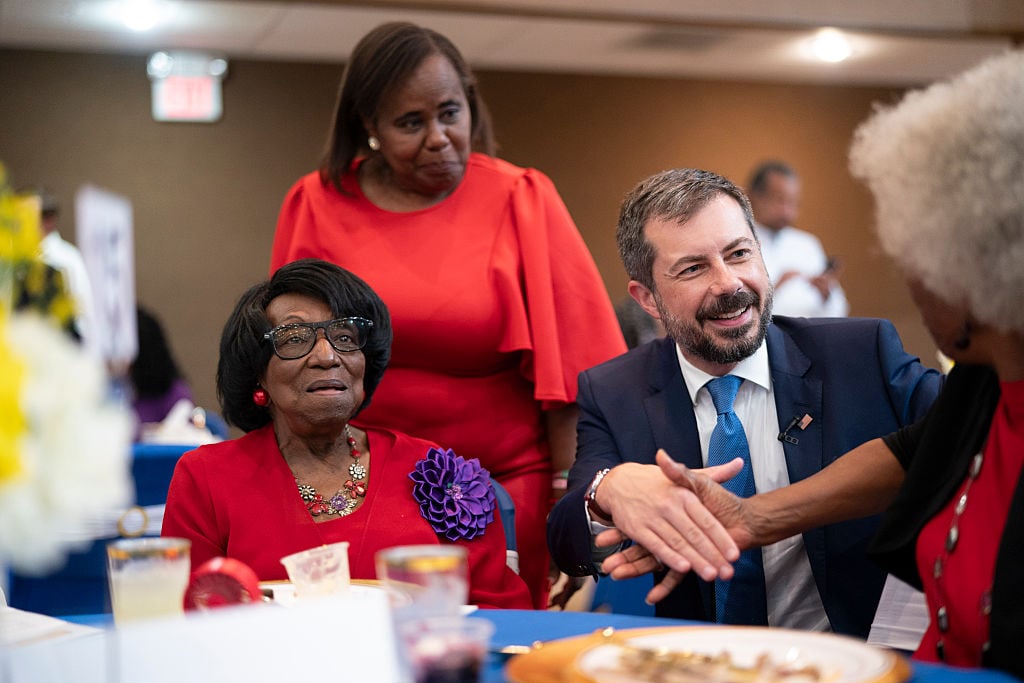
Former Secretary of Transportation Pete Buttigieg visited South Carolina over the weekend, meeting with key Democratic figures and visiting various community institutions in the state. And while his visit ostensibly focused on the important 2026 midterm elections, many are viewing the trip as a potential ground run for a presidential campaign and an opportunity to establish an outreach to Black voters.
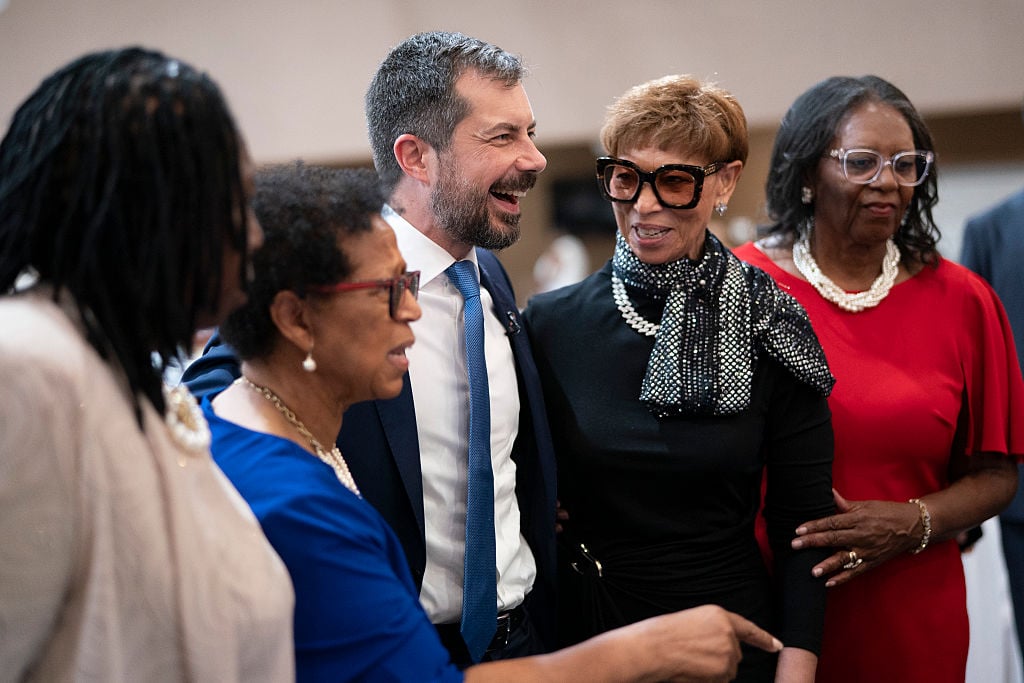
After disappointing primary performance in 2020, Buttigieg returns to South Carolina
Buttigieg visited South Carolina this weekend, the Associated Press reported, in a multistep trip across the state. Buttigieg’s trip included a Friday fundraiser in Charleston for U.S. House candidate Nancy Lacore, a former Navy admiral who was one of the women dismissed from military leadership under Defense Secretary Pete Hegseth; Lacore is running to flip the congressional seat held by retiring GOP Rep. Nancy Mace. Buttigieg’s visit also included attending an NAACP Freedom Fund Dinner and visiting a church in predominantly Black Orangeburg. During Buttigieg’s visit to the city, Orangeburg Mayor Michael Butler praised President Biden’s former Transportation Secretary for over $22 million in funding for Orangeburg’s Railroad Corner renovation project. Buttigieg additionally met with students at Claflin University, an HBCU located in Orangeburg. “Secretary Pete has definitely put himself on my radar for 2028 now, for sure,” Claflin student Davina Perry said after the event, while adding “I do want to see more representation from people who look like me.”
While Buttigieg said during the trip that “right now, I’m totally focused on 2026” and that he hadn’t made any decisions about his own political future, his trip to South Carolina is widely being interpreted as a precursor to another presidential run. Buttigieg’s 2020 presidential primary campaign was brought to an end by the South Carolina primary. Buttigieg, who had built on his reputation as the former Mayor of South Bend, Indiana and won the 2020 Iowa Democratic Caucus, finished a distant fourth in South Carolina and ended his campaign the day after the primary. Key to that outcome were Black voters, who dominate the Democratic voting base in the state. Joe Biden, supported by the endorsement of South Carolina’s longtime U.S. Rep. Jim Clyburn, was the overwhelming favorite among Black voters in the 2020 South Carolina primary, while Buttigieg’s support from Black voters in the state remained in single digits.
Appealing to Black, southern voters in 2028
The visit comes as South Carolina in particular, and Black southern voting bases in general, remain key to Democrats’ plans for 2028 and beyond. The Democratic National Committee recently proposed a calendar that would officially establish South Carolina’s 2028 presidential primary as the nation’s first Democratic presidential contest, solidifying the influence that the state and its predominantly Black Democratic voting base will have in choosing the party’s candidate. However, the committee eliminated nearby Atlanta as a possible host city for the 2028 Democratic National Convention, a move that Atlanta’s Mayor Andre Dickens called out as the party turning its back on Black and southern voters.
For Buttigieg, his time as Biden’s Transportation Secretary has given him wider name recognition, a list of policy accomplishments and a refined message for Black voters. When asked by Claflin students about reparations for slavery, Buttigieg told them that he not only favors legislation for a commission to study the issue but also supports “reparative” steps that the federal government can take more quickly. “I have a perspective on that that I didn’t have before when I didn’t have a chance to work on federal policy,” he said. During a time in which Democratic socialists and other progressives are making inroads in Democratic primaries but sometimes struggling to win over Black voters, Buttigieg is attempting to craft a message that appeals specifically to progressives and to Black voters. Speaking to the local NAACP about the choice between focusing on economic policy or on democracy and civil rights, Buttigieg evoked leaders such as Martin Luther King, Jr. and Jesse Jackson to argue that “we can — and we must — do both.”
As a white, gay man from the Midwest, Buttigieg has previously struggled to make connections with Black, sometimes socially conservative southern voters, and his message has not always resonated strongly in Black communities. However, his warm receptions in South Carolina and his new message for Black voters indicate that Buttigieg may be a stronger contender in the state as he contemplates another run for president.