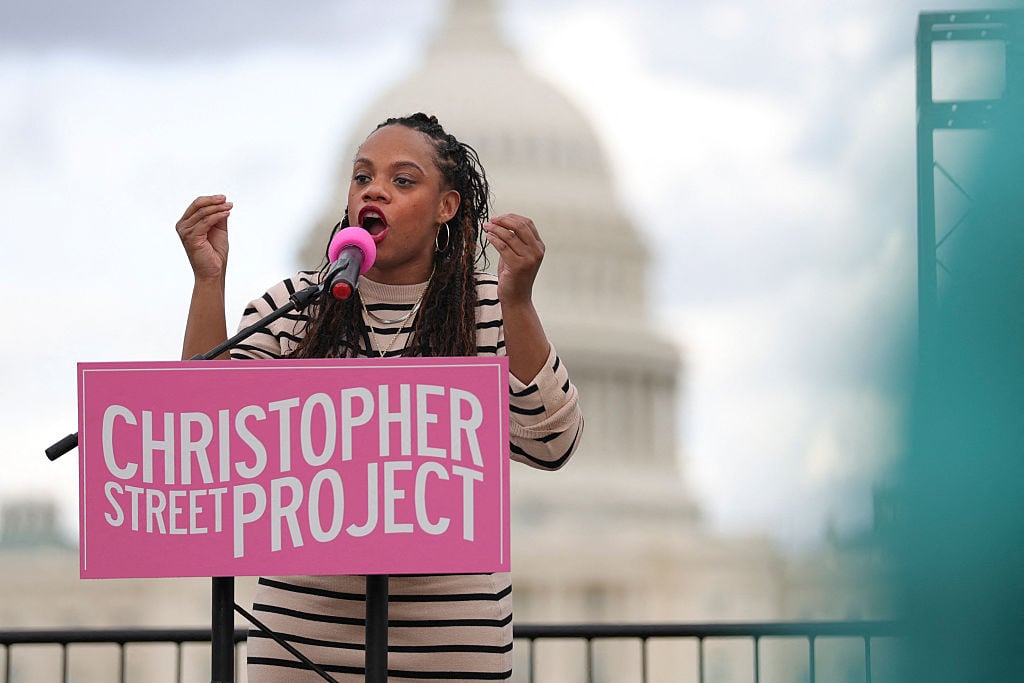
Long before she was a member of Congress, Rep. Summer Lee believed lasting political change started with ordinary people organizing in their communities.
After becoming the first Black woman elected to Congress from Pennsylvania in 2022, and earning a seat on the House Judiciary Committee this summer, that belief hasn’t changed at all.
“Real power is on the streets,” Lee told Blavity in an exclusive interview. “Organizing while legislating means that we’re getting people on the outside connected to their power… while organizing on the inside means helping my colleagues stay connected to the communities that are most harmed.”
That philosophy has guided Lee’s journey from grassroots organizer to one of the country’s most prominent progressive lawmakers. After upsetting longtime Pennsylvania state Rep. Paul Costa in a 2018 Democratic primary, Lee went on to make history in Congress, where she has become a leading voice on issues including workers’ rights, environmental justice and criminal legal reform. Even as her influence in Washington has grown, she says the lessons that shaped her political worldview began long before she arrived on Capitol Hill.
From organizing to governing
Lee’s appointment to the House Judiciary Committee marks another milestone in a political career that has challenged convention. The committee oversees issues ranging from civil rights and immigration to the federal courts, placing the Pittsburgh Democrat on one of the House’s most influential panels.
Asked whether joining the committee has changed her understanding of how political change happens, Lee didn’t hesitate.
“I don’t know that it has,” she said. “What deeply informed my idea of what moves the needle… is being a student of history. What we see is the power of the collective, the power of people.”
For Lee, organizing and legislating are not competing ideas. She sees them as complementary.
While lawmakers can introduce legislation and push policy, she believes sustained change depends on people mobilizing in their own communities and keeping elected officials accountable.
“It is impossible for us to legislate systemic change” under the current Republican-controlled government, Lee said, adding that organizers still have a critical role to play in protecting communities and laying the groundwork for future progress.
Lee first won a seat in the Pennsylvania House of Representatives in 2018 after defeating longtime incumbent Paul Costa in a Democratic primary, according to WESA. Four years later, she became the first Black woman elected to Congress from Pennsylvania. Earlier this year, she delivered the Working Families Party’s response to President Donald Trump’s address to Congress, underscoring her growing national profile.
The next generation of progressive politics
As more progressive challengers emerge across the country, Lee said she sees familiar themes in many of their campaigns. She recently endorsed Michigan state Rep. Donavan McKinney in his bid for Congress, but she cautioned against reducing the moment to political labels.
“I don’t think that people orient themselves on this left-right binary that we do in political spaces,” Lee said. “I think candidates are winning who are responsive to the needs, the anxieties and the fears of people in their districts.”
She said campaigns that prioritize grassroots organizing, reject corporate influence and focus on issues affecting people’s daily lives are resonating with voters, regardless of whether candidates identify as progressive or democratic socialist.
“There is a harsh reality that we in the Democratic Party have to accept,” Lee said, arguing that an emphasis on protecting incumbents can discourage participation. “People want to have a say in who is being sent on their behalf.”
Why Black political history matters
Lee said the exchange reflected something much bigger than just petty criticism on social media.
“There is such an attempt to sanitize the movements of the past,” she lamented. “It is hard for us as a generation to see that the Civil Rights Movement was a radical anti-establishment movement.”
She argued that Black political history is often stripped of the organizing strategies and ideological debates that shaped movements for civil rights, labor protections and racial justice. Understanding that history, she said, gives today’s organizers tools they can adapt to modern political fights.
“When you learn those traditions, you’re able to take it and adapt it to the current time.”
Although Lee has spent the past several years navigating Congress, she said one of her biggest frustrations is the institution’s attachment to longstanding traditions. She criticized a system that often rewards fundraising and prioritizes members representing competitive districts, arguing that lawmakers from safely Democratic districts, including many Black communities, can face greater hurdles in advancing legislation or securing influential opportunities.
Lee is nowhere near done, but she hopes her career on Capitol Hill is remembered much less for the titles she’s held than for the principles that guided her work.
“I hope people say that I fought like hell to change the conditions that we’re working in,” Lee said. “I fought for what was right, not what was easy.”