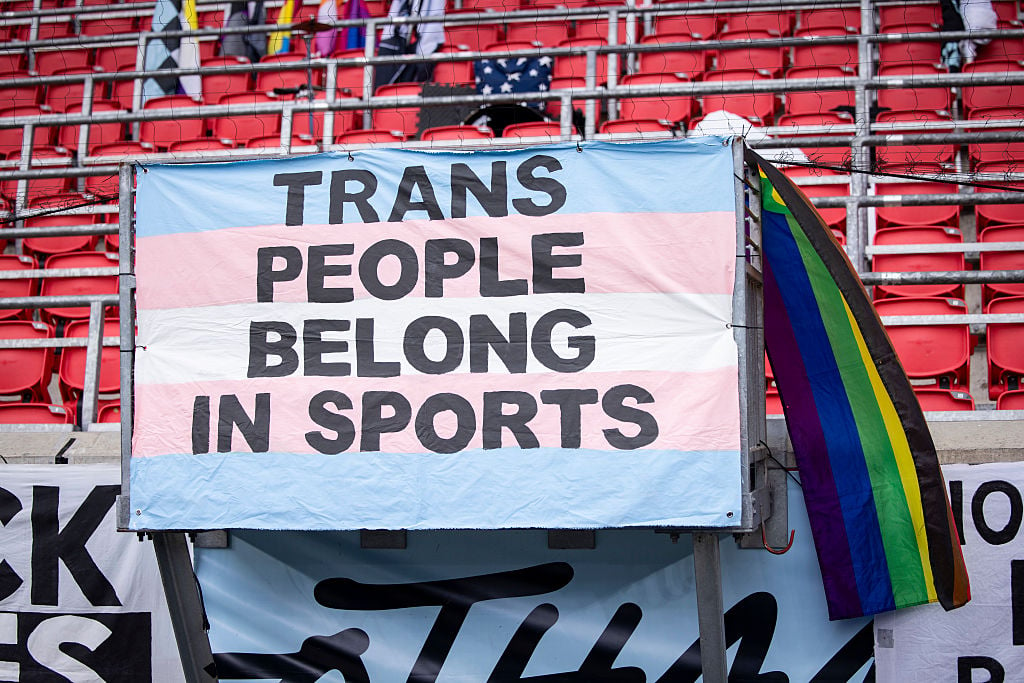
The Supreme Court on Tuesday ruled that states may continue enforcing laws barring transgender girls and women from competing on girls’ and women’s school sports teams, a decision expected to shape transgender athletics policies nationwide.
What did the Supreme Court say in its ruling?
In a 6-3 decision, the court stated that laws in West Virginia and Idaho restricting participation on girls’ and women’s teams based on biological sex do not violate Title IX, the federal law prohibiting sex discrimination in education, or the Equal Protection Clause of the 14th Amendment. Justice Brett Kavanaugh wrote the majority opinion.
The decision centers on two cases brought by Lindsay Hecox, a transgender college student who challenged Idaho’s Fairness in Women’s Sports Act, and Becky Pepper-Jackson, a transgender high school student who challenged West Virginia’s Save Women’s Sports Act. Pepper-Jackson was identified as B.P.J. in court filings because she was a minor when the lawsuit was filed.
The cases reached the Supreme Court after lower courts issued conflicting rulings on the challenges. Hecox argued Idaho’s law violated the Equal Protection Clause, while Pepper-Jackson argued West Virginia’s law violated both the Equal Protection Clause and Title IX. The justices agreed to hear the cases together to determine whether states can limit participation on girls’ and women’s sports teams based on biological sex.
How the justices explained their decisions
Writing for the majority, Kavanaugh said Title IX allows schools to maintain separate athletic teams for males and females based on biological sex. He wrote that states have a legitimate interest in protecting the safety of female athletes, preserving competitive fairness and ensuring equal athletic opportunities for girls and women, making the restrictions constitutional.
“The Constitution and Title IX do not require an overhaul of women’s and girls’ sports throughout America,” Kavanaugh wrote.
Justice Sonia Sotomayor dissented, joined by Justices Elena Kagan and Ketanji Brown Jackson. While agreeing that Title IX permits schools to maintain separate teams for males and females, the dissent argued the majority gave too much deference to the states and failed to properly examine whether excluding all transgender girls advances the stated goals of safety and competitive fairness.
“The Court’s equal protection precedents neither require nor support this contorted logic,” Sotomayor wrote in the opinion.
President Donald Trump responds to the ruling on social media
The ruling also aligns with actions taken by President Donald Trump, who has made restricting transgender athletes’ participation in girls’ and women’s sports a key part of his administration’s policy agenda. In February 2025, Trump signed an executive order directing federal agencies to enforce Title IX based on biological sex and threatening to withhold federal funding from schools that allow transgender girls and women to compete on female sports teams, according to the executive order.
Following Tuesday’s ruling, Trump celebrated the outcome in a Truth Social post, writing: “BIG WIN: The United States Supreme Court just RULED AGAINST MEN PLAYING IN WOMEN’S SPORTS. Wow! That takes that ridiculous situation off the table!!!”
The outcome extends beyond the two states involved in the case. According to the majority opinion, 27 states have enacted similar laws reserving girls’ and women’s school sports teams for biological females. The ruling is expected to shape future legal challenges involving transgender athletes nationwide.