
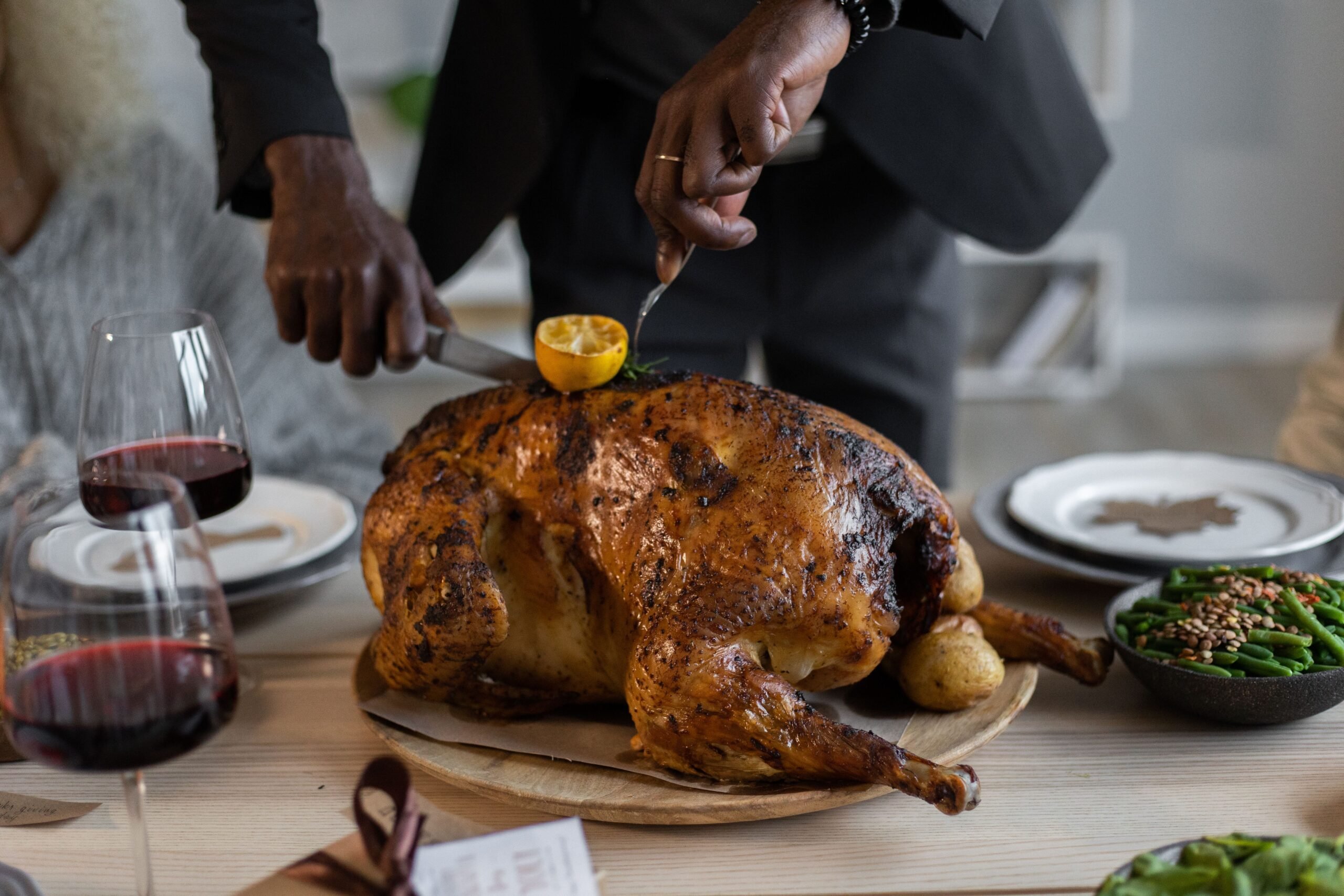
Thanksgiving dinner typically brings together a packed menu, a hectic kitchen and hours of prep. Yet just one misstep—like rinsing a raw turkey in the sink or leaving gravy out on the table all afternoon—can expose your guests to harmful bacteria.
Food poisoning can quickly turn a holiday gathering into a nightmare of diarrhea, vomiting, abdominal cramps and fever. Raw poultry often carries bacteria that can easily spread to other foods and kitchen surfaces. As reported by AP News, a few simple food safety habits can keep your holiday meal delicious and everyone at your table healthy.
Why Thanksgiving food safety matters
“Food poisoning occurs when a person consumes food that’s contaminated with bacteria, viruses or other germs,” Dr. Justus Rabach tells Blavity Health. “One source of infection is raw turkey, particularly if its juices come into contact with ready-to-eat food or the surfaces of food-preparation items.”
According to the Centers for Disease Control and Prevention (CDC), November and December are peak months for certain foodborne disease outbreaks, often linked to large holiday meals. Cooking for a crowd introduces extra hurdles, like tight refrigerator space and slower cooling times.
Donald Schaffner, Ph.D., a food science expert at Rutgers University, explained the challenge to AP News: “Cooking takes longer with big masses of food. Cooling takes longer with big masses of food.”
That is why food safety matters at every stage, from thawing the bird to packing up to-go plates.
Thaw your Thanksgiving turkey safely
A frozen turkey needs to thaw safely before it hits the oven. The best method is thawing it in the refrigerator, which keeps the bird at a consistent, safe temperature.
The CDC recommends allowing approximately 24 hours of thawing time in the refrigerator for every 4 to 5 pounds of turkey. Keep the bird in its original wrapping and place it in a container or pan to catch any juices that leak. Once thawed, a turkey can stay safely in the refrigerator for 1 to 2 days before cooking.
Need a faster option? You can thaw your turkey in cold water or the microwave:
- Cold water: Place the turkey in a leak-proof plastic bag and submerge it in cold tap water, changing the water every 30 minutes. Plan for about 30 minutes of thawing time per pound, and cook the turkey immediately afterward.
- Microwave: Follow your microwave manufacturer’s instructions and cook the turkey immediately after thawing.
Avoid thawing a turkey on the kitchen counter. Even if the center remains frozen solid, the outer layers can warm enough for bacteria to multiply rapidly.
Why you should never rinse raw turkey
We know washing poultry—often with vinegar, lemon or lime—is a non-negotiable tradition in a lot of kitchens. Still, food scientists say it is one habit worth breaking. Rather than killing germs, rinsing raw turkey spreads them. Water splashing off the bird can scatter contaminated droplets onto nearby dishes, countertops and the sink.
Benjamin Chapman, Ph.D., a food scientist at North Carolina State University, told AP News: “Anything that hits that surface and generates spray is going to spread contamination around your kitchen basically.”
Properly cooking the turkey is what actually eliminates harmful bacteria—washing it does not make it safer. If the bird is wet, pat it dry with disposable paper towels and throw them away immediately. Afterward, wash your hands thoroughly and wipe down any surfaces that touched raw turkey or its juices.
Use a food thermometer to make sure your turkey is fully cooked
A turkey can look golden brown on the outside and still be undercooked on the inside. Checking for clear juices or judging by the color of the meat is not a reliable way to tell if the bird is safe to eat.
According to the U.S. Department of Agriculture (USDA), the safe internal temperature for turkey is 165°F (73.9°C). Use a digital food thermometer to check three spots: the thickest part of the breast, the innermost part of the thigh and the innermost part of the wing. Make sure the probe does not touch bone, which can skew the reading.
If you cook stuffing inside the turkey, it must also reach an internal temperature of 165°F. Cooking the stuffing in a separate baking dish makes it much easier to ensure it cooks evenly and reaches a safe internal temperature.
Do not rely on the plastic pop-up thermometer that comes with some commercial turkeys—they are not always accurate. Always double-check with a separate food thermometer.
Keep Thanksgiving dishes out of the food safety danger zone
Bacteria multiply rapidly in the “danger zone” between 40°F and 140°F (4.4°C and 60°C). That means cooked dishes should not sit out on the counter while everyone grazes between rounds of spades, watches football or waits to make to-go plates.
Keep hot foods hot at 140°F or above, and keep cold foods refrigerated until it is time to eat. This applies to turkey, mashed potatoes, gravy, vegetables, salads and all other ready-to-eat dishes.
Follow the two-hour rule: refrigerate perishable food within two hours of serving—or within one hour if the surrounding temperature is above 90°F, whether indoors or outdoors. Instead of setting out massive trays for the entire afternoon, put out smaller serving dishes and keep the rest hot in the oven or cold in the fridge to replenish as needed.
Prevent cross-contamination while preparing your holiday meal
Cross-contamination happens when harmful germs transfer from one food, surface or utensil to another. Using the same cutting board for raw turkey and fresh salad ingredients, for example, can directly transfer bacteria to food that will not be cooked.
- Wash your hands with soap and water for at least 20 seconds before and after handling raw poultry.
- Separate your gear by using dedicated cutting boards, knives and utensils for raw meat and ready-to-eat foods.
- Clean and sanitize kitchen surfaces with soap and water, then sanitize with a food-safe sanitizer according to the label instructions. Pay close attention to sinks, countertops and cabinet handles.
- Prep in order: Make salads and other ready-to-eat dishes before you take out the raw turkey to minimize the risk of cross-contamination.
Store Thanksgiving leftovers safely
Leftovers can spoil quickly if left out too long. Refrigerate turkey, gravy, and cooked vegetables within two hours of serving (or within one hour if the room is above 90°F).
Use shallow containers to store large batches of food so they cool down faster than a deep pot or big block of meat would. Double-check that your refrigerator is set to 40°F or lower.
Eat refrigerated leftovers within 3 to 4 days, or freeze them for later use. When reheating, bring leftovers to an internal temperature of 165°F, and heat gravy and sauces until they reach a rolling boil.
Never taste food to test whether it is still good. Leftovers can look and smell completely fine while still harboring harmful bacteria.
Bottom line
A safe Thanksgiving meal starts with thawing your turkey in the fridge, keeping prep surfaces clean, avoiding washing raw poultry before cooking, and using a digital thermometer to confirm the bird hits 165°F. Keep hot and cold dishes out of the danger zone and promptly get leftovers into the fridge. These simple steps go a long way toward protecting everyone at your table.
Frequently Asked Questions
What are the first signs of food poisoning after Thanksgiving dinner?
Common symptoms include diarrhea, stomach cramps, nausea, vomiting, and fever. How quickly symptoms appear depends on the specific germ involved.
Who is most at risk of developing serious complications from foodborne illnesses?
Children younger than 5, adults aged 65 and older, pregnant people, and individuals with weakened immune systems face a higher risk of severe illness.
When should you seek medical attention for suspected food poisoning?
Seek medical care for bloody diarrhea, diarrhea lasting more than three days, a fever above 102°F, repeated vomiting that prevents keeping liquids down, or signs of dehydration.
Sources
Aleccia J. Tips for a safe Thanksgiving from food safety experts. AP News. November 21, 2026. Accessed November 24, 2026. https://apnews.com/article/thanksgiving-turkey-salmonella-37f27cf3bb76c8a9019ba75360746760
CDC. Current Outbreaks. Foodborne Outbreaks. October 20, 2026. Accessed November 24, 2026. https://www.cdc.gov/foodborne-outbreaks/outbreaks/index.html
CDC. Preparing Your Holiday Turkey Safely. Food Safety. September 24, 2025. Accessed November 24, 2026. https://www.cdc.gov/food-safety/foods/holiday-turkey.html
Department of Agriculture. Is Your Turkey Done? Let the Thermometer Decide! | Food Safety and Inspection Service. Usda.gov. 2026. Accessed November 24, 2026. http://www.fsis.usda.gov/news-events/news-press-releases/your-turkey-done-let-thermometer-decide