
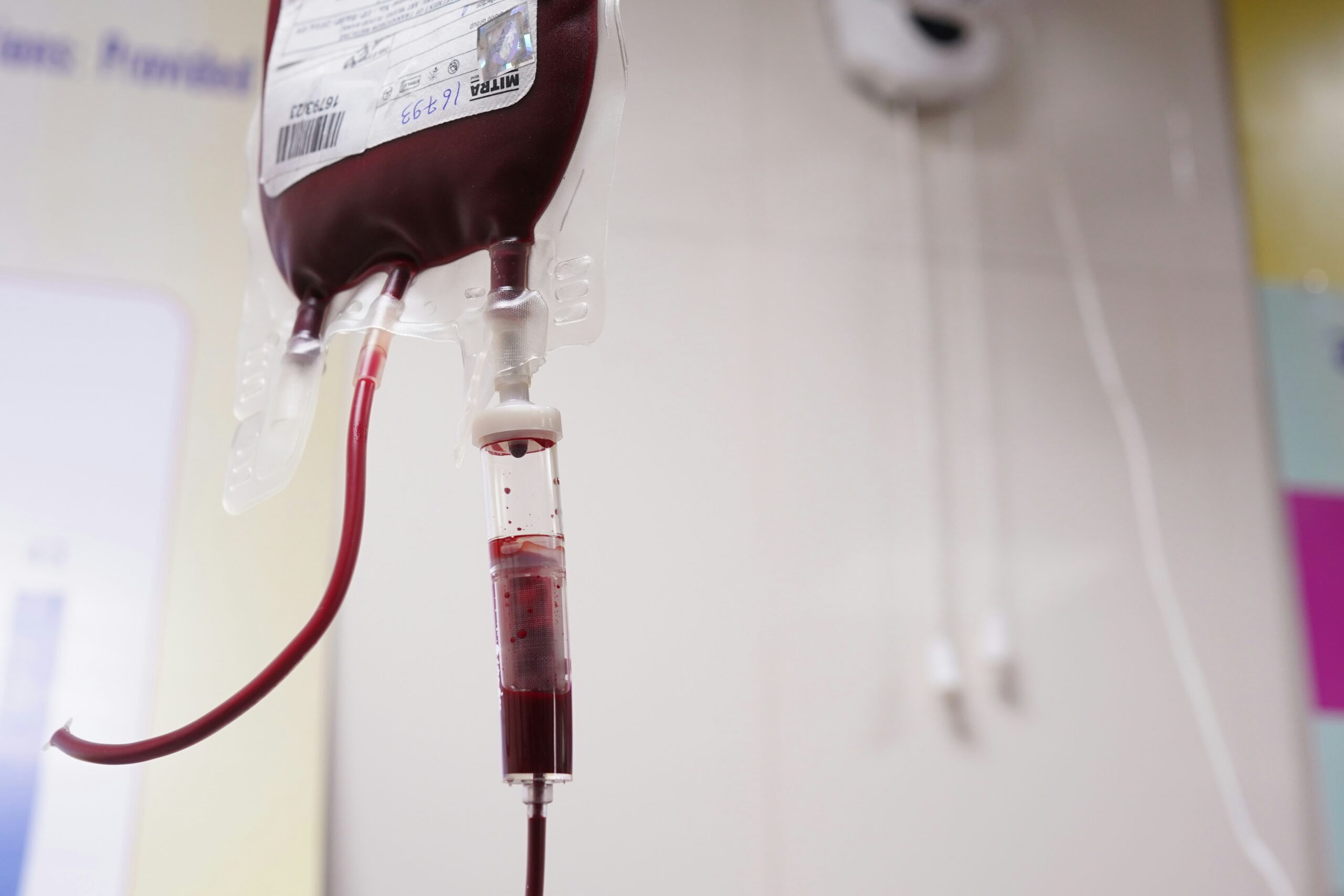
When hackers strike a healthcare system, the public expects leaked medical records or locked billing portals. But when an attack targets the cold rooms and freezers that store life-saving plasma, a digital breach instantly becomes a physical, life-threatening emergency.
Overnight between Nov. 1 and 2, hackers breached the industrial control systems managing temperature settings at three cold-storage facilities run by the Établissement Français du Sang (EFS), France’s national blood agency. Days later, U.S. federal agencies issued an urgent joint advisory: identical cyber operations are actively scanning and compromising industrial refrigeration networks worldwide.
Safeguards prevented inventory loss in France, and no American medical supplies have been reported compromised to date. Even so, the incident exposes a critical vulnerability. The threat to modern medicine is no longer confined to encrypted files—it now targets the physical cold chain that keeps patients alive.
How did a cyberattack target a French blood bank’s medical supplies?
The French Blood Establishment collects, prepares and distributes blood products across France. According to an EFS statement reported by The Associated Press, “temperature and defrosting thresholds were raised to extremely high levels” at three of its cold-storage sites.
Notably, EFS itself was not hacked. Instead, attackers broke into a supplier that provides and remotely manages the refrigeration equipment. The affected cold rooms held bags of plasma for transfusions, plasma used to make medicines and stored samples.
Fortunately, the safeguards worked. Monitoring systems quickly flagged the problem, and staff acted in time so that “no blood products or samples were compromised,” EFS said. As a precaution, personnel relocated and secured all units. The breach follows a broader industrial pattern: weeks earlier, cybercriminals gained remote control of commercial refrigeration systems across several European supermarket chains.
What types of medical supplies are vulnerable to cyberattacks?
Countless essential medications and biological therapies rely on the “cold chain”—an unbroken, climate-controlled pipeline spanning manufacturing, transport, storage and administration.
Even small temperature changes can matter, especially for blood products. Federal regulations require blood banks to keep fresh frozen plasma at minus 18 degrees Celsius or colder, while red blood cells must remain between 1 and 6 degrees Celsius.
Products that rely on precise cold storage include:
- Donated blood, plasma and platelets
- Vaccines
- Insulin and many injectable medicines, including GLP-1 medications
- Biologic drugs for conditions like cancer and autoimmune disease
- Lab samples, tissue and research specimens
Similarly, providers must store and handle vaccines correctly from the time they are made until the moment a patient receives them, according to the CDC. A break anywhere in that chain can weaken them.
How can hackers compromise medical supplies without accessing hospital computer systems?
The answer lies in operational technology, or OT. These are the connected machines and software that control physical processes, such as refrigeration, temperature monitoring and defrost cycles.
Unlike a hospital’s main computer network, OT devices often sit at the edge and are managed by outside vendors. So, attackers don’t need to break into patient records to cause harm. Instead, they only need to reach the controller that runs the freezer.
Specifically, the federal warning lists several entry points. Attackers target controllers that are unpatched or accessible from the internet, exploiting flaws that allow them to bypass logins or run commands, according to CISA. Default passwords and remote vendor access add further risk.
In addition, attackers can create what experts call a “denial of view.” In that case, staff lose the ability to see current temperatures, so a problem could go unnoticed.
That gap can create false confidence. “An attacker doesn’t necessarily need access to electronic medical records or hospital servers,” Shawn Riley, MBA, CISSP, former chief information officer for the state of North Dakota and co-founder and CEO of the venture studio BISBLOX, told Blavity Health. “Hospital leadership may believe its network is secure while critical equipment remains exposed through connections nobody in the cybersecurity department knows exist.”
Harman Singh, director of the cybersecurity consulting firm Cyphere, compared those forgotten connections to a hidden spare key. “This is similar to a contractor’s key safe on the back wall of a building. Nobody in security fitted it, and nobody remembers the code is still 1234,” Singh told Blavity Health.
Are U.S. hospitals and medical supply chains at risk of similar cyberattacks?
On Nov. 5, the Cybersecurity and Infrastructure Security Agency (CISA), the FBI, the Department of Health and Human Services (HHS), the Department of Agriculture and the Department of Transportation issued a joint warning. They said they are “aware of malicious cyber activity targeting industrial refrigeration and cold chain monitoring systems globally,” the American Hospital Association reported.
In particular, the warning names healthcare and public health among the sectors at risk. That also includes hospitals, pharmacies, blood banks, drug suppliers and refrigerated transport companies.
“Every organization that depends on refrigeration and monitoring systems should assume it could be a target,” Chris Butera, CISA’s acting executive assistant director for cybersecurity, said in a CISA news release.
Health care has faced major cyberattacks before. In 2024, for instance, a ransomware attack on Change Healthcare, a major claims processor, disrupted billing and prescription processing for providers nationwide, according to HHS. However, attacks on refrigeration add a physical risk, since they can destroy the products themselves.
Importantly, the warning describes a broad threat. It does not say that hackers have compromised any U.S. medical supplies. Still, it means cyberattacks on medical supplies are no longer a hypothetical risk for American providers.
What happens when hackers disrupt the storage of blood, vaccines and medications?
When storage temperatures drift out of range, products may lose effectiveness or become unsafe. For example, if vaccines are exposed to the wrong temperature, the CDC advises providers to label them “do not use” and contact the manufacturer before giving them to anyone. In many cases, providers must throw them out because there is no way to confirm they still work.
As a result, a single cold-chain failure can lead to:
- Wasted blood, plasma and medicines
- Delayed transfusions, surgeries or treatments
- Costly emergency replacements
- Vaccine clinics that have to cancel or reschedule
Even a short interruption can be serious. Blood products, for instance, come from volunteer donors, and no factory can make them on demand. So, replacing lost units depends on new donations.
The same is true for medicines at the pharmacy. “Storing a medication outside of its recommended temperature range can reduce its potency, making vaccines less protective against disease and insulin less effective at controlling blood sugar. The damage may not be visible, and putting the medication back in the refrigerator may not restore its effectiveness,” Jamie Winn, PharmD, a pharmacist and medical director at the online pharmacy Universal Drugstore, told Blavity Health.
Why are medical supply refrigeration systems difficult to protect from cyberattacks?
Several challenges make it hard to shield medical supplies from cyberattacks. First, many controllers are old and run software that was never designed with security in mind. “Medical cold-chain systems are especially tricky to harden because they rely on aging OT that was built for availability, not cyber warfare,” Rafay Baloch, an ethical hacker and founder and CEO of the security firm REDSECLABS, told Blavity Health.
Second, updates are tricky. A freezer full of plasma cannot simply be shut down for a software patch. Therefore, some organizations delay updates to avoid interrupting storage.
Third, many systems connect to the internet, allowing vendors to monitor them remotely. However, that convenience creates an opening. Encouragingly, the number of exposed systems is falling. Of the 6,695 internet-exposed refrigeration controllers identified on Oct. 9, only 47% remained reachable as of Nov. 5, SecurityWeek reported, citing internet intelligence firm Censys.
Finally, responsibility often falls to several groups. Facilities teams, IT departments and outside vendors may each manage part of the system, which can leave gaps. “In many healthcare organizations, refrigeration equipment is purchased by one department, maintained by another, connected by a third-party vendor, and never formally incorporated into the organization’s cybersecurity program,” Riley said.
How can hospitals and medical suppliers protect critical medical supplies from hackers?
Fortunately, the joint federal guidance lays out clear steps to protect medical supplies from cyberattacks. According to CISA, organizations should:
- Remove refrigeration controllers from direct internet access.
- Change default passwords and use strong, unique credentials.
- Turn on phishing-resistant multifactor authentication where possible.
- Install available software and firmware updates.
- Separate refrigeration equipment from business networks.
- Set safe temperature limits and alerts so controllers can’t be pushed out of range.
Beyond software fixes, physical safeguards matter too. Independent temperature sensors, backup generators and manual checks can catch problems a hacked system might hide. In the French case, that kind of monitoring prevented losses. As Riley put it, “Monitor the physical outcome, not just the digital system.”
What patients can do to protect temperature-sensitive medications at home
When regional distribution networks face threats, personal vigilance at home serves as a vital safeguard:
- Store insulin and other refrigerated medicines exactly as the label directs. Unopened insulin generally belongs in the refrigerator, according to the FDA.
- Keep an inexpensive fridge thermometer near your medications to spot problems early.
- Never freeze insulin, and don’t use it if it has been frozen.
- If a medicine got too warm or too cold, call your pharmacist before using it.
- Ask your pharmacy what its backup plan is if your medication is delayed.
What does the growing threat of healthcare cyberattacks mean for patients?
Ultimately, cyberattacks on medical supplies make cybersecurity a patient safety issue, not just a tech problem. “A spoiled batch of plasma is a patient safety incident, not an IT incident; therefore, it deserves an owner at board level,” Singh said. For example, a 2023 study in JAMA Network Open found that a ransomware attack on one San Diego health system strained two nearby emergency departments, which saw more ambulance arrivals, longer waits and more stroke cases.
Some patients depend on cold-chain products more than others. For instance, people with sickle cell disease often need regular blood transfusions. Sickle cell disease affects about 100,000 Americans and occurs most often among Black Americans, according to the CDC. As a result, disruptions to the blood supply can fall hardest on Black communities.
Likewise, people who manage diabetes rely on safely stored insulin. Those who track their insulin levels or take injectable medications have a direct stake in a secure cold chain.
Bottom line
The attack on France’s blood service shows that cyberattacks can threaten medical supplies by targeting the refrigerators that protect them, not just hospital computers. U.S. agencies now warn that similar attacks are happening worldwide, though no one has reported harm to U.S. supplies. Stronger security, independent monitoring and solid backup plans can keep blood, vaccines and medications safe.
Frequently Asked Questions
Was patient or donor information stolen in the French blood bank cyberattack?
Neither EFS nor French officials have reported any theft of patient or donor data, because the attack targeted refrigeration controls at a supplier rather than EFS’s own systems.
Are cyberattacks on medical infrastructure considered a national security threat?
Yes, the U.S. government treats healthcare and public health as one of 16 critical infrastructure sectors whose disruption could harm national security and public safety, according to CISA.
Citations
American Hospital Association. Agencies warn of malicious cyber activity targeting refrigeration, cold chain monitoring systems. AHA News. Published November 2026. https://www.aha.org/node/712343
Associated Press. Cyberattack hits French blood bank site but no blood products are compromised. ABC30. Published November 4, 2026. https://abc30.com/story/cyberattack-hits-french-blood-bank-site-no-products-are-compromised/20015587/
Associated Press. Cyberattack hits French blood bank site but no blood products are compromised. ClickOnDetroit. Published November 4, 2026. https://www.clickondetroit.com/news/world/2026/11/04/cyberattack-hits-french-blood-bank-site-but-no-blood-products-are-compromised/
Centers for Disease Control and Prevention. Data and Statistics on Sickle Cell Disease. CDC. Accessed November 9, 2026. https://www.cdc.gov/sickle-cell/data/index.html
Centers for Disease Control and Prevention. Vaccine Storage and Handling. CDC. Accessed November 9, 2026. https://www.cdc.gov/vaccines/hcp/storage-handling/index.html
Cybersecurity and Infrastructure Security Agency. CISA, FBI, HHS, USDA, and DOT Urge Critical Infrastructure to Strengthen Industrial Refrigeration and Cold Chain Monitoring Systems Cybersecurity. CISA. Published November 5, 2026. https://www.cisa.gov/news-events/news/cisa-fbi-hhs-usda-and-dot-urge-critical-infrastructure-strengthen-industrial-refrigeration-and-cold
Cybersecurity and Infrastructure Security Agency. Healthcare and Public Health Sector. CISA. Accessed November 9, 2026. https://www.cisa.gov/topics/critical-infrastructure-security-and-resilience/critical-infrastructure-sectors/healthcare-and-public-health-sector
Cybersecurity and Infrastructure Security Agency, Federal Bureau of Investigation, et al. US Government Partners Urge Hardening Industrial Refrigeration and Cold Chain Monitoring Systems. CISA. Published November 5, 2026. https://www.cisa.gov/resources-tools/resources/us-government-partners-urge-hardening-industrial-refrigeration-and-cold-chain-monitoring-systems
Dameff CJ, Tully JL, Chan TC, et al. Ransomware Attack Associated With Disruptions at Adjacent Emergency Departments in the US. JAMA Network Open. 2023;6(5):e2312270. https://doi.org/10.1001/jamanetworkopen.2023.12270
U.S. Department of Health and Human Services. Change Healthcare Cybersecurity Incident Frequently Asked Questions. HHS Office for Civil Rights. Accessed November 9, 2026. https://www.hhs.gov/hipaa/for-professionals/special-topics/change-healthcare-cybersecurity-incident-frequently-asked-questions/index.html
U.S. Food and Drug Administration. 21 CFR 610.53, Dating periods for licensed biological products. Electronic Code of Federal Regulations. Accessed November 9, 2026. https://www.ecfr.gov/current/title-21/chapter-I/subchapter-F/part-610/subpart-F/section-610.53
U.S. Food and Drug Administration. Information Regarding Insulin Storage and Switching Between Products in an Emergency. FDA. Accessed November 9, 2026. https://www.fda.gov/drugs/emergency-preparedness-drugs/information-regarding-insulin-storage-and-switching-between-products-emergency
SecurityWeek. US Agencies Urge Organizations to Harden Refrigeration Controllers. SecurityWeek. Published November 2026. https://securityweek.com/us-agencies-urge-organizations-to-harden-refrigeration-controllers