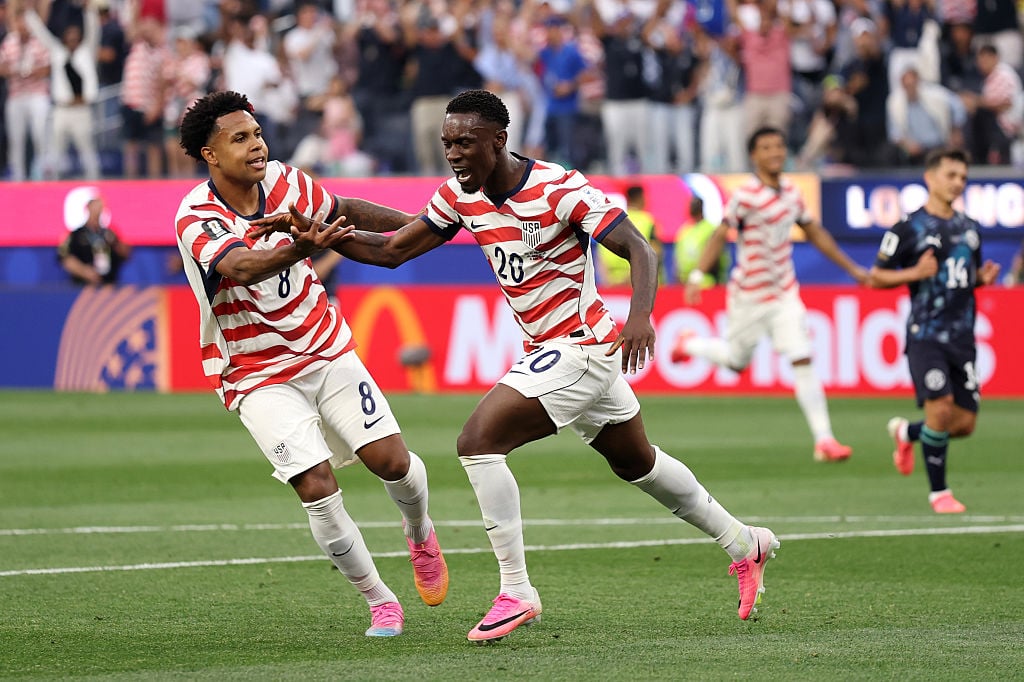
For decades, soccer in the United States carried a reputation as a sport many Black children couldn’t easily access.
Unlike basketball or football, which are often rooted in schools and local communities, youth soccer increasingly became associated with expensive club teams, travel leagues and a pay-to-play system that created barriers for many families.
Former U.S. Men’s National Team goalkeeper Tim Howard said those barriers continue to impact who gets access to the sport.
“With a pay-to-play model,” Howard told Blavity, “socioeconomically, we sort of outcast so much of this country.”
Yet as the FIFA World Cup unfolds, Black players, supporters, creators and storytellers are more visible throughout the sport than ever before. From African nations competing on soccer’s biggest stage to the rise of Black soccer media in the United States, many see this moment as evidence of how Black soccer culture has continued to grow despite longstanding barriers to entry.
Howard, who is partnering with Verizon for its World Cup initiatives, said the sport’s next phase of growth will depend on making soccer more accessible and inclusive for communities that have historically been left out of the game.
“Black soccer is not a marginal storyline in the World Cup,” Dr. Jermaine Scott, a contributing creator for Forty-One Magazine and author of the forthcoming book Black Soccer: Football and Politics in the African Diaspora, told Blavity. “The African diaspora is at the center of global soccer itself.”
The tournament’s expanded 48-team field has only amplified that reality. As African nations continue their World Cup campaigns, Scott said the global influence of Black soccer culture extends far beyond the players on the field.
“African nations have inspired the rise of football kits as fashion, centering and inserting the aesthetics of indigenous African communities onto the world pitch,” Scott said. “Additionally, African supporters continue to create culturally diverse environments inside and outside the stadiums.”
For Scott, international soccer also offers a unique lens through which to understand history, politics and identity.
“Football also provides a cultural site of resistance for many Black nations to defeat their former colonizers on a global stage,” he said.
That history remains visible throughout international competition. Scott noted that conversations around teams such as France, England and the Netherlands cannot be separated from the colonial histories that helped shape those nations and their modern identities.
“It’s impossible to watch teams like France, England and the Netherlands, for example, without accounting for those countries’ colonial histories,” Scott said. “The World Cup allows us to reimagine who gets to belong, and who gets to represent the nation.”
The growth of Black soccer culture is also increasingly evident in the United States, where a new generation of creators, media outlets and fans are helping expand the sport’s reach.
Scott points to the rise of independent Black soccer publications, podcasts and digital communities as a major reason for the sport’s growing popularity among Black audiences.
“Within the last decade, we’ve had the creation of independent Black soccer media brands that are dedicated to telling stories about Black footballers, both in the men’s and women’s leagues,” Scott said.
He highlighted outlets such as Forty-One Magazine and Black Arrow FC, along with podcasts including For The Culture UTD and Shea Butter FC, as examples of platforms centering Black voices within soccer coverage.
The growth extends beyond traditional sports media.
Scott said streaming personalities such as iShowSpeed and Druski have introduced the sport to younger audiences, while the FIFA video game franchise has helped create new fans. He also pointed to the influence of Afrobeats, UK rap and the increasing intersection between soccer and fashion as factors driving interest in the sport among Black communities.
Similarly, Howard has witnessed that growth firsthand.
“Soccer is in a place in 2026 that it’s never been,” Howard said. “It’s the biggest and the richest and the brightest and the healthiest it’s ever been.”
Still, he believes visibility alone isn’t enough.
“When you get Black and brown faces in front of young kids, they can sort of look up to them, aspire to be them,” Howard said.
Howard pointed to grassroots investment and efforts to expand opportunities beyond affluent suburban communities as important steps forward, adding that soccer’s future depends on making the sport available to everyone.
“The next big step is that inclusivity,” Howard said. “Letting the game of soccer, which is the world’s game, be for everybody in this country.”
The conversation around access comes as companies and organizations look for ways to bring more people into the sport’s ecosystem, whether as players or fans. Through initiatives such as Verizon Access and the recently launched Verizon Shine rewards platform, Verizon has offered customers opportunities to attend matches and receive exclusive experiences tied to the World Cup.

As part of Verizon Shine, customers can enter to win a three-day trip to the FIFA World Cup Final, including tickets to the championship match and access to an exclusive event with soccer legend David Beckham. The company is also continuing to release additional World Cup tickets throughout the tournament, with more ticket drops scheduled for June 22 and July 8.
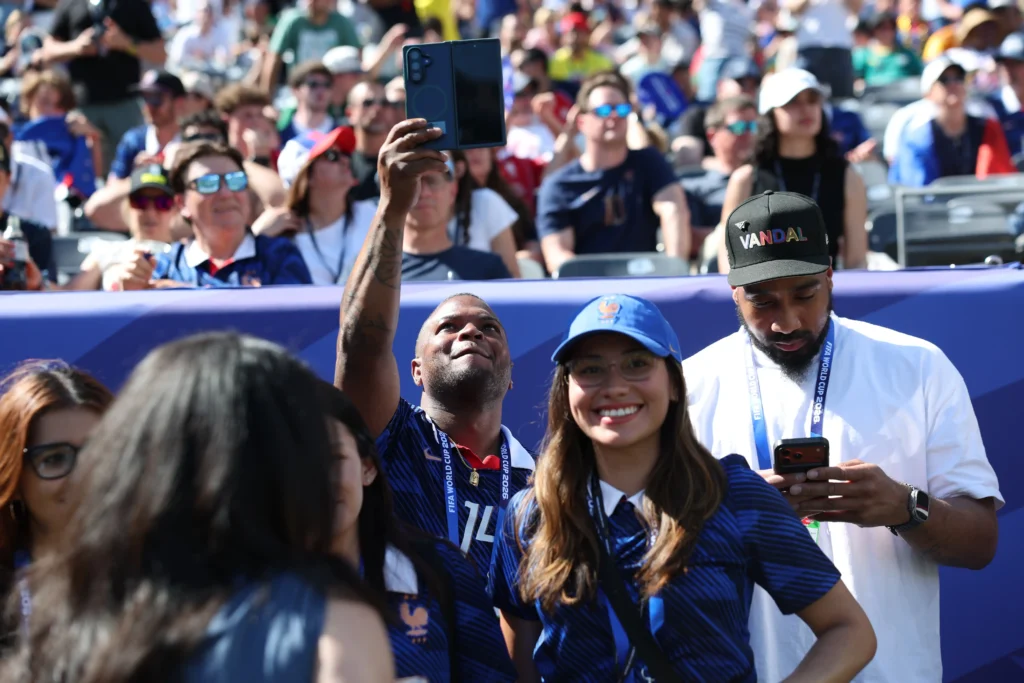
“However great you think this is going to be, it’s going to be 10 times that.” Howard said fans who receive World Cup experiences through Verizon will get “an experience that will surpass their wildest dreams.”
For Scott, the broader significance of this year’s tournament extends far beyond attendance numbers or match results.
“The impact I would like to see this World Cup have on Black players, supporters and storytellers is that this is more than an entertaining sport,” Scott said. “It is deeply tied to history, politics, national formations and racial identities. This World Cup makes evident that football cannot be understood in a vacuum, but rather must be placed in the context of these celebrated, yet often complicated stories around race, colonialism and resistance.”