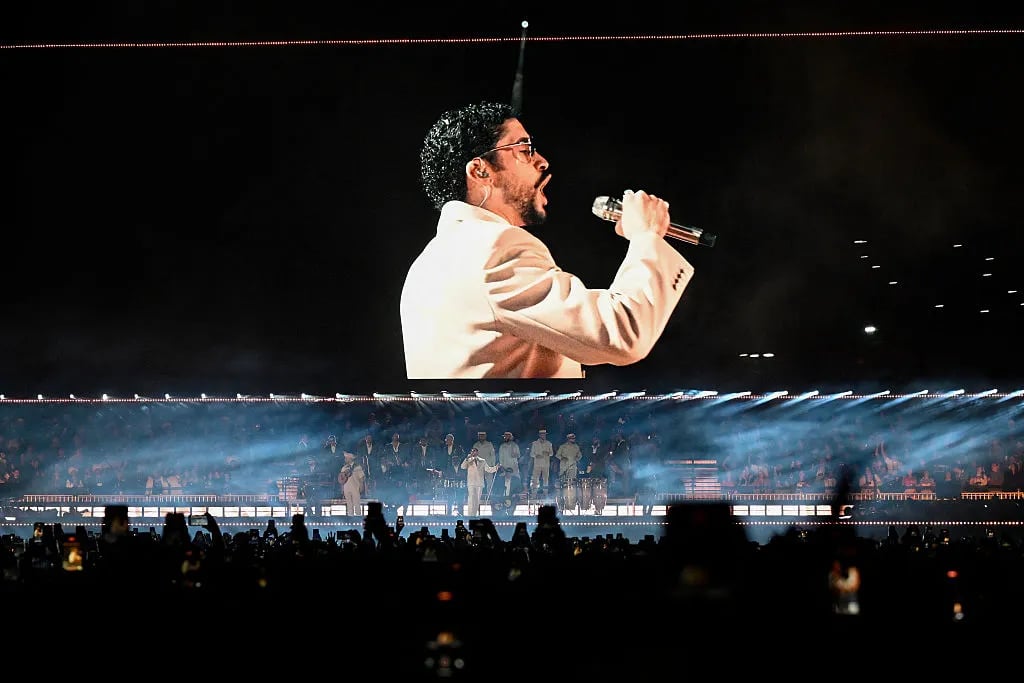
In the latest episode of Blavity Town Hall, host Raven Schwam-Curtis revisits the long, complex relationship between Black athletes, protest, and performance — just ahead of the 2026 Super Bowl.
From Muhammad Ali to Colin Kaepernick, and now to figures like Bad Bunny and Azeez Al-Shaair, the conversation around sports and political expression is far from new. The episode highlights how athletes and performers have used their platforms to challenge power, assert identity, and spotlight injustice — often at personal and professional cost.
This year’s Super Bowl, airing Feb. 8 from Levi’s Stadium in California, marks a historic moment with Bad Bunny as the first artist to headline the halftime show in Spanish. He’ll be joined by pregame performers including Coco Jones, Charlie Puth, and Brandi Carlile — with American Sign Language interpretations incorporated throughout.
Conservative backlash toward the Super Bowl
Since the announcement, conservative backlash has mounted. Immigration and Customs Enforcement (ICE) is expected to be on-site, a move confirmed by South Dakota Gov. Kristi Noem and Trump-era advisor Corey Lewandowski. Critics say the enforcement presence casts a chilling effect — especially given Bad Bunny’s vocal support of Puerto Rican independence and past refusal to tour the U.S. over ICE concerns.
Right-wing commentators have also condemned the performance. House Speaker Mike Johnson called Bad Bunny a “terrible decision” and suggested an alternative rooted in Americana, while Turning Point USA announced a “counterprogram” halftime event.
The episode explores how this response fits into a broader pattern of scrutiny toward athletes and performers of color who use their platforms to speak out — particularly when their politics challenge dominant narratives about patriotism and identity.
The legacy of segregation in sports
The episode also traces the history of racial segregation in American sports. While today more than 65% of NFL players are Black, it wasn’t until 1946 that the league was reintegrated following years of exclusion. Other sports — including Major League Baseball, the NBA, tennis, and boxing — followed similar paths of resistance and eventual inclusion, often prompted by public pressure or legal action.
High-profile acts of protest are also examined, including the 1968 Olympics Black Power salute, Serena Williams’ experiences with racist media depictions, and Kaepernick’s kneeling in protest of police violence — a gesture that ultimately cost him his NFL career.
New episodes of Blavity Town Hall drop biweekly.